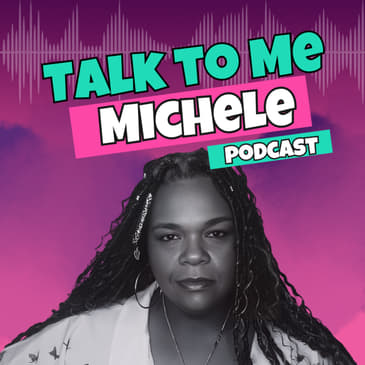
In this episode of Talk to Me Michele, Michele sits down with award-winning screenwriter, producer, and host of the Run Fool podcast Rodney Barnes. They dive into the meeting point of African American culture and the horror genre-from cultural influence to breakout stories, Rodney shares insight into how Black culture has shaped and continues to inspire the world of horror. It's historic, filled with creativity, and perspectives on the supernatural unlike any other. Tune in as he proposes an engaging discussion on deeper levels of horror through African American eyes!
[00:00:00] Want to take your brand to the next level? Become a sponsor of the Talk To Me Michele podcast and connect with an engaged audience that loves real conversations and fresh perspectives.
[00:00:10] Whether you're looking to boost your brand awareness or promote a new product, we have the perfect platform for you.
[00:00:15] Join us as a show sponsor and let's grow together.
[00:00:18] For more details, email TalkToMeMichele at gmail or contact us directly on all social media platforms.
[00:00:25] Let's make something amazing happen.
[00:00:55] Welcome to Talk To Me Michele. I'm your host, Michele.
[00:00:59] Welcome back. I am super excited about this episode.
[00:01:03] You want to know why? Because I will be talking to screenwriter and producer Rodney Barnes.
[00:01:09] I have always admired his work on Boondocks, My Wife and Kids, and Everybody Hates Chris.
[00:01:15] But it was his podcast, Run Fool, that truly got me hooked.
[00:01:20] Every week Rodney shares creepy, suspenseful horror stories that range from folklore to monstrous creatures and even self-sabotage.
[00:01:29] And trust me, his voice alone is worth listening to.
[00:01:33] Now I will admit, I flurried a bit to be fair. I did.
[00:01:38] And I really tried to keep it professional. But Rodney is attractive and intelligent, witty.
[00:01:46] That is my kind of combo. So it was pretty hard not to.
[00:01:51] But let me get back on track. If you've not checked out Run Fool yet, do subscribe and you will not regret it.
[00:01:58] This episode dives deep into how horror has been influenced by the African American community.
[00:02:04] Not many people realize yes, there are some black people who are fans of horror. We out here.
[00:02:10] I just felt that Rodney was the perfect person to have this conversation with. You're actually going to learn a lot.
[00:02:16] You're going to learn about some horror films, directors, producers, characters.
[00:02:20] So I just want you guys just to sit back and enjoy this creepy conversation.
[00:02:28] How you doing Mr. Barnes?
[00:02:29] That was a very sexy opening. Even the music coming in, the music coming in grabbed me.
[00:02:35] We could just run the opening again. That was perfect.
[00:02:41] I appreciate that. I try to represent being a solo producer and podcast.
[00:02:46] You're doing it. You're doing it. You're doing it.
[00:02:48] I really appreciate that. But I wanted to bring you on today, besides I am a groupie of yours.
[00:02:54] I'm not going to lie. But I'm not going to pull a misery card on you.
[00:02:57] No, I appreciate it. I'm too old at this point.
[00:03:00] But at the same time, I have always been a horror junkie.
[00:03:05] And I know for a lot of black folks, that's not so common because...
[00:03:09] Not too many of us there is not too many. We're a very passionate group but we're small but passionate.
[00:03:14] Small but passionate. So that's why I think I gravitate to all the material that you do
[00:03:19] and the podcast especially, and I've listened to some episodes more than once
[00:03:24] because I do have a couple of favorites. But it's great work.
[00:03:27] I appreciate that.
[00:03:29] But I want to get to our influence on African American influence on horror.
[00:03:35] This is a very small group of us. There have been film writers,
[00:03:40] there have been significant plots of that nature.
[00:03:42] And when it comes to social issues, I think that's the majority of what we see in African American horror nowadays,
[00:03:50] like with Jordan Pills films. Do you have any feedback on that particular path that we're taking in horror?
[00:03:57] I think it's a great one. I mean when I was coming up, they were far and few in between.
[00:04:03] You know the films I remember, I was a big fan of the Hammer films and the Universal Monster movies
[00:04:08] and never saw black people. They tell my mother took me to see Blackie.
[00:04:12] And that changed everything. They sort of opened the door for me.
[00:04:16] And not just in the film itself, but the reaction of the audience.
[00:04:19] You know, the amount of fun that people had in the movie, seeing themselves represented in a way that felt as authentic up to that point as anything that I'd seen.
[00:04:29] And you look at today like you said before mentioned Jordan Pills and there's some other folks.
[00:04:34] You have stuff like Lovecraft Country even though that's not a film, but it's still...
[00:04:39] But serious?
[00:04:39] Yeah. And you see like stuff coming here and there that reflects more than just race.
[00:04:48] You know, we get into culture. We get into families and dynamics and that go beyond because when I was coming up, if there was a black anything,
[00:04:57] you had to talk about being black in some way.
[00:05:00] There was very rarely was it about the characters and their dilemmas like like in a Stephen King book where it's just a family coming apart and they go to a haunted house and the house is haunted.
[00:05:09] They got to figure a way out. It was always when we get to the houses, gotta be black ghosts in there.
[00:05:16] There's something in there that has to do with something about being black.
[00:05:20] And not that I'm against it because I think horror is a great vehicle to be able to talk about history, to be able to talk about culture,
[00:05:27] to be able to integrate a lot of different elements of what it means to be a personal color in the American and Western world.
[00:05:37] In a really, really unique way that doesn't feel like medicine.
[00:05:40] And I've always seen it as just like a conduit to a lot of different subject matter that was interesting.
[00:05:45] And even outside of film, you know, writers like to not read due and rest in peace Octavia Butler and so many other people that come along until some really great creative stories.
[00:05:58] Always looked at it as an opportunity to just be human.
[00:06:03] And I think oftentimes we haven't been treated that way, you know, in film and in literature and horror films give you an opportunity to show there's such there's so many states.
[00:06:15] And horror, like life with death and the way that the characters that protagonist have dealt with. It's not always a conventional way to deal with the thing that's supernatural.
[00:06:27] Yeah, you have to use your wits. So it's an opportunity to really show intelligent people doing intelligent things or sometimes you get the people that aren't that smart but somebody smart has to come in and deal with the thing in order to fix a problem.
[00:06:41] And I just love us being at the center of that narrative.
[00:06:46] I'm glad because I was getting tired of going to horror films as much as I love them and you know is usually more Caucasian cast, if they do have one black friend he the first to go.
[00:06:57] He's my guy in the opening credits.
[00:07:00] He might slip and die right after they say his name when the letters come up.
[00:07:04] Like so, oh, I didn't get to his last name but anyhow.
[00:07:07] But we like them though. We like you know he was a good guy so fortunately he had to go but he had to set it up for the real people to come in and save the day.
[00:07:17] Exactly, but I like the way that I can say your approach and your passion for the horror genre.
[00:07:24] I would like to see if you could highlight for me a couple of key works and pioneers in African American horror they've made a major impact on the work you do today.
[00:07:34] Oh, like I said to not to read do was huge when I was coming up because I had this period where when I was at Howard University and I was I wanted to do this but I come from a small town inapolis Maryland right outside of Baltimore.
[00:07:48] And I wanted to do this but I didn't see me as someone who was capable of doing this and I needed an emotional psychological bridge.
[00:07:58] If I could just find someone who looked like me who sounded like me that I could read their work I could talk to like I would understand their world in such a way that it would help me build a world that I have in my head but I don't necessarily see a way to execute it.
[00:08:15] Right.
[00:08:15] And to not to read do ironically had a great conversation with Spike Lee but I was in college that influenced me as well.
[00:08:23] And even though he hasn't done horror, you know, in a traditional sense.
[00:08:29] I look at him.
[00:08:31] I know he did the sweet blood, which was kind of like ganja and Hess, but yes, and has as gone to an S.
[00:08:38] But, you know, it's so many other influences that just helped me find the confidence to be a storyteller.
[00:08:46] Robert Townsend was another one.
[00:08:48] Not necessarily people in horror. It was just people who really helped me build the bridge emotionally and psychologically to taking a shot at being a storyteller on a different level.
[00:08:58] And I mean that I think that's what impels me and I'm this side track here.
[00:09:03] After I hooked on some of my girlfriends onto your podcast, it's like, oh girl, that voice is like 1900 horror.
[00:09:10] So thank you.
[00:09:16] Tell them how much I appreciate back to the questions right quick.
[00:09:20] The portrayal of African Americans and horror films and some books.
[00:09:23] They evolve so much significantly that we're basically from the stereotypical roles that you basically see the African American actors played a more complex characters.
[00:09:34] How do you perceive this notion? Do you think that we're stuck in a time warp when it comes to the roles that we have in horror films or are we expanding?
[00:09:43] I think they're good things.
[00:09:45] I see, you know, just the fact that you can ask the question means that there are good things that are happening. Like you said, Jordan P.
[00:09:54] You see some stuff. I forget the show that's on Amazon.
[00:09:59] Forget the name of that show.
[00:10:01] It's another horror theme show like them or something like that.
[00:10:04] Damn, that's it.
[00:10:06] Okay, then, you know, we said Lovecraft Country every once in a while. Another one pops up here with their.
[00:10:12] It's a weird time in the business though, I think since the strike just to get things made just anything for across the board.
[00:10:22] So it's hard to to have like we go through these periods sometimes where you see a cluster of films come up.
[00:10:30] I remember Eve's Bayou and yeah, you know, there was a right in there.
[00:10:35] We had like three or four of them that were came out at the same time.
[00:10:38] Um, it's a tough one for me because the ones that seem to come out are higher quality.
[00:10:47] Yeah, I don't see many of them.
[00:10:50] And I remember there was a time after when Black Panther came out and then get out.
[00:10:56] I don't know which one came up before the other.
[00:10:58] But I remember my agents and representatives were like open to the idea because I've been trying for years to get something made done, whatever.
[00:11:07] I got a couple of projects in development right now.
[00:11:10] But it's so, so difficult to get something made and sustain just a regular influx of new films that are culturally diverse.
[00:11:23] They come from us.
[00:11:24] They come from a lot of different entry points.
[00:11:26] It's really, really, really hard to sustain them.
[00:11:28] And I think it's people like yourself, people that are making things, the podcast, the comic books, the novels, all of the different things that keep it going that give hope and an opportunity for the larger things to be done because even
[00:11:44] things on being done right now at least there's an audience that's being served to show that there is an audience for these.
[00:11:50] Yeah.
[00:11:50] So I appreciate that.
[00:11:53] I don't know if I answered the question, but that was what was going through my mind.
[00:11:56] It's such a difficult, so many facets to the answer that it's hard to just land on one thing that's going to completely satisfy.
[00:12:04] But now that we have a social and political movements, of course, such as civil rights movements, contemporary movements for racial justice influence the things of storytelling and horror.
[00:12:15] Yes.
[00:12:15] Can you discuss any specific examples of where these movements shaped or inspired your own work of African American horror?
[00:12:24] Yeah, I mean, when I was coming up, my mother was a school teacher for 45 years.
[00:12:30] And so I was always, I always had literature around like I was reading books like so long nice man, John the promised land and all of that stuff as a child.
[00:12:39] You know, I was it was always in front of me.
[00:12:41] So reading was sort of the thing that opened up the door to film and television in a different kind of way.
[00:12:51] And that stuff that I was reading was based on either the Pan African movement at the time, the civil rights movement in some ways today's movement, even though in some ways it's more progressive because it's built off of the work that all the other people before us, you know, laid.
[00:13:09] It's more difficult, I think to identify it in a way that you could before in film and in literature like back in the days, it was revolutionary just for a film like Black It Would Be Made.
[00:13:23] Yeah, just to have it that existed.
[00:13:26] Now when you make something it's not just a miracle that it got made. It's what does it say.
[00:13:32] Right.
[00:13:33] Like what's in the content of the thing that is trying to say when you look at a movie like Get Out in its layer and it's talking about interracial relationships and those things.
[00:13:43] The content now is the thing that seems to be speaking more to what's going on in the social movements and those types of things.
[00:13:52] The fact that, you know, it's funny I debate my kids all the time and they always talk about how they feel.
[00:13:57] And I keep saying when I grew up nobody cared about when I say nobody cared.
[00:14:01] Nobody identified me as anything. I was hard enough to be identified as a human being to be, you know, my feelings.
[00:14:09] Okay.
[00:14:10] Like what are those?
[00:14:12] Exactly. You know, nobody cared. Even if in my own house and my grandmother hit me upside down here she wasn't concerned about when I felt, you know, how I felt from the hit and the fall.
[00:14:23] But it was in love.
[00:14:25] But in today's movement, I see that integrated into the content.
[00:14:31] I see it integrated into, you know, LGBTQ stuff, material, you know, and how people interact as human beings and getting more of a an honest depiction of how people, you know, express themselves in life.
[00:14:49] And that to me is an extension of that thing we talk about with Black you know, where just existing just being a black vampire was a big deal.
[00:14:57] Black vampire in a black community was a big deal. It's what are they saying? What are they doing? How does it feel?
[00:15:04] Is it honest and trying to find, and that opens the door up to more creators of color via directors, writers, actors that are able to depict the material in a way that is more layered and honest and all that stuff.
[00:15:21] And I attribute that to a lot of the movements that are going on today.
[00:15:23] You know, it's funny you said that I'm going to share something with you. I'm just a let me say I'm an up and coming writer. And I do want to take my quack at horror.
[00:15:33] And it's like such a wide range genre. And we have so many personal or historical stories within our community that we can draw examples from.
[00:15:42] And I think that that's one of the elements that we do also bring to horror culture. How can we remix this tragedy and turn it into not only a lesson, but a entertaining horror film as well.
[00:15:54] So I do love the concept. I did.
[00:15:57] Yes, I do too. And I mean even like in my book, Philadelphia, I wasn't so much looking at history per se.
[00:16:05] Because a lot of times when you have at least back in the day, a lot of our horror came from sleep. And I remember even when we were putting run full together, when we do research on folk tales, all of them came from sleep.
[00:16:19] And I was like, no, we can't. That's not what I want to do. It's like there are other periods of history for us that are as layered and as human, you know, as that experience.
[00:16:31] So, you know, you've got reconstruction, got the civil rights. You've got the current era that we're in right now that maybe not as easily to define.
[00:16:39] There's just a lot of different periods and then each one of those periods they had their own struggles to deal with it, not just from forces outside of the culture, but forces within the culture.
[00:16:50] And there are a lot of interesting stories that I think can come from a myriad of places.
[00:16:54] So, yeah.
[00:16:58] Yeah, but I got what you're saying. I agree wholeheartedly with the increased recognition that we are now having in horror stories.
[00:17:06] And we're reaching broader audiences is not just our community going to see these film since we are a big part of the genre itself.
[00:17:13] Can you discuss any examples or trends that highlight how horror stories have resonated with diverse, a diverse audience?
[00:17:22] Yeah, I mean, it's funny. I had this conversation. I just did San Jose, Galaxies con this past weekend and I was did a panel with a good great writer Mark Gruden, Guggenheim.
[00:17:33] And we were talking about how, you know, in my day, let me see that's when you know your old when you start talking about your body.
[00:17:41] When you would see shows that had characters that were challenging like Archie Bunker and all in the family or the Jeffersons or whatever.
[00:17:51] And that character may express a point of view that wasn't politically correct or didn't necessarily walk a certain line.
[00:18:00] You know, you got to glimpse into another way of looking at life and how people that don't agree with you.
[00:18:06] Yeah, sort of express themselves in today's world. A lot of times I think content works along the line of an algorithm.
[00:18:13] It gives you exactly what you want and expresses to you what you want and how you want to feel.
[00:18:18] I think the beauty of filmmaking from people outside of my culture and within my culture is that you get a different you get a glimpse into someone who lives their lives differently than I do.
[00:18:32] You get an opportunity to develop respect and insight into how people, you know, you don't always have the same thing before used to be water cooler talk like every is three channels.
[00:18:44] So everybody saw the same thing when a movie came to town. If everybody saw it, they could all talk about it and even the exorcist.
[00:18:51] I remember that when the exorcist came out, even though I was a kid, I'm crazy people went over the exorcist, you know, and whether they were talking about it in the media, they were talking about it at school.
[00:19:02] Those of us that weren't supposed to see it if you saw it, you could come back and tell your friends whatever it was.
[00:19:07] It was a glimpse into something that was outside of your experience.
[00:19:11] And I think that's sort of the virtue of having different types of films and different types of content that doesn't necessarily just speak to your experience.
[00:19:24] You know, you get an opportunity to see a different way of life if executed in that way. Sometimes it's just based entertainment.
[00:19:31] There's nothing wrong with that. But sometimes you'll get a film that can move the needle and understand it.
[00:19:38] And I think that's a beautiful thing when you get those types of stories that again, don't come from the world in the place that I walk every day.
[00:19:45] The shoes that I walk in every day. So I just think that's the power of film and the power of horror films and the power of things that are interesting, diverse, well crafted, all of that.
[00:19:55] I like there's some key works that we have within our culture. I mean, I know you've got a few favorite films yourself because I follow you on, of course, Instagram and Facebook.
[00:20:06] So when you're putting up clips about you talking about certain horror films.
[00:20:11] And I might do, I thought I was the only one that knew about this film.
[00:20:16] And you did a particular clip and you were talking about your top, I believe top five.
[00:20:22] And I think you mentioned near dark. Yeah, and I said, what other black man know about that film?
[00:20:29] I got a lot of it's funny because it's a weird thing where I started off and again sound like an old man because a lot of these movies that I saw being an only child, you know, seeing a lot of stuff being 64 since I was five years old.
[00:20:47] And I was like, I'm not sure what the film is like. And walking back then nobody told you take nobody checked my ticket or asked me how old I was when I walked into a movie theater.
[00:20:55] So I've seen a lot of things I probably shouldn't have seen.
[00:20:58] And I would I was the guy that would go to virtually every movie that came to town and that was where a lot of movie theaters, all of these little dead and buried.
[00:21:09] All these little in between horror films that came out in the late 80s 90s, you know, whatever. I saw many of them.
[00:21:18] And cable, of course, gives you the opportunity and shutter love shutter.
[00:21:23] They give you an opportunity to see a lot of these movies that you may have missed.
[00:21:26] But was a junkie at one time of just watching horror films.
[00:21:31] So now I get to talk about them and build a community of folks that love them as well.
[00:21:36] And it's kind of fun for me. It just brings some spice to life and makes it seem like I didn't waste my time and money sitting through all those movies.
[00:21:44] I wish we were friends in high school because this is like this is like the vibe you want to find.
[00:21:50] It wasn't many. It wasn't many.
[00:21:52] Hey, why you gonna go see that? I got a buddy of mine.
[00:21:54] Right.
[00:21:55] I don't say his name. I won't blast him, but he posted a movie. Somebody posted a movie and I tagged him in it.
[00:22:00] I said, man, how many times did I make us sit through? Because I remember how many times we got to see this movie.
[00:22:05] And I think the movie was Serpent in the Rainbow.
[00:22:08] And I love the Serpent in the Rainbow.
[00:22:11] And he went to see it with me. I think we went to like a five o'clock show.
[00:22:15] I wanted to see it five. I want to see it seven. I want to stay for nine.
[00:22:19] Like I want back then they didn't check the theater to all right you got to get out before they started it again.
[00:22:24] Right.
[00:22:24] And I was that dude. I was the dude that wanted to see it again and again and again.
[00:22:29] And we didn't have cable or you just press a button on your phone and you get anything you want, whatever you want it.
[00:22:35] I don't know when this thing is coming to the video store. So I want to see it as much as possible.
[00:22:39] You don't know when it's leaving the theater. I was that dude.
[00:22:42] Yeah. Well, see, I was the chick that was, you know, once it did have once VCRs came out.
[00:22:47] Oh yeah.
[00:22:48] Yeah. So once my parents were out the house, watch the exorcist.
[00:22:53] You know, so because I was you know, young but I always been drawn to it.
[00:22:59] It was phantasm for me. I remember that was one of the first that we had the big top load in VCR.
[00:23:05] Where you stick it in was like lawn mower.
[00:23:07] We stick it in the top and push it down.
[00:23:09] Push it down.
[00:23:10] And engine was started up. You know, it was like it was literally like a lawn mower.
[00:23:14] Those were the movies with the video store first opened up.
[00:23:18] Yes. And God forbid if you were watching something, you didn't have no business watching and that would be that wound up.
[00:23:24] Yeah. You're like, oh, I can't.
[00:23:26] That's the other video with you later. That's the other interview.
[00:23:30] That's how you can't do it on this video. But yeah, as you said in the previous episode, this is not a smut show.
[00:23:35] So we're going to go.
[00:23:37] No, no.
[00:23:39] I'm teasing. I'm teasing.
[00:23:40] Yes. No, this is for the Lord. We're doing the Lord's work right now.
[00:23:45] Yeah. Well, I appreciate the Lord's work being done right now, but I do have to ask you on a comical and a real note.
[00:23:52] Why black folks scare the clowns? Why do we have to say everything with clowns to, you know, I think John Wayne Gacy, you know, legitimized it for me when I found out that there was a serial killer with a clown.
[00:24:08] But, you know, for me, they were always odd to me. I never saw them as entertaining.
[00:24:13] Like when you would come go to the circus as a kid and they would come up to you and smile.
[00:24:16] And I'm like, all right. You know, I guess that's that part of me that's true to my culture.
[00:24:21] But it the book, it didn't help. And like I said, John Wayne Gacy didn't help.
[00:24:27] And, you know, I went to the circus with animals. I didn't really go for the clowns.
[00:24:31] I appreciate the clowns. And I know that it's an art form and I respect the art form.
[00:24:36] But I never, you know, it's like behind that smile could be a killer.
[00:24:40] Well, yeah, I understand we did have a former serial killer taken on that persona.
[00:24:44] But at the same time, I did find it very entertaining.
[00:24:49] I've never had a fear of clowns. I put you that way.
[00:24:52] So that's why I think I was able to, you know, indulge into that series a little bit more.
[00:24:56] But I was just like, why?
[00:24:58] Whether it was mimes, anybody, anybody put makeup on their face like that, you know, mimes, some of the women I've known over the course of my life.
[00:25:06] Anybody put too much makeup on. I've always questioned, you know, whether or not they could come back and kill me.
[00:25:11] And some of them tried. But that's another video. We'll do that in the third video.
[00:25:15] Yeah, yeah, we'll catch up on the comedy side of the makeup.
[00:25:18] We'll get that one. We'll get that one.
[00:25:22] Now, we mentioned Jordan Peele earlier since he seems to be as far as films are concerned,
[00:25:27] bringing us into the spotlight of a lot of films.
[00:25:30] So I just wanted to briefly go over some of his productions because I want to say out,
[00:25:36] almost had me pissed off in the credits because you know how the setup is.
[00:25:41] And you see this young black man, he's dating a Caucasian woman and he's going to this family's house and it's like the oddest vibe that's like semi-racist but not too racist.
[00:25:53] So racism, I want to say used a bit was played a big portion that role where rumors are, you know, when we're kidnapped and our organs are taken.
[00:26:04] And we have certain strengths. So do you think he tapped on a myth that we still have to deal with today?
[00:26:10] Yeah, I mean, I think the brilliance of Jordan is his ability to speak to these things without directly speaking to him to speak to the feeling that they counter.
[00:26:19] So it's like he doesn't specifically have to say that thing, but he's close enough to it that you feel the paranoia and some of the stuff that comes with existing in this culture.
[00:26:32] And some of the things that we have to figure out on their own because the mainstream world isn't on it, but we have this underground railroad of information that we share with each other.
[00:26:43] And he's able to sort of tap into that.
[00:26:46] Yeah, that one us I wouldn't too crazy about. I thought you know I have that's one of those I have to keep watching to make sure I got the concept right.
[00:26:54] But I did like no, I will say I was fascinated with no, but I thought that was a great concept.
[00:26:59] But I know one of your favorites is Blackie love and it's influenced a lot of your work. And I'm going to start reading comic books again, just because of you.
[00:27:09] I appreciate that I'm very, very proud of my black reboot and Jason Shawn Alexander I think did fantastic art nominated for Nasdaq court.
[00:27:19] And it was one of those things like a dream come true because I saw the movie as a kid. And as I as it age and I age I started to see some of the issues that I had with, you know, the budget could have been a little bit more you start to some of the some of the things that come with the time.
[00:27:38] And you know, I was like if I could indicate some of those and highlight some of the things that I would do that I think bring him brings the story in the modern times like the late great William Marshall, I think it was a fantastic actor.
[00:27:51] And I think he brought as much gravitas to that role as Bella go as Bella the ghost he did to Dracula.
[00:27:57] And I just wanted to create a world around him. That's sort of the idea of that character Prince Mama Walde, they gave him his respect and his due deference as you know being a really really great actor that I don't know if the times could do in the way that I did personally.
[00:28:15] No, I like that you put your own spin on it is modernized. It's a good series and I mean I promise you every time Rodney gives you know he has like various giveaways.
[00:28:26] I know I ain't got a chance to help but I'm gonna give it a shot anyway.
[00:28:30] That's not true.
[00:28:32] You would be surprised if the people who have said wow how me and it comes up not that I'm playing favorites or anything like that but there's some people who just are always part of the conversation.
[00:28:43] And you appreciate those people because those are the people that are the foundation of you being able to you know life isn't forever.
[00:28:50] And if you can find a respite or something that brings some joy to it brings some fun to it brings some color to it.
[00:28:58] Why not do it and you depend on your little family your social media family of people who you can interact with and sometimes you might be having a difficult day.
[00:29:08] Life isn't easy for any of us and just to take a couple of minutes away to talk about a horror film to talk about a thing with strangers.
[00:29:16] Yeah, all of you are on the same wavelength and like you said if we were in high school together we probably would have gone to these movies or argued about these movies or whatever.
[00:29:26] Right.
[00:29:26] It's gonna bring something to life that I think is positive.
[00:29:28] See I should have took more credit because I was more active on my personal account which I'll make it I'll comment on one of your posts on my personal account.
[00:29:37] Hey, it's the podcast girl so I will definitely but you've actually interacted with me on my personal account because I love the content that you do put up.
[00:29:45] It does create a community for everybody to interact and give opinions on and give us some history because I know you were recently in New Orleans.
[00:29:52] Yeah.
[00:29:53] And you are tapping in on something I got a real interest in so I'm looking forward to the continued reels that you're doing while you're investigating these historical places that have great stories.
[00:30:05] So I also want to get to my addiction of your podcast real quick before we wrap this up.
[00:30:12] Yeah, Runful.
[00:30:14] The Runful series is an excellent podcast series and like I said I'm always listening to podcasts.
[00:30:22] The first was definitely in is definitely my top five because it's intriguing.
[00:30:27] You got the narration voice and you got great, you know production behind it but the stories you'd say are influenced from your grandmother.
[00:30:35] And you know and I'm that's that's really funny because you said the black family thing we don't really discuss too many horror situations.
[00:30:43] What was some of the things that you loved about her story she shared with you.
[00:30:47] You know it's funny because my grandmother hardcore Christian took me to church every Sunday.
[00:30:56] So she would not describe what the story she told me as horror stories per cent but they were truly horrifying stories and she would talk about these things without them feeling like they felt like a natural like you were talking about a cousin.
[00:31:10] You know she was telling you about a cousin that had moved away.
[00:31:13] She would tell me a story about trees that light up in the forest and how they let her home and how somebody passed on but they came back and they helped her do a thing.
[00:31:24] And it was so natural that as a child without a reference point you believe them.
[00:31:29] Yeah.
[00:31:30] And the times that never knew when they were coming we could be sitting out on the porch and it could be raining.
[00:31:36] Yeah.
[00:31:36] And it would just start telling the story.
[00:31:38] She could be hanging up clothes in the backyard and I happen to be out there and she would tell me a story.
[00:31:43] And it just became a thing where it was so natural to hear the story and to not question the story and to be thoroughly entertained by the story that it created such a relationship between my grandmother and I.
[00:32:00] I'm an only child.
[00:32:02] I got a lot of half brothers and sisters who I consider brothers and sisters if y'all listen I love y'all most of y'all.
[00:32:10] And you know there was a thing where my grandmother made my childhood feel fully realized by being such a character and any of the things that were painful were placed in perspective and not at the forefront of my mind so I focused on them.
[00:32:26] They were there and I felt them but I don't think I felt them with the weight that they would have hit me had I not had her and her ability to make life interesting.
[00:32:38] So when we started going down this road of potentially doing a podcast I was like this is what there's a master run for and one full days you have a human story that's as heavy and weighs just as much as the horror story because I think the two go together that if you can have empathy for character.
[00:32:54] You can invest in the story that much more so and they have to feel authentic.
[00:33:01] You have to feel like real folk tales.
[00:33:03] They have to feel like things that come from parts of the country.
[00:33:05] You know whether you're talking about the Gullah people in South Carolina whether you're in New Orleans whether you're in Detroit wherever you happen to be somebody has hit me at some point and said I remember that story.
[00:33:18] I remember the story of goat man in Maryland and Southern Maryland or Chessie and Maryland and Chesapeake Bay and just different stories from around the country.
[00:33:30] And we research them we find them some are more closer to me than others but we figure out a way to integrate me and my grandmother into whether it was something that was told you know whether it was something I came upon or whether my career because I used to travel.
[00:33:47] I used to commute from Maryland to LA in the beginning of my career and before I established myself and could move here.
[00:33:55] And so we tell stories along the way you know my travels because I did stop from time to time and I have places.
[00:34:01] So it's just a matter of trying to tell a story with heart trying to tell a story that has meaning but somewhere along the way telling a scary story but something that hopefully will resonate with you.
[00:34:15] Something that will resonate you with in a way that makes you want to come back for more but also improves the quality of your day.
[00:34:24] I'm not going to lie Rodney when I wake up at the crack of dawn on a Tuesday.
[00:34:28] Yeah first thing the first thing I'm doing is going to my Spotify.
[00:34:33] Okay because I'd like to listen to stuff before I get ready for my day to kind of set my mind in a certain tone.
[00:34:39] So your podcast is one I listen to.
[00:34:41] Of course I listen to my own but you know.
[00:34:43] Of course.
[00:34:44] You got it.
[00:34:45] I listen to yours first because I've already heard the recording so I'm good.
[00:34:53] That's a good point.
[00:34:54] I say when I get you know some downtime I listen to myself but I look forward to every new release and like I said you'd be killing me with these two parts but it's a good logic.
[00:35:03] I'll tell you that it's a good logic.
[00:35:05] Thank you.
[00:35:06] And we have at the end of our season I think on Halloween we have an hour long.
[00:35:11] It's not a two part you know we give you a thank you for getting us through season one and getting ready for season two.
[00:35:17] And so you won't have to wait.
[00:35:19] You won't have to wait come Halloween.
[00:35:22] You'll get a whole one hour it won't be part one part two.
[00:35:25] Don't nobody call me on Halloween.
[00:35:28] Don't nobody text me.
[00:35:29] I will be listening to Mr. Barnes.
[00:35:32] It's a good one too.
[00:35:33] It's scary one.
[00:35:34] It's one that feels more of War of the Worlds is an apocalyptic in a sense that it touches everybody.
[00:35:41] It's not just like down the street you heard about it.
[00:35:43] It's one that touches you too.
[00:35:46] So slow hearted.
[00:35:48] See and that's why I say this is man.
[00:35:50] This is like a dream conversation.
[00:35:51] Like I said I'm a hard junkie.
[00:35:52] I love Halloween.
[00:35:53] I love fall Halloween is like my Christmas.
[00:35:56] But at the same time you've brought these great stories to us and you're still working on so many different projects.
[00:36:02] So you just wrapped up one of rapper exhibit that I'm actually going to go ahead and purchase would you mind tell us a little bit about that project.
[00:36:08] Yep Florence and Normandy is about an infamous corner in South L.A.
[00:36:16] Where it's known for the Rodney King rights and we make it known for something else that there's an alien invasion that takes place on a random day with two guys who happen to be in a
[00:36:27] who interact in a way that's familiar.
[00:36:30] Think the defiant ones when you have a cop and a kid that he's chasing but now they have to work together because whereas they were against one another in the beginning something happens that forces them to come together.
[00:36:44] And it really started I happen to be having a conversation with exhibit one day and he was like man why aliens never come to hood.
[00:36:52] That was it.
[00:36:53] That was this major contribution.
[00:36:55] That was the conversation and I had about seven jokes as the one we don't need to hear.
[00:37:02] And you know and he was like no man you know they come to New York they come to DC they always come to like the pop places but they never come to hood.
[00:37:12] And we started talking about movies like Attack the Block and yep the other one with brother from another planet you know we start talking about movies and.
[00:37:23] It was like we need another one man so I didn't have time to write a screenplay and I said you know I got an idea how about we do this we do that blah blah blah he loved it.
[00:37:33] I sat down for a month or so and packed away and came up with a story and John Wayshack great artists he did the illustrations and we got a book and we may do more books we'll see how this one does you know it's always with how a thing does that says whether or not you're going to keep making them but.
[00:37:53] Very proud of it very fun process it's like when you're growing up and you're having these conversations that you and I would have had at the lunch table at cafeteria.
[00:38:02] Why don't you see this we need more of that man wouldn't it be cool if and we're doing these things like you know whether it's the stories and run full or it's Florence and Normandy or it's black or it's any of these things.
[00:38:15] All I'm really doing is taking my child turn it on his head and asking myself what would I like to see and do my best to make it.
[00:38:25] I can't tell you how much fun I had speaking to Rodney Barnes I mean the flirting was good too now but since the minute I created this podcast I told my girls that I was going to have Rodney on the show it was just a wish but that's an example on how you could just speak things into existence.
[00:38:45] Rodney will be back for another episode just in time for my favorite time of year you guys know how much I love Halloween and we'll be talking about the season finale of run full so make sure you subscribe to his podcast.
[00:38:58] Now if you are subscribed on my YouTube channel you guys can catch the live conversation when it's scheduled so be sure to subscribe at YouTube so you don't miss our live conversation and turn those notifications on.
[00:39:10] So grateful for you guys again tuning in and would love to hear from you leave me a review if you like the show and leave me a voicemail if you like at 832-463-0525.
[00:39:23] You can share any thoughts on the show or a topic you would like to see covered so until next time people peace.