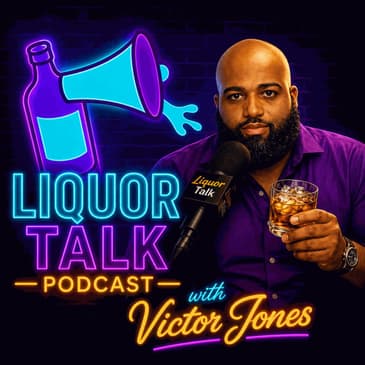

We are only three episodes away from 400. Hope you got your gin and juice ready for this episode. When everyone supports collectively then the vision grows to heights unimaginable. ON this episode of Liquor Talk, Victor Jones engages with community advocate Camille Washington, exploring her journey and the impact of her education at FAMU on her identity. They discuss the importance of recognizing and valuing black culture and art, the need for collective growth, and the challenges faced by black artists in gaining recognition and support. The conversation emphasizes the significance of investing in one's community and the stories that black artists tell, while also addressing the need for more representation of black joy in art. In this conversation, Victor Jones emphasizes the importance of supporting black-owned businesses and the need for intentional spending within the community. He discusses the challenges faced by black entrepreneurs and the necessity of collaboration among creatives. The dialogue also highlights the significance of reviving community connections through events and collective economics, while addressing the current state of black creatives in Tampa and the need for better support and promotion.
[00:00:00] Liquor Talk, another episode starts now. Welcome everybody to another edition of Liquor Talk. I'm your man Victor. I'm here at the Cohatch. Shout out to my friends at the Cohatch. This is episode 397. We are only three episodes away from 400 y'all. So thank you to everybody that's kept it going. Joining me today is Miss Camille Washington, a community advocate and a recent world winner and met her at a networking event and now she's here. That's how it should be done in Tampa.
[00:00:28] You know, so I love y'all but this is how we should be doing. Meet at networking event, set something up. Hey, now you're on Liquor Talk. I appreciate you for coming through. How are you doing today? I'm so good. Thank you so much for having me. I'm super excited to be here. Yes, I'm super excited to have you on and you know, got us some gin. I'm drinking like Snoop Dogg, gin and juice. She got the gin and tonic. You know how it is, y'all.
[00:00:53] All right. So tell me this before art noir, indie noir and everything you're building today. Who was Camille? Tell the people about yourself. Who was you before you started building everything?
[00:01:04] All right. Well, I've been healing hoes since 1987. The icon, the legend. No, I'm joking. I am just someone who absolutely loves her community. I've always been that person who has always advocated for what is right. If I see a problem, then I'm going to fix it.
[00:01:23] I was a theater kid, the arts kid, the complete nerd slash cool kid. I moved around a lot. So always starting over, always making new friends, never met a stranger. And I just grew a big heart, a lot of love and going to FAMU. Yes. That's a big, big part of my life. Yes. Shout out to FAMU. FAMU made me who I am as well. Shout out to the Rattlers.
[00:01:50] You know, I know we're going to pull through, even though we've got a governor that's trying to do everything he can to shut us down and sabotage FAMU. But FAMU's still pulling through, you know? FAMU forever. Yes. FAMU changed how I view being Black. FAMU changed what I thought I would be capable of. They teach excellence. And it was there that I realized I was able to see so many different cultures. I think that's, I fell in love with Black people when I went to FAMU.
[00:02:20] When I saw the dances from Chicago and the fashions from Fort Lauderdale, Miami and bringing that in and then the New Yorkers and the way that we were all striving for excellence, the way that we were all striving to bring home something great and to go back to our hometowns and be the leaders and be the industry leaders and lead with our education without losing our culture. That's where I learned that I didn't have to sacrifice myself to be great.
[00:02:47] And you can't teach, you know, you can't teach us all of that and then expect us not to actually bring action to our lives. So that is a big catalyst for why I do what I do. I believe that we are afforded or should be afforded the opportunities to be great, to do great things. And it doesn't have to be, you know, from a place of trauma or demise. It can really be from Black joy. And that's where I'm at. That's it.
[00:03:14] So the level of Black people is who I started as, who I will continue to be and who I see myself moving with further. I totally feel you. I totally understand that. And I agree with everything you said about FAMU. It would help shaping who you are because FAMU has that excellence. That's how I was able to find my voice when I got to FAMU because when I left St. Pete, I was shy, introverted. But then when I got around Black people from different cultures, like you said, you got people from Miami, Fort Lauderdale, even shy.
[00:03:42] People in Jacksonville, Duval, they went hard. Yes. Duval at every party. At every party, somebody from Duval going to let you know they're there. But then when you talk to them, they cool people. They cool the vibe with, you know. And then you got the D.C. people, got the go-go music. And yes, they big on that. They had that fashion as well. And then what's shocking was, there were people coming from California and the West Coast to be at FAMU. I'm like, I feel bad for you because you're 3,000 miles away from home.
[00:04:12] If they had them, the parties was lit, okay? The Bay Area parties. Everyone had their own culture. Everyone had their own stomping ground. And then we all came together under one umbrella. And that's literally how I structure all of my businesses is the idea that we move as a collective. Yeah. And that's how I have this. That's why I built this platform to have people to come on, talk about their platform, the vibes and stuff. That's kind of how I shaped it. And I wouldn't have shaped it if it hadn't been FAMU.
[00:04:40] Now, have I been back for homecoming? I haven't yet. But I know. I know. I don't like glass crowds people either, so I tend to go off-season. Because I'm not fighting nobody to get my fish plate at top flight. You're not for now. I'm not fighting no crowds. I want to go on that random offset, go see them same professors that's still there, and get my fish plate in peace. So I'm okay with you. I understand. It's okay. Yeah. You know, I do miss the wings at top flight.
[00:05:09] I do miss the wing plate at top flight. Them strong-ass strings. And you got to do it right. The drinks are real. You got to do it the way. Yes, they are. That's a flight where the drinks are real. Yes, they are. They ain't lying when they say them drinks are real. You just need one. You just need one. Just need one. So when I saw people having two and three, I'm like, you people are crazy. What is wrong with y'all? I'm like, I was good on two, but there were people getting three or four. I'm like, Lord.
[00:05:39] It's okay. You just wasn't that OG status yet. You know, you got to be 35 plus to get in there. Well, now they changed. Well, when I was there, they changed you to 21 and up, you know? So they started letting the young people in. Yeah. They started letting the young people in when I was there. So that's how we figured it out, you know? That part. That part. So move forward. What experiences shaped how you see black culture? I mean, I think I hit that on the head with FAMU. But not only my experience at FAMU, my world travels.
[00:06:09] I've been very blessed to travel. Maybe I'm where we're at. Like country 23. Wow. Black people around the world. I've seen black cultures around the world. And I was always so surprised when I got off certain planes to see people who look like me in places that we don't necessarily expect. But black people are everywhere. And when I say the word black, I know we generally discuss that as, you know, the mixed diaspora that's here in America. Because we are mixed race black people. And I do want people to understand that.
[00:06:38] Like the same way that we say a Spanishman and a Frenchman, you wouldn't say they're the same kin. But they are of a certain race group. A Guyanian and a Nigerian. Those are different countries in Africa. So when I get my DNA report, I am a mixed race black person. And that is generally who we are here in America due to the spread of diaspora, the history and all of that. But the culture of that, because we're mixed, we represent so many cultures. So we're talking about your Caribbean diaspora.
[00:07:06] We're talking about the actual African motherlands. But we're also talking about the brown skinned people that were in the base tribes of Asia and Europe and so on and so forth. Black people are everywhere. So when I say I love black people, I mean all black people. And I want to make sure that we're represented, you know, wholeheartedly. So that has really changed, like I said, my personal definition of black. Instead of feeling like I was separate as an American, which I'm very proud to be American.
[00:07:34] Very proud of black Americans. But to see the parts that have poured into what makes us black Americans, the mixture of those cultures on an individual level has been transformative. Yes, it's very transformative because I've even had people from other black ethnicities on the podcast. And they were some good interviews. You definitely learn from a lot of those people. So of all the places you travel to, what's one of the places that you look forward to going back to? Oh, gosh.
[00:08:04] I genuinely like a lot of the countries I've gone to. I will say, I can't lie. Jamaica has been an amazing place. I know everyone's like, oh, I'm going to be in Jamaica. Listen, Jamaica is and has been a very wonderful place to be. The people are very kind. And I happen to, like, have an affinity for Jamaican food. So I can eat the same. You can give me curry goat every day and I'd be happy. So I think that's why I'm so akin to that.
[00:08:34] But there's one place that I absolutely adore. And it's messed up historically. Messed up historically. Yes, historically because it's Portugal. And Portugal started the whole thing. If you guys don't know anything about history, Portugal started it all. Go back and do the history on that. But I went to the Azores Island. And it wasn't for cultural reference of blackness. The island is just absolutely beautiful. The people, again, were very kind. And they have wild hydrangeas there.
[00:09:02] So I really enjoyed Portugal. Spain, not so much. But Portugal, yes. Yeah, I actually heard that Portugal has a lot of black people there. One of the highest amount of black people there outside of Brazil. That's because Portugal started slavery. Wow. Wow. So they are the country that started slavery. Portugal started. Damn. We don't give enough credit. But that is the historic facts. Now, don't go attacking the Portuguese there. We do.
[00:09:30] That was one of those countries where I said I got off the plane and I was surprised everyone looked like me. I got off the plane in Portugal and said, oh my God, that's my cousin. That's my cousin. Am I Portuguese? Do I need the sprick of the Portuguese? I know, right? You know, I kind of felt that way when I found out I'm part of a Brazilian. I went to a couple of Brazil bars. I'm like, damn, a lot of these people look like us. You look Brazilian. You look Brazilian. There's an Afro community in almost every place.
[00:09:57] That was the whole point of the natural effects of the diaspora was that, again, our culture got spread all over the world. So, you know, historically, everybody, you know, everybody out there isn't. Yeah, it is. And thanks to Portugal starting damn slavery. Y'all don't get me taken out. But it is a fact. It is. Don't believe us. Go Google it. Don't believe us. Just go Google it if you don't believe us, you know. But I can believe it because I even saw how racist some of them countries are.
[00:10:27] I even knew that Argentina was a lot of black. There was a lot of black in Argentina before they got whitewashed, you know. And when he says whitewashed, I do want to historically state that there was a bill passed for them to actually eliminate their black people after they released their slaves. So there. And when I say eliminate, you know what that means. So, again, there are countries there. Please look up your history. Please look up why, you know, certain things are certain places. But, again, we are in the year of 2026.
[00:10:54] According to the Gregorian calendar, we don't even know what time it is in real life. Okay, guys. But wherever we are in this position of the sun, I think it is now time for us to try to put some of that trauma behind us and hold the people of today accountable. Yes. Hold the people of today accountable and also show love to the ones that ain't on that bullshit, that they recognize that, yeah, these are some fucked up people, you know, because you got a lot of people, they live in delusional land. They don't realize that, hey, that this happened, you know,
[00:11:23] and they tried to act like it didn't happen. Why do you think we got a governor in Florida trying to outlaw every black book there is? You know, it's crazy. I stayed my hands out of the politics. Not in real life. In real life politics, I'm here for the community. But I let the politicians deal with the politicians, and I make sure that the community holds themselves accountable. And if you don't like who is in office, please remember to go out and vote. That is the most important thing is that we often complain about things, but we've got to vote. And I don't care what race or color you are.
[00:11:52] Please make sure that you go out and vote. Yes, please go out and vote, y'all. Like I said this a hundred times on Look Talk, you heard me talking with the fellas. We spent about damn near 30 minutes talking about politics. So please go out and vote. And go check out the other politician channels, because there are channels with black people. They discuss politics. Go check them out as well. So what is something you had to unlearn in order to become the person you are today?
[00:12:19] Oh, I had to learn or unlearn the idea that everybody who looks like you is for you. Oh, that's a fact. That was the biggest thing for me, that skin color alone wasn't going to make anyone unite with me or understand my vision. No matter how hard I beat it into it, that I was going to get resistance, that I was going to have to fight from inside the house. That was a big thing for me.
[00:12:48] I don't hold any pressures about it because, again, everyone has their own individuality and their own visual self. But, of course, after, again, my experience at BAMU, you know, you kind of come out of that thinking like, we're together. That's the fact. That's the fact.
[00:13:18] But we all were on the same accord that when we left the highest of seven hills, we were going out to fight. That's a fact. And so to get back and realize that, not to any fault of our own, that the people that were going back to save aren't necessarily going to see the vision. You know, they didn't get the college education or they didn't get the experience, not even about education, just life experience, getting the opportunity to travel, that the mindset that we were going to have to come back to, I was going to have to then fight my own people and my own,
[00:13:48] the own education of why I'm even doing what I'm doing to get them rallied up behind me. It's kind of like, you want the leaders, you want the MLKs, you want the Malcolm Xs, but when they appear in front of you, it's so hard for you to recognize that that's what's happening for your community. So that was my biggest thing. You know, I actually agree with that because corporate America taught me that, you know, because there are Black people and think, okay, we're Black. We're going to look out for each other. Shit. They don't do people. They didn't really care about you.
[00:14:17] They didn't really tell you. They didn't really put you on game of, you know, they see you working hard. Hey, here's more work. Hey, I'm thinking they're going to see a hard, young working brother working hard. They're going to want to help you up because they know how hard it is. Because like you, like the leaving family, I'm thinking Black on Black, we got our back. But not all Ken folk, not all skin folk are Ken folk, you know. And it's true, but I do not place blame on the community for that.
[00:14:45] That is the effects of the crabs in the bucket mentality. So as long as the idea is, is that there's only two spots for minority representation, I'm now not going to be able to lift you up because there's only two spots. So if I lift you up, I'm gonna get kicked out. That's the whole bucket. So we just kick that over completely and realize that it's not just two spots. I'm in the business of flooding systems. If the system isn't working for you, the reason, how can you break a system? You flood it.
[00:15:14] That's how you break it down. So, you know, the one to two spots, that's not going to make any noise. But if you tell me that there's a grant out there for a small business, instead of we thinking it's going to be one or two, the way that we guarantee that all those spots are taken is if we flood the system. That is how that works. So I'm here to not un-gate-keep everything. I want it all open. I want all the doors open for everybody. And I'm willing to take the good and the bad in order to disrupt the system. Yes, I think we need more system disruptors as well,
[00:15:43] because so many people are just okay with the status quo where it is. But, you know, that's what I love about our generation. It's like you have a lot of people who are asking questions why. And hell, even the generation coming behind us, they got technology and they trying to change things, you know? So shout out to everybody who's out here trying to change the system. That part. And make sure that you look back to the younger generation, at least the one behind you. I look up to the ones that are in front of me. It's a little bit difficult.
[00:16:12] But as far as pouring back into the community behind us, the children are the future. Hold on, I could say that. So we want to teach them that you can reach up, that you can pull up. So I do a lot of my work for and with younger creatives. They call me muggle or auntie, honey. They're going to know who it is. But I'm happy to do that because I know that as I'm running out here with this machete, they're going to be right up front behind me. Right. So I need, you know, that push to come forward.
[00:16:37] So I'm very excited about what our youth and our young creatives are actually doing out here to change the world with technology. Yes, it's very exciting as well, you know? And also, I realize I'm getting to that point now. I might need to start back, start giving back, start looking out as big bro or the OG now. Well, I'm excited. Everybody will remember where they're supposed to be. If you are in the 40 plus, you are exactly at auntie and auntie status. We are the new young adults. Adulthood starts right there at 40, all right?
[00:17:07] So make it work. Make it work. Yes, we definitely got to make it work. Ladies and gentlemen, this is Liquor Talk. The more you drink, the better we sound. Cheers, y'all. So what, besides the gin and tonic, which was your request, by the way, what else do you like to drink when you hit the bar? Gin and tonic is like one of my new favorites, to be honest with you, because I'm a retired drinker. I can't drink anymore. I know what every liquor tastes like, every combination. But outside of that, I will say I'm a classic old-fashioned girl.
[00:17:37] I'm good on a little rye, a little whiskey, a little smoke, a little cherry, a little bitters. You know, a little boom, boom, boom. Yeah, you know, and listen, shout out to the cigar loungers, because the cigar loungers, they put me on to the smoked old-fashioned. And I learned that not everyone can do it right, you know, because some people, I say a smoked old-fashioned, they ain't got no presentation with it. No, come on. They don't even put the cap on, let the marinade smoke come out right there.
[00:18:05] Man, I'm like, I'm looking at y'all like, you're supposed to have the whole presentation here. You're supposed to let the smoke come out. But it is what it is. So sometimes you just got to do it yourself. So going back to Black art, why is Black art so important? And why do some people take Black art for granted? Oh, Chile. Black art is important. One, because it's our stories. It is our expression of ourself and our lived experience.
[00:18:34] So, and I'm diligently trying to get Black artists to paint outside of their trauma, outside of our culture, just through our eyes of Blackness, because that's really what I want to see, the perspective of the world from Black people. But I still want, you know, our heartfelt experiences and so on and so forth. But it's important because, like I said, this is how we tell our stories. This is how we capture. This is our time marker. So if we don't put value into it, there won't be value later on. And as we can tell, there was a lot of great value in Black art.
[00:19:04] Historically, it's in museums around the world. So we just have to remember how valuable our perspective is and why our perspective is intrinsically different than everyone else. So I encourage you to purchase some Black art today. What was the second part of that question? And why do we sometimes take Black art for granted? Because some people, they take Black art for granted. And it's like, and people don't realize, it's like Black art is amazing.
[00:19:32] There's a reason people are trying to shut it down or trying to take it from us. So why do people take it for granted? I think, one, we do, as a community, have a tendency to be in such proximity to greatness that it's hard for us to find value. Every family has a comedian. That's what we'd be like, comedy show? My cousin, Wookiee, is hilarious at the family event.
[00:20:00] So we are so talented and so creative and so amazing that we look for validation in our community. And we're like, oh, it's about 12 of y'all in a dozen. There's so many of us that are so talented that it's hard to be a breakout star in our own community. And so when it comes to artists, it's like, oh, my homeboy does this or my cousin does this. And we don't realize that we are literally saturated with so much talent and so much that
[00:20:26] we almost, you know, we miss the mark that we go, oh, it's like we have access to it. It's kind of the back end privilege of the backside of black privilege. The fact that we're so saturated with so much talent that we almost be blind. We become blind to it. And it's hard for us to realize, like I said, the true value of what we have because we're so used to it. Like, oh, the boys outside, they do backflips and they do that. And we think that's just regular activity.
[00:20:53] Comes and behold, you know, that is a gymnastic star. Yeah, that is. That is. And you're like. Yeah. I realize a lot of us, we be sitting, a lot of black people be sleeping on our talents. And it's like, why aren't you marketing yourself? It's like, who the hell is telling these kids, hey, you got talent, go market yourself. You know, we didn't have that in our generation. You know, we didn't have the people to see our talents and try to figure out how to make money from it and teach us how to make money from it. But hey, we learning now.
[00:21:22] And social media is a big thing now, too. So now you do see what you're seeing the effects of that and what happened with the creators and the TikTok movement and the dances and all of that. When all of the black dancers on TikTok decided to boycott, there was no more dances. That's what we mean. Everybody got a cousin who, you know, we naturally have it. So again, to rise above what is a natural base of star quality and creativity and then
[00:21:50] to have to break out even further to be seen in your community, it can make it a little bit difficult. But we're working on it. We're doing great. Yes, we're working on it. We got to continue to work on it. So what why do you think some people will see the black culture, but not really want to invest in a black artist? And I'm like, y'all see what we got going on. And you see what we're doing on TikTok. We creating all these movements, but you let someone else of another race do it. Oh, here's the dollars. Here's everything.
[00:22:20] Like, why can't the black folks get those things? Did we not market ourselves? Well, what is it? It is. And it's a hard. Are you ready for a hard truth? Yeah. What's the hard truth? Are you ready for a hard pill to swallow? It's us. It's us. It's us. In order to create those opportunities to where we're not asking people or fighting people or begging people to recognize us, we have to first recognize ourselves. We have to first invest in ourselves.
[00:22:49] I'm presenting a plethora of opportunities. And I'm going to tell you guys this. When I meet people and I say this is the opportunity I have because I look like them, it's not a big enough opportunity. I deal with reverse racism quite frequently. I'm a black woman who owns an art gallery and we're doing festivals, we're doing all the things. But when I present to my people, hey, this is the opportunity, it's like, oh, well, I'm going to hold out for something bigger gets me. I am the big thing. I am the opportunity. I am what you're looking for. And it's us.
[00:23:18] It's actually for us, by us, so that we can control the narrative. As long as we're continuously seeking validation, external validation about our talents, about our skill sets, waiting on someone else to give us a big break. We're not here for that anymore. We can't afford to do that anymore. We have enough degrees. I'm sitting here. We're two graduates. Okay. I had a corporate job. You got a corporate job too, don't you? Right. So we got the jobs with the money, with the things, and we have enough millionaires and
[00:23:48] we have enough people, enough to really get it started again to where we really invest in ourselves. I say this quite often. A lot of people talk about circulating the black dollar, but nobody knows how to draw a circle. If you don't bring it back to the community, then we won't see it. So why are we not generating these opportunities for our young artists? I'm not waiting on somebody else's foundation or somebody else's museum to do that. We need to make sure that those opportunities are in place all the way through.
[00:24:16] If Jay-Z didn't teach y'all nothing, you got to own the whole line. You got to. You got to own the whole line. So I'm looking for people to take accountability and ownership in that so that we can create our own avenues and our own opportunities. And it seems like we only do that when it's in trauma. We only created the chitlin circuit out of, you know, but the chitlin circuit was, we was popping, running around, doing the thing. So trauma seems to motivate us. And that's why I'm trying to get us to shift our motivations, to shift it just not because
[00:24:45] we're being pinned down, but because we actually want to see each other grow. We actually want to take each other up and we want to move as a collective. That's the only way we're going to be able to do that. Yes. Yes. I don't know. I'm here for all that. Because I just don't sometimes understand how trauma, it brings the best out of you, you know, because some artists, they'll put out their best music at the breakout, you know, and it's just, I've never understood that, you know. I can break that down for you. That's an energy thing. Yes. Your sacral chakra is your emotions.
[00:25:14] So black people are literally, we are so creative and we are so talented because of the trauma. How else do you express deep feelings of hurt? How else do you express, we express it through paint, we express it through dance. When a black, y'all know good and well, ain't nothing more captivating than when that little, that little black girl in that little dress on, I don't care if you go to church or not go to church. When that little dancer get up there and start dancing to the gospel music, everybody's heart just be, oh, she just, oh. Yeah.
[00:25:42] Because we all identify with what that is, what that power, what that energy is. And we're screaming for our voice to be heard. But like I said, we have to stop begging people to hear us and just listen to each other and move in a way that makes sense for us. Because the system isn't built for us. So I'm not trying to assimilate to that system. I'm trying to either break that system or at least get ourselves organized and create a system that works for us.
[00:26:09] Yes, we got to definitely create a system that creates for us. And which leads us to my next question is, what stories are black artists telling that mainstream institutions aren't telling? Because I feel like we're telling it all in the mainstream society. They trying to shut us up. Yeah. Because it's not a good story. It's not good for marketing and PR. OK, America just turned 250 years old. They're trying to move forward in the conversation. Yeah.
[00:26:35] But yet they keep forgetting on the backs of what people built America, you know. I don't think, see, and that's why I say I don't think there's a forgot. Like, that's not the case. I don't think they forgot. There is an intentional attempt to erase so that it's not the conversation. And I get it. Some people are coming from the idea that if we don't teach these things, then it won't be the precedence of thought.
[00:27:02] But I'm like, we teach every other variation of traumatic history. So we can put it in the microcosm and then we can go ahead and move forward. It shouldn't be erased. It should be learned from so that we understand why we're doing what we're doing. And if I dare, I say we are in a scope of time that people don't really realize. So if slavery took effects of 400 years plus Jim Crow plus everything else, think about that on the generations of people. I said 400 years.
[00:27:29] So we're looking at 600 years plus 800 years of a mentality of generations of people. We are not but about 150 years outside of that. If so. So the mindset of a full people and generation has to change. We're very early on in the mindset of growth and change and acceptability in those things. And we've done a few years. If you guys really do your history, there was a little time period between Jim Crow and slavery where black people were thriving. That's your black Wall Street job. Yeah. And so it got bombed.
[00:27:59] And it got bombed for a reason. I will say. Bombed, flooded, everything. For a reason. If let's just imagine, let's just let's just take it. I'm going to play the devil's advocate here. If I had imported a group of people here and they started breeding, which was important. Breeding. We stopped. We stopped importing slaves well before the end of the slave trade because we were actually breeding. We were having babies. So we were just born here. You're doing the things, which is a great business model, by the way.
[00:28:27] So for building a country. So you do all of that and then you stop the end of that. And then you have a group of people who then need to figure out what's going on, what to do and how to assimilate again into a system that was not built for them. And we're not talking about I don't think people really realize. The. The countries that colonized here in America were already far fetched. They had guns. They were in dresses. They were all the things they brought people over who were in a gather hunting mentality, a warring mentality.
[00:28:57] They were not in the same realm of things. So you have a big gap of education and assimilation to a society that was never meant for you. So we're in the effects of that. It doesn't go away. We're going to be in the mental effects and the after effects of that for up to the next thousands of years. The flow of black people in our growth of that is literally just beginning. We just got our first black president. Then I just tell you I was 250. So we are in the scope of first. We still have Mitzi Copeland.
[00:29:27] She was the first in black. You get what I'm saying? Like we are in the beginning stages of what that change looks like. So I can't judge, you know, our chapter one to our chapter 20. I'm imagining at the end of chapter 20, we will be Wakanda. OK, I'm here. I got it on the lip. We're going to do the things. But in history right now, this is where we are. So no matter if time is fleeting, remember that you are in the time of now and you have to ask yourself, where am I going to be in the scope of history? Did I fight on the right side?
[00:29:57] And we have to, like I said, take full accountability for no one's going to come save us because they weren't trying to save us to begin with. So we have to look to ourselves to say this is what we're going to do. Yes, that's right, because nobody's going to come save you, you know. No, not some rich billionaire that's going to come save you, you know. Nobody's come to save you, you know. We got to get it on our own and, you know, make it happen. So do you feel like there's pressure on black artists to make their work more comfortable for other audiences?
[00:30:25] And if that's the case, then why we got us to do that, you know, because I'm like, I'm like, fuck whoever don't support. I'm here for the ones that support. Let's care to the ones that are supporting us. But some black artists, it seems like they try to cater to other artists and try to make them make other people feel comfortable, you know. Because they're trying to sell that work. We live in capitalistic America. As long as people are paying money for things, we're going to curtail that to make the money.
[00:30:55] Your personal pieces and passions, yeah, we're going to keep that. Private collectors, things of that nature. That's why it's so important for black people to become art collectors so that we can collect the work that the artists genuinely want to sell versus commercializing themselves. But that's a business move. That has nothing to do with race. That's every business has to curtail to the audience in which it is actually catering to. And as long as we don't have a lot of black collectors and a lot of black people buying art, then I'm going to have to cater to who's buying art.
[00:31:24] I'm going to have to maneuver myself in that direction. And that's why we need to, again, flood the system. I need more developers. I need more than just my shea butter businesses and waste beads. I need industry leaders so that we can make industry change. And we are on the way to that. But it's just taking time. And also, like I said, when the black artists also start to draw their creativity, not necessarily from trauma, because I'm a very joyous person. I'm a huge art collector, by the way.
[00:31:53] I have over 300 pieces in storage in my house, everywhere. I tend to focus on art that I don't necessarily want the slave masterpiece in my living room. But I want to see more joy. I want to see more of not so much, like I said, of our trauma side. I want to see black joy. And I want to be able to purchase black joy. But when I go seeking art from my community, it generally does come from a very hurt place.
[00:32:22] So I think as we change our inside feelings and we start to show more appreciation and we support, the art itself will change. Yes. And the flow will change. Yes, we need more art with black people having joy and stuff. Just living life. Yeah, instead of the reminders of our traumas and stuff, the traumas that we've had to go seek a therapist for, we need more art that shows the joy.
[00:32:45] So do you think black people sometimes support black culture without their wallet, more with their applause rather than their wallets? Because I know that is a recurring theme. I know it's with black people. It's like, you know, I appreciate the applause and stuff, but where them dollars at, you know? Very true. Again, that mentality is hard.
[00:33:10] We were systematically trained to believe that things that came from us were second rate. So when we did have segregation, you know, and to be only able to afford things that were from our black vendors, they couldn't get quality supplies. They couldn't, you know, their lack of access to certain things put a damper on how we feel about black business. And black business would be second rate. At this point in time, black business is just black business. And we need to support black business as it is black business.
[00:33:39] We're doing the things we're investing. It's not, you know, it's not far-fetched from or detached from our historic space. But we do need those dollars. And I need to know, or I want to share with you all that where you put your money is just as equal to you going out to vote. We talked about voting earlier. Your vote is for a person. But every time you pay somebody, you are voting for that person.
[00:34:07] So when you don't choose a black vendor, you're voting for somebody else. You've got to put your dollars where it actually is going to count. Because you know that these small businesses are not, you know, big box companies. They're families. They got daughters. They got the same thing that you got. They got a dance recital. You're not putting your dollar into a big corporation. You're putting your dollar into a family who wants to do better for their family.
[00:34:32] So if we're not going to support our community in that way, then again, it does a disservice to us. Now, is it convenient to shop black? We're not there yet. That's what I mean by the scope of time. It's not like you're going to have a bunch of black-owned businesses in your neighborhood, especially if you done moved out the hood. You know, you've got a Publix and a Ross, so it's not going to be convenient for you to shop black. So you have to be intentional. You have to go seek out. My dentist is 45 minutes away.
[00:35:00] My veterinarian is an hour over the bridge because it's black veterinarian in St. Pete. So it's not convenient. It is not going to be easy. But it must be intentional if we are going to move forward as a community. So put your dollars where your mouth is. Go find that black toothbrush. We got it now. We got toilet paper. We got the things. So where we thought we were behind, we are catching up with products and services. I got a lady who makes fresh bread.
[00:35:29] I go get that fresh bread from that black lady as soon as I found her. Why would I buy bread anywhere else? It doesn't make it any convenient, but it's worth it because I'm going to say what I'm going to do, and then I'm going to do that. So, again, I ask us to not just say we're shopping black. Make it accountable. Make it a mission. Make it a part of your daily mission. Shop three times a month, whatever it looks like for you. But try to replace your essentials, your basic needs with black businesses because you're going to spend the money anyway. Right.
[00:35:58] You're going to spend the money anyway. It's not. It might be a little bit more only because that business doesn't have all the opportunities. We don't have big manufacturing stores. So, yeah, it might be an $8 bar. So, I know you can get that $2 bar of zest from the Dollar Tree. But this woman that made this good handmade soap and she cut it herself and it's probably going to be the best thing that you put on your skin. And if I put a Louis Vuitton stamp on that on zest, you'll pay $8.
[00:36:26] But if I give you a handmade bar of soap from somebody in their home and I tell you it's $8, you tell me it's too much. So, we really have to change how we value our own products, how we value our own businesses, and then we'll see a change. Yes, we definitely do. And also, I don't say we also need to be supporting our own black creators. You see somebody here that's producing content.
[00:36:49] Hey, how can I support them or how can I collaborate with them instead of looking at them as competition or trying to find something about them to try to knock them down, you know, try to come up with an excuse of why you can't do it, you know. Because those things get annoying and it's like us black people, it's not like we'll make an excuse to not support each other, but we'll go support someone else. And that shit got to change, you know. It does. But the mentality has to change. Like I said, we were trained to think that all things black were second rate. It's literally a mentality.
[00:37:19] So, we can't be mad at those who haven't woken up yet. We can only invite them to drink. And I find that if you just keep pushing positivity, that we will be able to make a change. Because when we get upset about it, you know, it just puts a bad taste. So, I always say just meet people with a smile. If they don't support this time, that's perfectly fine because guess what? You keep pushing, you keep moving, and next thing you know, it'll be that same thing. Oh, how do I get on? What did it say? Kanye said, stack your money up.
[00:37:48] And then get on. So, it'll circle back around. And we pray that the people who do make it up into those seats, again, that we don't have heavy hearts. Because those same people who got on your nerves, those same people who didn't do episode one through 400, are going to be right there at 600. And the goal is that we keep you up until 600, to the 1,000, so that it does. But again, creating value, allowing us to realize that there is value in the beginning. There is value in the building stages.
[00:38:16] And you want to be working with people as they're on their way up. Because there is a whole bunch of people who knew Oprah wasn't Oprah, and then Oprah became Oprah. And now y'all looking like, well, I want to talk to Oprah. Same thing. Everyone's always on a building mission. So, if we can build together, what is the proverb? If you want to go fast, go alone. If you want to go far, go together. I plan on going far. So, let's support each other. Yeah, I'm trying to go far, too. That's why we are around here, networking, trying to collaborate with people, you know, because that's the goal, to go far.
[00:38:46] Now, one business question. Do you think Black entrepreneurs sometimes try to feel guilty for wanting to make money from something that benefits for the community? Say that for me again. Do you think sometimes Black entrepreneurs sometimes will feel guilty for wanting to make money from something that benefits the Black community? And it's like, I feel like they shouldn't because at the end of the day, they got to make a living, too, you know? They should. So, I'm dealing with this right now. So, I think there should be a caveat.
[00:39:15] So, for instance, I'm throwing a free festival. There are no vendor fees. There are no tickets. So, thus far, there is no money actually being exchanged. That means everyone who's participating is donating their time. And I'm very valued for that. Now, did I get a whole bunch of people ask me if there was paid spots? Absolutely. And when I told them there weren't any paid opportunities because there was no money being exchanged, again, the heart space was, oh, well, I have to eat. I understand that. Everyone do got to eat.
[00:39:42] But if we don't sometimes get together to build things to create larger opportunities, then it won't be the trickle-down effect. So, do you need to be able to have discernment of when something is aligned with your business and with the community? Yes. And we also, as people who are doing things for the community, we have to be okay when people say that they got to eat. It's okay. We're all in different levels.
[00:40:08] There's a moment where you're in a hustler mentality and you can't afford to do anything free. Cool. I can't take that personal because I know what it's like to know that you need to eat and do the thing. So, everyone has to take into account the curators, the community leaders, and everything else on where people are in their business, where people are in your ask, where people are just in life. And then no one take hard feelings because business is going to be business.
[00:40:33] And just because you said, no, this time doesn't mean I'm going to lose love or not circle back around as long as everyone has a mutual understanding that this just wasn't the time for that. But there shouldn't be an expectation. Now, what I will tell you is that people be out here doing the community events and then don't want to bring no community. You got to bring some, you got to put some effort into the community as well. You can't just show up and reap the benefits. Yeah, you got to like post on social media. You got to do something. Do something to help the people out, you know.
[00:41:03] Do something. Contribute to the party, you know, because I remember back in the days, I tell people it's free to come through. Bring something. Bring something. People don't be bringing something. I'm like, bro, I told you to bring something, you know. My goodness. It's like we lost. I will say this. As the black community, I love us for real. But this new generation, and I will say it's us. It's us. Because we just got here. So, we don't know the power of the community cookout. This is what I call real collective economics.
[00:41:33] Back in the day, everybody would get together at somebody's house for the summer cookout, right? And that means what that really meant. Somebody would always bring something. Somebody, you know, they bring it. Somebody's going to host it through the house. Somebody's going to bring the liquor. Somebody's going to bring the car. Somebody's going to bring the dominoes. Somebody's going to bring the chicken. Somebody's going to bring the beans. Somebody's going to bring the thing. So, then everybody comes together. Now, in that particular evening, all the kids come. The hot dogs. Everybody. Your family. The cousins. Don't even be your family. The whole thing.
[00:42:01] That is the one night that we think like, oh, yeah, that was just a cookout. But really, it was five single moms not having to cook that day. It was parents not having to find babysitters because the teenagers would go watch the little kids so that they could at least have an adult night. Y'all remember being down in the basements or wherever it was while your family was up? That was them having a break because they nine to five was knocking them down. And it was the one time that they actually got to have community. So, it wasn't about who was on the grill. It wasn't the cookout itself.
[00:42:30] It was a community. Just about us coming together. Coming together. Hanging out. Creating community and also creating community relief. That created economic relief. It created time relief. It created a safe place for children and so on and so forth. And now we're of that age. But you know what? The funny part is the housing market went up, didn't it? How many of us actually have homes to host the cookouts in?
[00:42:56] We don't think about how the economy changes our culture and our ability to get together and do things. Now, it does. That does. But I will give it to certain people. You know, there are some groups I've hung out with. You know, we got together at people's apartments. You know, we're still doing it. We're still making it happen. You know, that kid. I remember that feeling, though. Yeah, I remember that feeling. Backyard and somebody had the whole ground pool. And, you know, the kids was outside. You know, wasn't nobody watching them. We still have.
[00:43:26] We're at that stage now to where it is our responsibility to be housing those things. We got our friends. They got kids. They got the thing. So just continuing to build community, even in such a hard economy. So it's like I said, the way that Black people and Black culture really did things, we are truly being affected by the changes in our economy and the changes in how we have been navigating in these silos, separation, social media, how we're connecting. We're affected by all of that.
[00:43:52] So it's like I said, I don't necessarily take our lack of support as a big oomph to the face. I think it's more so, like I said, just a lack of organization, a lack of structure and based on the pressures of the system that we have on us right now. But we can come out on top. We can. We just make a decision. We just make a decision right now. Everybody pledge right now. Host the cookout. Yes, host the cookout, especially on football season coming up. Hey, have the game nights and stuff.
[00:44:19] Hey, whether it's a cookout or game night, everybody going to the space, everybody going to Uno or everybody play Domino's. Or my video game people, let's get on the video games or whatever. You know, let's do more of those things, you know. Now, let's deal with our community, the city we call home, Tampa, Florida, Tampa Bay. Yes, shout out to Tampa Bay, you know. And shout out to all the people who are from Tampa Bay that have been on the Liquor Talk. I'm going to try to get more of y'all on because, hey, you know, I need y'all. I definitely need y'all.
[00:44:48] So how would you describe the Tampa Bay Black creative community right now? What is your thoughts to the Tampa Bay Black creative community? There is a lot of stuff actually going on in the city. It's part of the reason why it goes so hard is because there are some creatives that have held down events across Tampa Bay post-COVID, beyond. They started and they're still going and they deserve their flowers.
[00:45:15] And then there's new creators that, you know, bringing different things and different events to Tampa that we're not necessarily seeing. You know, they're traveling, they're bringing certain things back. And it's hard for them to get, you know, like full city support, even though they are the thing that is actually like making what is happening in the Tampa Bay area happen. And then I see, you know, those creatives, their events being mimicked, you know, on larger scales. And I'm like, there was someone already doing this and you could have just paid them to do it. Right.
[00:45:45] But we have so many like amazing grassroots things, fully supported things. We got our own, our own, what I call our own rolling loud. We have loud on seventh, which is an amazing hip hop festival that H does. We've got Rebel World, where our fashion festival that happened. We've got Rock the Block that happens in Juneteenth. We've got Big Fest for National Black Business Month. We've got things that are happening, Art Raffle. We've got AFTAs with Asia. We've got DJ Daddy Love just started a series called Timeless.
[00:46:15] Like there are so many things that are happening in our city. Oh, and shout out to like the older creators. We had Smoking Words. We've got with Noah Cain, which is nationally acclaimed. We've got Rhapsody Suites that happens at Seventh. Like there's so many dope art things that are happening. Trap Orchestra was here at home base. Like those things are happening here in Tampa. And I don't feel like the community really knows that they have such innovative and ingenued ideas that are happening here. They think they have to travel out to Atlanta.
[00:46:44] They think they have to travel to Miami to have cool stuff. And I'm like, we got it here in Tampa. You just got to look a little bit harder because it's not being publicized. It's not being pushed out. But that underground creative scene is crazy. Open mics everywhere. Markets everywhere that are for us, being supported by us. So you just got to tap into the community a little bit and you'll find exactly what you're looking for. Yes. Yeah. Yeah. Definitely tap into the community of Tampa. We'll definitely find it. So where do you feel like Tampa is failing Black creatives?
[00:47:14] Because we know the word isn't really getting out that much. So where else do you think Tampa is failing Black creatives? In promotion and financial support. There are opportunities that are being presented that are not being given to the people who are here. And I can say that wholeheartedly from art projects and mural projects that are being put on by the city. And when you go to city council, they say, well, we don't have any Black artists.
[00:47:41] But I'm sitting with a group chat of over 38 Black artists that are ready and willing to do things. So I find that I push to make and create opportunities where people just aren't seeking. We're failing the Black creatives because we're not looking for them. We just assume that we don't have them. And that's the natural assumption, especially for people who are actually from Tampa. Because the implants and the imports are doing it. Because it's not your friend on social media. It's not someone you're connected to. You generally think it's not happening.
[00:48:10] But there's so many beautiful Black people who have come to make Tampa home. And they are doing the things that you're seeking outside. So again, bridging that gap between our native Tampanians and our out-of-town or what we call our transport Tampanians in the Black community and allowing us to really come together and support our creatives and give us a fighting chance to be seen. I think that's what we need to do. And again, creating more opportunities.
[00:48:34] So if you own a building, if you, you know, where we have those pockets of, you know, I run into people at Cigar Lounge and they be like, oh yeah, I own that building on 3rd. How many Black artists have we put in your building? That's what I'm asking those questions. Because we do have real estate here and we do have ownership here. And it's just about bridging that gap between the people who have the things and the Black creatives that are doing the things. Yes. Yeah, we definitely got to bridge those gaps as well.
[00:49:01] So do you feel like local creatives are supporting each other enough? Because personally, I feel like they're not. But some may be, but I feel like not enough of us are. I mean, you're always going to have cliques in every city. So people are going to support whatever friend circle or friend group they have. There's a huge circuit of those who went to USF. Like I said, it just kind of depends on, you know, who you grew up with, what's going on. That does happen here.
[00:49:27] But I have come to see a lot of actual internal support. I can't say that I don't. I think it's in certain niches, though. Like if you're an artist, you can get other artists to support. If you're a musician, you might be able to get other musicians to support. But cross-industry support, that's missing. Getting, you know, the hip-hop community to support the R&B community and the thing, you know, like getting the cross and the course cross the bridge, too. The St. Pete people, the Tampa people, Tampa people.
[00:49:56] I know it's a 45-minute drive. It's just a little bit of gas. Yeah, listen, like I said, I lived in it. Listen, I grew up here. So it's like I know people from St. Pete are like, oh, I'm not getting on the bridge. I'm like, bro, come on. We have to. We have to. We got to put the damn gas to your car. Come on and support, you know. You got to do the things. It's got to be, you know, it's got to be real support so that we can create that, you know, like I said, that genuine community. I mean, no one should be having shows and they're not being supported.
[00:50:23] But also there's a lack of communication amongst the creatives. It's hard to get everybody together because everybody wants to get their thing off the ground. But if everyone's hosting something on the same night, you're spreading the community thin. It's not a whole bunch of, I mean, it's a whole bunch of us, but there's not enough of us to where the community can be spread thin because they're going to be supporters. So if we can get together and organize and say, hey, we know this is going on and we know this is going on and start to really promote it as a circuit that this is the experience,
[00:50:53] the collective of Black Tampa. This is what's happening. So I'm trying to do that now with the Indian Noir Market and allowing for a site and an app that really, you know, lets us know what's going on. On the underground scene, especially when people are coming in from out of town, it's always, well, where do I go? You guys see it on the, what is it? Our Tampa page and the Black Tampa page. What's going on tonight? And you know what I'm saying? Five things and I'm saying five venues. But the venues that are being promoted are great.
[00:51:20] But that same night, I've got 12 younger creators that are putting on fashion shows and putting on art shows and putting on things that nobody's, like I said, nobody's talking about on the mainstream of things. So we've got to bridge the generation gap. Older people have to support the younger people. And then the younger people, we there to support, but y'all got to listen. Y'all don't, we show up and then y'all don't listen. What is that? What is that, Tampa? What is that? Right. Make it make sense. You got to give some give and take here.
[00:51:48] We got to compromise and collaborate, man. Come on. But I have seen the scene of collaboration really pick up in the last few years of getting people who are like showing up and showing out and it being cross-cultural. That's also a thing. A lot of the support is cross-cultural. I do want us to, you know, really try to tap in and support as much of our Black community as possible. But again, diversifying our audience. I want people to be excited about Black culture.
[00:52:16] The same way that we excited about going to the Taquito's and the Taco Tuesday, I want people to be excited about there's a Black artist showcase because they absolutely love what we're producing. They love our sound. It's like we know that people are in love with Black culture, but we've made it to where we want to create safe spaces that it kind of has hindered us because we're like, oh, where do we get to just be ourselves? But when we lock ourselves in that box, we keep other people out. And then that affects our ability to make money and do things because how often do you see something and be like, oh, that's a Black event?
[00:52:44] And then it means that I can't go or I can't show up. But that's not how I feel about Samba with me and Keela. I'm ready to do-do-do-do-do-do-do-do-do. Right. I want people to be that excited about our culture as well. Yes, we do. We got to stop being the mean girls. And we have to let people enjoy our culture. And yes, there are avenues where we need to have things that are our own, but we've got to make sure that we're diversified when it comes to the dollar because grand opening, grand closing, it's so hard for us to be able to sustainably support ourselves.
[00:53:14] We've got to let people be excited about our culture. Yes, we got to let people be excited about our culture as well and let the right people in as well. And all you creatives out there in Tampa, come on through. I'm looking to interview people. I'm looking to collaborate, looking to talk to people. So what does Tampa Bay need to stop doing if we really want Black creatives to thrive here? What's something you feel like we need to stop doing if we want Black creatives to thrive here and stuff saying, oh, we got to go to Atlanta. We got to go to Miami. We might need to go to LA or we need to go elsewhere.
[00:53:43] Invest in your Black creatives. Invest in the actual events. If you go to the events, guess what? The events will get better. Do you know how hard it is to throw in a fit? And only your budget is based on tickets and only 10 people buy tickets. Yeah, if you show up to that event, it's going to be janky because there was no budget. There was no money. You have to buy the tickets. One thing Tampa Bay need to stop is last minute buying these tickets, though. Now, let me tell you something about that. It is hard to plan an event. If there ain't nothing coming in up front.
[00:54:13] And Tampa likes to wait until the last day to reserve a spot or a ticket and then expect the event to be off the chain. We just got your money yesterday. How was I supposed to buy something? So please, if you guys can, if a young creative is putting out something or Black creative is putting out something, get them tickets early. Secure your spot early. Don't wait for something that could be better. That is what you're doing that night. You ain't doing nothing. You doing that. You're going to that open mic. You're going to that thing.
[00:54:43] Those are your plans. So let's plan in advance. The same way you plan for that vacation, go ahead and plan to be at these events. Yes. Yes, we need to plan to be at events. And also, like I said, once I know about it, I'm buying tickets. I will definitely pull up. And I need y'all to be doing the same thing as well because we got to be supporting one another because that's how we keep things going. It shouldn't take for other people from other cities to come here and like, oh, y'all don't support one another. No, we do.
[00:55:13] We just got to get out of that. And to my fellow St. Pete people, we got to do better. You know, we all have to do better. We all right. We're getting there. Yes, we are. We are getting there. Last thing. What is something about Black culture that you think we need to have an uncomfortable conversation about? Internal racism. Internal racism. Oh, that's interesting. It is.
[00:55:41] I told you guys, it's a very interesting subject. Like I said, our mentality, we carry the same mentality that we are. Our business is second rate. I don't. That's why I support a Black business. Why don't you support a Black business? Because what? Because they got one bad experience. Do you know how many times I've gone to McDonald's and them fries is nasty? And I go back hoping that there'll be that one day that them fries be busting like I remember. It take about 18 trips. See, I just stopped going to McDonald's altogether.
[00:56:09] But there was a time period where nostalgia, you know, they had that legacy. So you have to give Black businesses time to grow. Like I said, in the scope of things, you can't judge someone's chapter 20. You can't judge a Black business the same way that you judge an established business somewhere else. We're not Amazon. Your shipping isn't going to be two days. Now, that doesn't mean the customer service needs to be absolutely ridiculous. But for the most part, people are pretty decent with customer service.
[00:56:38] But sometimes our own people be the demise. I'm a one-person person. I was handling 300 applications. Somebody hit me up and was upset that they didn't get some communications. And I said, well, I'm only one person. And they were like, oh, I thought you had a team. And I was like, even if I did have a team, why would you talk to my team like that? Oh, right. I don't understand. We have a certain genesis of what about us when it comes to customer service. Because Black people, what's the one thing about me? Or us, we're going to know the process.
[00:57:06] We're going to read the fine print when it comes to us getting something back or doing something like that. So we know our community. And then when we turn and do the things, like I said, when we turn that back on us, it makes us a little bit more difficult. I do ask for us to have a little grace when it comes to us and our businesses and our processes. Because, again, it's not like there are a whole bunch of operating procedures. And I'm not saying or giving an excuse to anybody who is lacking. But most of the time, these are people with dreams who decided that they was going to get their LLC paperwork and make them a business.
[00:57:36] But really, it's operations. They're just a fancy hustler that we're trying to move into actual business owners. So I do ask us to value each other, to see us as the first tier rate. I want us to be the first people excited. Like, oh, girl, I got this from a Black-owned business. It makes it that much more valuable that it came from a Black-owned business. I want Black-owned to add value, not take it away. I want it to be a badge of honor.
[00:58:05] And where, like I said, it's like, oh, I got this from this culture. This is amazing. The same way that we're excited about everything else. So I want to put more joy behind us shopping Black. I don't want us to be the ones tearing us down. Because, again, we have to get people excited about what we do and how we do it. Because one thing I know is I don't care who do it. I want to learn how a Black person do it. Yes, always. Always. Always want to learn how a Black person would do it as well. Now, I will say this about Black-owned businesses, though.
[00:58:31] There are places, not everybody, whenever somebody says something negative, that don't mean they're being a hater, you know? Because a lot of... Oh, no, you got to take the constructive criticism. You got to be okay with being held accountable. Because I've seen Black-owned businesses going after creators. Like, oh, why are you talking like this? Man, we just hold you accountable. Because we see that greatness and we want you to be better, you know? Because I know some people, they ain't going to say it. They just not going to come fuck with your business.
[00:58:59] I'm going to say it, you know, if I want you to elevate, you know? Out of love. Some people, you're going to be out of love because you get that random Google review. Like I said, it'd be your own fault. So I understand. It is a very sensitive relationship that we have with each other. And sometimes, y'all got to remember, cross-cultural. We talked about this earlier today. I'm going to give you guys a tad bit of a story. Just a tad bit of a story. So I travel a lot. And my mom doesn't travel. She travels quite a bit. But she doesn't travel to the same places I travel to.
[00:59:28] And so we went to, I went to go drop her off at the hospital. And the guy who was working in the hospital happened to be a man from the islands, right? And so I was giving him my order for my burger. And my mom was just like, oh, he's being so rude. He must not need to be at work. And I said, he's not being rude at all. Because I know the temperament of island people. He was actually being very nice for an island person. I know. He was being kind. That is the kind in there. That was what worked. And he ended up laughing and cutting him with me.
[00:59:57] But my mom wasn't used to that, even as a Black person. Again, she just saw another Black person. What I saw was a Black person of another culture. And I knew enough about that culture to know that his presentation to me was kind for him. And if you hadn't been nowhere in that, you would have taken it wrong in American culture. So I do ask us to be very cognizant.
[01:00:21] And when you go to the Haitian and get the Black rice, the good rice, that culture presentation of customer service is going to be different. If I go to a Jamaican restaurant, the customer presentation is going to be different. We don't have that. They don't have the gravy. She is being – that's the joy of the Jamaican restaurant is being yelled at. So you have to really understand what all and where everyone is coming from and that it's not always going to be the same and that you're not going to expect that same cookie cutter.
[01:00:50] And that's actually something to be celebrated instead of, like I said, demonized for us. You're going to get a multitude of different services from Black people, and we're going to honor that. But hopefully, like I said, at the end of the day, it's good service. It's good business. It's good food. It's good product. It's good. And it's worth it. Because like I said, Amazon get on my nerve all the time. I done paid extra for shipping and ain't get it on time at all. So big businesses do bad business.
[01:01:20] Business does bad business. Good businesses still do bad business. You're never going to be able to please everyone. And if you just so happen to be the person in that crack, have grace, give a blessing, give constructive criticism, and then find peace. So, again, let's work together. We'll elevate each other, and we'll be good. Yes, we got to elevate each other and have that grace because, you know what, these businesses aren't perfect.
[01:01:45] You know, like I said, shout out to the Black-owned businesses because sometimes I'll order from them, and sometimes it'll take a few days for the product to get here, whereas Amazon, it might be here. You might have that prime two day, but, hey, they might not be on time, you know, because, hey, you have some of them delivery drivers who don't speak another your language, and then they get lost, and your package gets lost. So I'm like, motherfuckers. And now you got to call Amazon and bust them out. But, you know, support your Black-owned businesses.
[01:02:13] Let's do more of that in 26 and going forward in 2027. Yes, we do. Yes. So tell me about this festival you got going on. Yes, before we get out of this line, we got to talk to these good artists because the music festival is going to be lit. Speaking about Black business and Black culture and Black everything, so I launched my nonprofit, the Camille Adrian Foundation, so that I could make sure that we were working on a privatized community and collective economics.
[01:02:39] I enjoy being a Black person, and I enjoy being American, and I enjoy helping out my people in the best way that I can. And so with all of the rigmarole around that, I knew that I had to do something that was going to be in a protective space. So like I said, my nonprofit is there to protect us so that we can happily say Black. So I'm running Tampa Bay's two-day National Black Business Month Festival. On day one, we have a River Tower Park takeover. Over 125 businesses for you to shop from. It's family-friendly. We got a kids' zone. We got bounce houses.
[01:03:09] We got a VIP area for the adults. We got the cigar lounges. We got services. We got community resources, hair care, body care, clothing, art, all the things you can think of, food, snacks, everything. Everything that you can think of, I want you to come out here and find you a Black-owned business that you can support, a Black-owned business that's your favorite, your new favorite. And this is for everybody. This is for the community. Like I said, we're diversifying. I want people to be excited about Black culture. And then on day two, we have a music festival with all of your favorite local artists. We have an alternative stage.
[01:03:39] We've got an R&B stage. And we've got a hip-hop stage. We got the big music playlist. So we've got a playlist full of local artists that we're going to be shouting out. DJ Donnie Love. Guest host Queen Bee. We've also got the big business brunch. So if you want to sponsor a business, help a Black business, you can sponsor them into our big business accelerator program. It is a year program for Black businesses to grow and get better and have access to great opportunities through the city and through the county.
[01:04:07] It is the reason why we throw Big Fest to recruit all of our businesses for this program. So you can sponsor a business all year. Like I said, sponsorship is just $100. If you sponsor before Big Fest, you get an invite to the brunch. Hobnob. Do the things. And help us give out our big awards. Our big artist of the year. Our big nonprofit of the year. Our visual artist of the year. So we're doing it big for National Black Business Month.
[01:04:32] If you haven't shopped Black all month, make sure you are in the place August 29th and August 30th. And did I mention it's free? It is free. There are no tickets. There are no nothing. We just want you to come out and support and shop, shop, shop. And listen, listen, listen. Get them streams in. Play that Big Fest music playlist when you're cleaning your house. And help us support these artists. Because sometimes support doesn't always look financial. Sometimes support is free. But we are asking for you to shop. So go ahead and get them $10 ready.
[01:05:02] And support a Black-owned business today. Yes, please do. I'll definitely pull up as well. Y'all go ahead and check it out there. And meet me out there as well if you haven't done so already. Camille, I want to thank you for blessing the liquor soap with your presence. So good. Listen, if you got anybody else you can think of you want to have come on, let me know. If you need me to pull up and do live interviews on the spot, you let me know. I'll do it as well because I'm trying to get out here in this Tampa community, you know.
[01:05:31] Because shout out to everybody that's 3,000 miles away that kept the Liquor Talk going. So, hey, now we got to bring it home. So, Camille, thanks again for coming on Liquor Talk. And thank you to everybody that's tuned in that had a drink with us on this episode, y'all. Until the next episode, keep sipping that liquor. And until the next episode, we have to stay in peace, y'all. See you next time.