

What if you're not always the hero of the story? And what if admitting that doesn't make you a bad person?
In this week's Sunday Seeds, Dr. Carmela Maxell explores the uncomfortable relationship between self-perception, defensiveness, and personal accountability. From cognitive dissonance to the difference between shame and responsibility, this episode challenges us to stop defending our intentions long enough to examine our impact.
Because sometimes you can be right about what happened and still be wrong about how you handled it.
The Sunday Seed: You can be the problem and still be a good person. What matters is what you do when you recognize it.
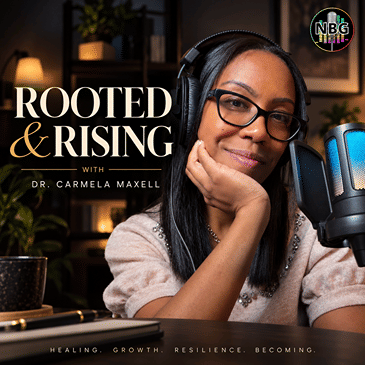
Rooted & Rising with Dr. Carmela Maxell — Not just mental health. About being human.
goodperson: Hey there, beautiful people, and welcome to another Sunday Seeds of Thought on Rooted in Rising with Dr. Carmela Maxwell. Today I want to have a conversation that might make some of us a little uncomfortable. And when I say us, all of us, myself included. Because today's message is something I think we all need to hear from time to time. You can be the problem and still be a good person. Now, before we get started. I already know what some of you are doing. You're thinking about somebody who needs to hear this episode. Your ex, your coworker, your mother-in-law. That friend who somehow manages to be the victim in every single situation. And listen, maybe they do need to hear it. But before you start sending this episode to everybody who's ever gotten on your last nerve, I want you to consider something. What if today's message is actually about you? I know. Nobody likes that question. Because it's much easier to identify problematic behavior in other people than it is to recognize it in ourselves. We can tell you exactly what somebody else did wrong, why they did it, what they should have done differently, and how their behavior reflects some deeply rooted psychological issue. We become experts in everyone else's dysfunction. But when it's our turn to be in the hot seat, suddenly there's context. There's nuance. There's a backstory. There's an explanation. And somehow, we always seem to have a perfectly reasonable justification for why we behave the way that we did. Funny how that works, isn't it? But that's where I want to begin today. Because I think one of the biggest obstacles to personal growth is our inability to tolerate the possibility that sometimes we're the ones who got it wrong. And that doesn't necessarily make us bad people. It makes us human. So let's talk about something I see frequently in human relationships. We tend to judge ourselves by our intentions and other people by their behavior. Think about that for a second. When we say something hurtful, we might respond with, Well, that's not what I meant. But when somebody says something hurtful to us, we don't always extend that same consideration. We focus on what they said, how it made us feel. How they should have known better. And sometimes we decide that their behavior tells us everything we need to know about their character. But here's the thing: your intentions do not erase your impact. You can genuinely love somebody and still hurt them. You can believe you're helping someone and still make them feel inadequate. You can think you're being honest when, in reality, you're being unnecessarily cruel. And you can believe you're protecting yourself while behaving in ways that damage your relationships. Now, I want to be careful here. Someone feeling hurt doesn't automatically mean you've done something wrong. People interpret experiences through their own histories, expectations, and emotional states. But that doesn't mean we should dismiss their experiences simply because we didn't intend to cause harm. Sometimes the most productive response isn't, that's not what I meant. Sometimes it's helped me understand how that affected you. And those two responses can lead to very different conversations. Now let's bring a little psychology into this. There's a concept called cognitive dissonance. Essentially, cognitive dissonance describes the psychological discomfort we can experience when our behaviors, beliefs, or attitudes conflict with one another. For example, let's say you believe you're a compassionate, emotionally intelligent person. You pride yourself on being thoughtful. You believe you treat people fairly. And then somebody tells you that you did something dismissive, inconsiderate, or hurtful. Suddenly you're confronted with information that doesn't align with how you see yourself. And that can be uncomfortable. So what do we sometimes do? We defend ourselves. We explain. We justify. We minimize. We start talking about what the other person did. We bring up something that happened six months ago. And before you know it, a conversation about one specific behavior has turned into a full-blown courtroom proceeding, exhibits A through Z, witness testimony, character references, a PowerPoint presentation, and a closing argument. All because somebody said, Hey, that hurt my feelings. Now, I'm laughing, but think about how often this happens. Sometimes we're so invested in proving that we're good people that we completely miss the opportunity to behave good people in the moment. We become more concerned with defending our character than examining our conduct. And that's a problem. Because personal growth requires us to tolerate discomfort. It requires us to consider information that challenges our understanding of ourselves. And sometimes, It requires us to admit that the version of ourselves we carry around in our heads doesn't perfectly match the version other people experience. That doesn't mean their perception is always correct, but it might mean there's something worth examining. Here's where I think people get stuck. We confuse accountability with shame, and those are not the same thing. Shame tends to focus on the self. It says, I'm a terrible person. Accountability focuses on our behavior and our responsibility for it. It says, I did something that I need to address. That's an important distinction. Because when every mistake becomes evidence that we're fundamentally bad, it becomes incredibly difficult to acknowledge our mistakes. We start protecting ourselves from the emotional discomfort of being wrong. But here's what I want you to understand. You can take responsibility for your behavior without turning that behavior into your entire identity. You can acknowledge that you were selfish in a particular moment without deciding you're a selfish person in every aspect of your life. You can recognize that you were emotionally unavailable in a relationship without concluding that you're incapable of loving somebody. You can admit that you handled a situation poorly without believing you're a failure. And You can apologize without surrendering your dignity. Somewhere along the way, I think we've developed this idea that accountability requires humiliation. That if somebody makes a mistake, they need to be publicly shamed, dragged through the mud, or reminded of their behavior indefinitely. But that's not accountability. Accountability is about recognizing harm, taking appropriate responsibility, and making meaningful changes. A meaningful change requires something more than feeling bad. It requires action. Now the next part is especially important. You can be right about what happened and still be wrong about how you handled it. Let me say that again. You can be absolutely correct about the facts of a situation and still respond in a way that creates unnecessary harm. Maybe somebody disrespected you. Maybe somebody broke a promise. Maybe somebody failed to follow through on something important. Your frustration might be completely justified, but that doesn't automatically justify every response that follows. You can have a legitimate reason to be angry and still say something unnecessarily hurtful. You can have a valid concern and still communicate it in a way that shuts down productive conversation. You can be disappointed in somebody and still treat them unfairly. And here's something I want us to stop doing. Stop using somebody else's behavior as a blanket justification for your own. Well, I only said that because they made me mad. They started it. If they hadn't done what they did, I wouldn't reacted that way. Sound familiar? Now, other people's behavior absolutely influences our emotional responses. But influence is not the same thing as removing responsibility. We still have choices about how we respond. And sometimes two things can be true at once. Somebody else behaved poorly. And so did you. That's not always an easy reality to accept. Because we like clean narratives. We like heroes and villains. We like knowing who was right and who was wrong. But human relationships are rarely that simple. Sometimes, everybody involved has something they need to work on. And recognizing your contribution doesn't mean excusing somebody else's. It simply means taking ownership of the part that belongs to you. Now I want to talk about something else. And this might be where I lose a few people. Sometimes we become so attached to our experience of being wronged that we stop examining the ways we participate in unhealthy patterns. And I wanna make an important distinction. I'm not talking about blaming people for abuse, trauma, discrimination, or mistreatment. People are not responsible for the harm others choose to inflict on them. I'm talking about the situations where we genuinely have agency, but we avoid examining our own choices because it's easier to focus entirely on what somebody else did. Maybe you keep having the same argument with different people. Maybe you repeatedly find yourself in conflicts where everybody else is supposedly the problem. Maybe people have given you similar feedback over the years, but you've dismissed every single one of them as jealous, insecure, difficult, or overly sensitive. At some point, it might be worth asking yourself a question. What is the common denominator? Now, being the common denominator doesn't automatically mean you're at fault. Sometimes environments are unhealthy. Sometimes people are treated unfairly. And sometimes Repeated experiences reflect circumstances beyond our control. But when similar patterns keep showing up, curiosity can be more useful than defensiveness. What am I contributing? What am I overlooking? What could I do differently? Because here's the thing: you cannot change behavior you refuse to recognize. And if every difficult experience is always somebody else's responsibility, You may be giving away opportunities to exercise your own agency. Now let's get into something that I think is especially relevant today. We live in a time when psychological language is everywhere. Everybody knows about attachment styles. Everybody's talking about triggers. Everybody's discussing trauma responses, emotional regulation, and boundaries. And I actually think increased access to psychological concepts can be a wonderful thing. But there's a difference between understanding psychological terminology and applying that understanding to your own behavior. Knowing why you do something doesn't mean you've done the work to change it. You can recognize that you become defensive during conflict and still become defensive every single time somebody challenges you. You can understand that you struggle with vulnerability and still avoid every emotionally difficult conversation. You can identify unhealthy communication patterns and continue participating in them. Insight is valuable, but insight alone doesn't necessarily produce behavioral change. And this is where accountability becomes important. Because sometimes we use our self-awareness as an explanation rather than a starting point for growth. I'm just avoidantly attached. I have issues. That's my trauma response. And listen. Those experiences can be real and meaningful. But understanding the origins of our behavior doesn't automatically eliminate our responsibility for addressing it. Your history deserves compassion. Your behavior still deserves examination. Both can exist together. And I think that's something we need to talk about more often. So, what does accountability actually look like? I think it begins with the willingness to listen without immediately preparing your defense. And I know that's difficult. Because when somebody tells us we've hurt them, our instinct might be to explain ourselves. But sometimes we need to resist that impulse long enough to understand what they're actually saying. Accountability also means being specific. Instead of saying, I'm sorry you feel that way, you might say, I'm sorry I interrupted you and dismissed what you were trying to tell me. Instead of mistakes were made, you might say, I made a decision that negatively affected you. And instead of saying, that's just how I am, you might ask, is this something I need to work on? Now here's another important part. An apology is not the same thing as repair. You can apologize beautifully and still repeat the same behavior. You can express genuine remorse and still fail to make meaningful changes. Repair requires follow-through, it requires consistency. And sometimes it requires accepting that the other person may need time, distance, or may not want to continue their relationship. Because accountability does not guarantee forgiveness, and forgiveness does not automatically restore trust. That's part of what makes genuine accountability difficult. We have to be willing to do the right thing even when we don't get the outcome we want. So here's what I want you to take today. Stop asking yourself whether you're a good person long enough to ask whether your behavior is doing any good. Because being a good person isn't a permanent title that exempts you from self-examination. It's something reflected in the choices you make, how you treat people, how you respond when you're challenged, how you handle disappointment, how you repair harm, and how willing you are to grow when growth requires you to confront something uncomfortable about yourself. This week, I want you to think about a situation where things didn't go the way you wanted. Maybe it was an argument or a misunderstanding, a relationship that ended badly. And instead of focusing exclusively on what the other person did, ask yourself three questions. First, what part of the situation was actually within my control? Second, is there anything about my response that I would change if I had another opportunity? And third, What can I learn from this experience that might help me show up differently in the future? Not because you're responsible for everything that happens to you, but because taking ownership of your choices is one of the ways you develop greater agency over your life. And listen, you're gonna get things wrong. So am I. We're all gonna have moments when we say something we shouldn't have said, make a decision that we regret, or fail to show up the way that we intended. That's part of being human. But the goal isn't perfection, the goal is growth. And growth requires honesty. Honesty with ourselves. Because sometimes the hardest person to confront is the person staring back at us in the mirror. And sometimes, the most important apology we can make begins with acknowledging something we've spent a long time trying to justify. You can be the problem and still be a good person. But being a good person shouldn't become your excuse for refusing to change. That's your Sunday seed. Until next time, stay rooted in who you are and keep rising into who you're becoming. Take care.