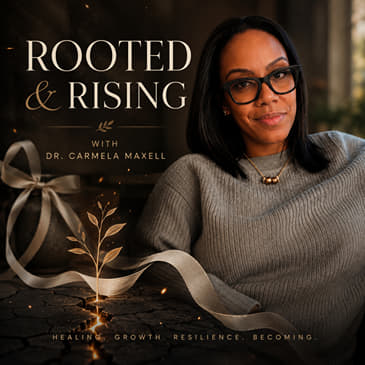
speaker-1: Welcome back, everybody, to another video episode of Rooted and Rising, the podcast where we talk about real things and have real conversations about life experiences and just being human. Today I have an amazing guest with me, ⁓ a dear friend and colleague, Mr. Joe Barcana. Welcome, Joe, to the podcast. Welcome to Rooted and Rising. ⁓ Joe, I am so ⁓ just over the moon. That you're here with me and our audience today, and I can't wait to talk about ⁓ this topic. So Joe.
speaker-0: having me so much, Dr. Max. I really appreciate you. It is a real honor to be here, and I'm very excited to be here. I and I really mean that too.
speaker-1: Thank you so much. Thank you so much. ⁓ and Joe and I, you know, work together ⁓ through ⁓ like the recovery courts and the drug courts and and just this aligned mission on ending mass incarceration. And so we we're gonna zoom into his story today. So Wa ⁓ he is a part of the Washington State Therapeutic Court Alumni Association and the King County Drug Court. ⁓ and today's episode is entitled Healing After Survival, Street Violence, Recovery and Learning to Live Again. So Joe, I would love for you to just tell us a little bit about ⁓ yourself and then we'll sort of dive in. Tell us a little bit about your background, maybe where you grew up, all of those things.
speaker-0: Yeah, so again, my name is Joe Barsana. ⁓ so I do work in the recovery field. I am a Washington State certified peer support specialist, ⁓ recovery coach. I do work at King County Drug Court, which we work with your team very, very closely. You know, your team's outstanding. We love doing the work that we do every single day. ⁓ so you know, that's the work the field that I'm in. I grew up in the Seattle area. ⁓ I was born and raised here. I be pretty much have not left King County my entire life. So ⁓ I've been here, I've stayed here, I'm stuck here. That's kind of a rare thing nowadays because everyone in Seattle is usually from somewhere else. From somewhere else, yeah. Yeah, but I've been here. I went throughout here. ⁓ yeah, that's ⁓ I I do a lot of different hobbies. ⁓ you know, I'm but I'm just Joe Barcana and I'm and I'll again I'm excited to be here because you're one of the ⁓ the very powerful voices when it comes to our local area in recovery and actually the services that that you guys provide to a lot of the folks that we both work with. So just happy to be here again.
speaker-1: I appreciate you so much, Joe, and I can't say that enough. And folks, I am not ever going to address him as just Joe Barcana. Joe, you are just a beacon of of light and hope for so many, and I can't wait for this story ⁓ to be aired. ⁓ I do want to acknowledge ⁓ before we get started that today's conversation is going to include some information about trauma and addiction and violence. ⁓ incarceration and recovery. And so if you do need to take a moment ⁓ to breathe or to step away, please do so. But I want to ⁓ acknowledge that that this is Joe's story and ⁓ we we want to bring this to the surface. We want to talk about this. So I want to start by asking ⁓ you to tell us who who was Joe before recovery.
speaker-0: Joe Barcana before recovery was a very different person. I always talk to I ⁓ one thing about me is ⁓ when you come into my cubicle at work, I have a a huge montage of my booking photos. And I like to show folks when I first who first come into the program that I make sure that they understand that I'm I'm also a King County drug court graduate. So I've been to the program. But yeah, exactly. So but I have those photos and those photos represent who I was, I believe, before. You know, Joe Barcana before, who was out in the streets and doing what he was doing as someone who is significantly damaged, someone who's gone through, you know, a lot of trauma. And the trauma surrounds, you know, a lot of different things and I think a lot of us in recovery have gone through, right? Childhood trauma, ⁓ different things, events that I've gone through. ⁓ the streets that I grew up on, the streets that ⁓ where I lived out in active active addiction were very violent. ⁓ you know, in the pack highway area, the blade in downtown Seattle. So I went through a significant amount of violence, a lot of different things like that. And ⁓ you know, so that was Joe. Joe was just a different person. But at the end of the day, I always think that Joe, who was born Joe Barcana, through my mom and my my my dad is still had that heart, still had that really, you know, ⁓ I would say soft soul that ⁓ but I ended up when I was out in the streets having to change that whole dynamic into something completely different and kind of into a monster to be able to survive. But Joe Barcana, ⁓ before I f Specifically before I mean c recovery, was someone that did what I had to do to get what I needed, right? Because active addiction is absolutely a tornado of disaster and and and unmet needs. And I was someone that was a tornado through the community, right? I victimized our community. I did lots of different crimes. ⁓ a lot a lot of the history of incarceration, being booked into jail, being released from jail. ⁓ I always tell people there's this Joe Barcana and things that I Joe Barcana went through before, typically How my life looked before recovery was Joe Barcelon's is out in the streets. ⁓ you know, I'm doing drugs. I run out of drugs. So what do I do when I run out of drugs? I need to commit some crimes to get drugs. You know, a lot of the times committing crimes, I would get arrested, so I'd be booked in a jail, right? And then ⁓ the judge would say, Yeah, I'm gonna let you out. Right. So and I go and then what would happen? Funny enough.
speaker-1: Get more drugs, yeah.
speaker-0: When they release you from jail, you go right back to the exact same spot that you committed the crimes and the same people you're doing the same thing over and over again. Looped continuously, right? Yeah. There's some periods of time where I'd be incarcerated much, much longer. And then there's some times where I would just be let out. Just to give like the audience an idea, here locally in Seattle and in the kind of the King County area, there's a jail called Score. And I always like to tell this story that Score Jail will release you at two AM. So what they do is they put you in a van
speaker-1: Cycle.
speaker-0: And they drive you up to Pack Highway, which is one of the worst neighborhoods you can ever imagine, and they drop you off at two AM outside of the van on the streets of Pack Highway, right? So and then a lot of people ask themselves, Why would Joe, why would you keep getting in trouble over and over again? Well, I didn't set myself up for success, right? So but again
speaker-1: you do that ⁓ by yourself, I mean right.
speaker-0: Close to impossible. Right. And and I think that's the that's the theme of my life before recovery was someone who just had a bunch of needs that were unmet. A lot of mental health needs that were unmet. ⁓ you know, I grew up ⁓ you know, I I always like to tell people because I think the stigma is really strong. I have real mental health disorders, right? ⁓ and I I think a lot of folks, you know, who are in the recovery, a lot of the men who are the strong men and who are tattoos and right, we don't like to talk about this stuff, but hey. I had some mental health issues. And what I mean by that is I was too depressed to get out of bed. I was too pr I was depressed at a some points where I was hearing voices. ⁓ I had anxiety to the point where I couldn't, you know, I was afraid of pretty much everything. ⁓ just terrified. ⁓ not to the fact that I wouldn't go out and do what I had to do every day, but there was always this dark voice of Of doom and and gloom and things are gonna go wrong and you're gonna negative feedback loop. Right. So that was Joe before recovery. And and it was it wasn't a really great existence. I can say that much. It wasn't a wonderful existence. I I wasn't living amongst ⁓ everyone else the way I should have been. Right. I wasn't participating in the world as a normal human would be because of those mental health disorders. So again, I was that that was Joe. That was Joe before recovery, someone who just who didn't know how to deal with those things. So I dealt with them the only way I knew how, which was drugs and crime and that lifestyle.
speaker-1: Yeah, and it sounds like, you know, through that cycle you you almost learned this kind of forced way of survival, right? 'Cause ⁓ you know, what we do know about how substances work is after a while there is like this physiological need for it. And so after you know, it it starts with this desire perhaps, or something that has happened, whatever the genesis is, and then after a while you just have to keep doing it. And in order to get to that space where you're getting that need met 'cause now we've c sort of created this need, right? We have to do more and more and more and more. And I can't imagine just how maybe even mentally exhausting that must have been.
speaker-0: It is. And the adaptation is really quick. I like to you know, I always like to mention that. Sometimes when when you're someone like me who's been in recovery for quite some time, I'm coming up. I'll have eight years of recovery in October. So yeah. Congratulations. That's the longest amount of recovery I had since I was twelve years old. Right. So the first time I used was when I was around twelve, thirteen years old. So this is the longest I've had since then of of continuous sobriety. But what I like to point out is the adaptation to that lifestyle is very quick, meaning that, you know. A relapse will lead to me back on the streets committing crimes pretty quickly. Like it it happens quickly. You know, first happens, ⁓ you know, I I use drugs, then I throw everything away really quickly, then I c and I change my lifestyle back to that criminal lifestyle very quickly. I had those relapses in the past that r really happened dramatically and quickly and and I became someone I didn't want to become in a matter of like days and a week. ⁓ so but that physiological thing is is real. Right. Once that I always say there's a switch. Once that switch goes on, there's that different Joe in there who has different needs and desires and who someone's going to my entire existence is going to be focused on something negative, right? ⁓ I always tell people, as good as I am today in recovery, I'm ambitious. I have a lot of I have high motor. I like to get things done. I'm very ambitious. I had that same drive, unfortunately, in addiction too. Right. I was out there hustling and grinding and doing everything I could to make sure that I had dollars, to make sure that I had what I need to do. I was out there doing everything I needed to do to keep myself safe, to keep my people safe. ⁓ right. So and so that was unfortunate, right? But that physiological need is real because sometimes you don't notice how quickly it changes to that lifestyle where you it just becomes ⁓ just common nature. That every single thing you're doing feels like breathing, right? Going out committing crimes is breathing. Going out and using is committing. Putting an ⁓ putting a needle in my arm is is is normal, right? I was just a normal thing in a normal day. ⁓ you know, a a an unusual day would be me not g getting loaded, going out and committing crimes, right? But today that's what my life is. Today is ⁓ luckily today, my life is about much, much more, right? A spiritual highness, much more than I ever could get high before.
speaker-1: Yeah, and I think also, you know, with the amazing work that you do and that we do together, ⁓ you know, for for our communities, helping to restore, right? ⁓ Absolutely and and I think that is the beautiful part of of just who you are and where you are. And this is why I'm just I'm so grateful and ⁓ I think our communities are just grateful for for you, Joe. ⁓ what's what circumstances do you think led you to that life?
speaker-0: You know, I think it was a ⁓ I I really think my early childhood experiences, my unmet mental health needs, right? Like, you know, early on when I was I always think about it. I was younger, I always I knew there was something wrong. Like I would wake up terrified. I remember like in the literally it was the seventh grade, I like would miss the bus per I always tell the story. I would miss the bus purposely because I wouldn't want to go to school. I there was something wrong. There was some mental health disorder that was wrong. And then around that same time as when I found substances, and that's when I hell I was like, ⁓ there's the solution. That's what I'm gonna do from now on. But I think that's what led me there is just kind of the growing up with these mental health disorders. ⁓ I had a mom who had significant alcoholism, who had mental mental mental illness, ⁓ you know, and and kind of living in that chaotic environment, right? Fueled the fire a lot as well. But ⁓ you know, I I think that's kind of what led in it, and it's a s I think it's it's gradual, right? Where ⁓ at first I'm using marijuana and then I'm using alcohol and then I'm using ecstasy and then I'm using cocaine, and then I'm using crack cocaine, and then I'm shooting heroin and and but that throughout the time kinda that's how it gradually built up, right? Until ⁓ it maxed out to the most max amount of effects where it kinda brought me down to my knees.
speaker-1: Mm, mm. And we're gonna talk about that bringing you down to your knees part ⁓ and and that shift and what what happened. But I I want to to sort of squ to bring to light and maybe even squash some of the misconceptions about being in constant survival. Right. So when you're in that mindset, whether it is from substance use or you know, or poverty or whatever it is. Many people may have never experienced that. For you and maybe some of the stories that you have encountered like in your time, what does survival mode actually feel like?
speaker-0: Right. And I think that's a really good question about what does survival mode look like? Because also we see it every single day, but seeing it on the streets of Seattle, seeing the tent, seeing the disorder, it's a lot different than living that disorder, right? So waking up in a tent when it's thirty three degrees out in February ⁓ and you're next you're next to you're shoulder to shoulder with seven other people in a four person tent and ⁓ everyone's dope sick, nobody has drugs. ⁓ we haven't showered in ⁓ who knows long, right? That environment is real, it's real dark, it's and it's a it's a savage environment, right? Yeah. ⁓ where you could have your your best friend or your ⁓ you could be in the same living environment as someone that you stabbed them right in the back to get what you need to make sure. ⁓ you know, and that survival, that's what it really looked like. Every single day it felt like waking up doing whatever it took, not really gauging what. risk there are in the in my life, right? There's no gauge of like, ⁓ that's a risk, so I'm not gonna do that risk because it might have some bad consequences. The only risk I ever thought about was like, what's the likelihood of me getting arrested? It wasn't like what's the likelihood of me being a really terrible human being, ⁓ robbing your grandma, right? That that that didn't come into my mind. That moral perception never came across my mind. So that survival every single day, which we see out in the streets, is that what do I need to do to survive? What do I need to steal? What do I need to do? What commit what crime do I need to commit? What do I need to do to make sure that this cycle doesn't get stopped by the police department, by investigators, by detectives, all those different things, right? ⁓ how do I make sure, ⁓ you know, how do I adapt to the changing drug supply, right? ⁓ drug supplies were changing dramatically when I was out there. Fentanyl started coming out of the scene. Yes. Right when I started getting sober and it changed everything. Changed everything, right? And I and I think the survival nowadays is like, how do I survive not only ⁓
speaker-1: Everything ⁓
speaker-0: street life, the crimes, the all those different things that come about. But also how do I medically survive? How do I make sure not to overdose? How do I take care of my my lesions and wounds that are caused by the toxic drug supply? How do I actually you know that survival is is also it's it's terrifying, right? Yeah. ⁓ to to talk to talk about how rough it was out in the streets, it's really easy. But to talk about how sometimes degradating like the the thoughts of like how How dark things were, right? ⁓ you know, I always like to tell people it it the lifestyle wasn't fast and furious and wonderful in like a movie. It was Joe waking up, Joe having a dull needle and having to stab myself several times into the arm to try to find it to try to find a vein, right? Yeah. It is Joe trying to jab a dull needle into my neck because I couldn't find any veins. It's Joe having to go to extreme measures to be able to get high. Right. Yeah. That's what the reality is. The reality isn't just people out and nodding out. The reality also is, right, is the loss of any type of positive relationship you have in your life, the loss of your family members, the loss of respect from the community. And the thing about survival mode too is what shifts, I also think, is that there's this an animalistic instinct that comes out really quickly, I think, when we're in that survival mode. And what it is is out in the streets, right? ⁓ I was t I'm a crisis intervention trainer as well. From ⁓ the the local ⁓ police academy more or less. Thank you. And I tell them about like on typically my day-to-day life, aggressiveness was a a ⁓ natural thing. I dealt in aggressiveness. violence and aggressiveness was something I was very attuned to, very normal. That's how I got what I needed. You're not just out there being very kind to people, they get the drugs you need. I was out there hustling. I was out there hustling, robbing, and being a bully. I was being a ⁓ victimizing people.
speaker-1: Thank you for
speaker-0: robbing people, stealing, doing those things, right? And to you have to shift that need because Joe Barcana is actually a really kind and soft person. But when you're out there, you have to turn that switch. And the longer that you're out there and you're doing those things, ⁓ that shift is ⁓ it's harder to get out of. But I tell police officers, I always tell them, like, if you come at me in an aggressive nature, in a violent nature, you're gonna stack you're gonna you're gonna put up your fists and try to fight me. That's a normal day to day life. I and I'm all about that life out there. But if you came to me, I always tell police officers, if you came to me and said, Joe, I'm really worried about you. Joe, hey, we found you knotted out in the back of a dumpster in federal way, and we had to narc you and you're literally on the ground covered in garbage and we think you're gonna die. ⁓ Joe, that would break down my walls a lot quickly. So what I mean by all of that is that that survival mode is this different type of human nature that I think a lot of us enter when we're out there surviving on the streets. ⁓ you know, and a lot of times there are some really good relationships you ha have out there, some some experiences you've had out there, but survival mode is different. When this when the ship is sinking and it's taken on water, people do things that you would never think they're gonna do to survive, right? And that's I think what it is with addiction.
speaker-1: And I you know, I I I want everyone in the audience to really hear that ⁓ from from that perspective because what I'm sort of unpacking, right, ⁓ not having been in recovery, ⁓ being being a clinician and and treating individuals, I think this is also great information for those who are starting out in the clinical field, wanting to work with individuals who, you know, are are using substances, want to stop using substances. having you know very ⁓ acute mental health ⁓ concerns and disorders. ⁓ we've got to unpack some of that. So what I heard was, you know, that there on the one hand it's about, you know, ⁓ this lack of space, right? So not knowing where you're gonna be, being unhoused, there's that, having to share space ⁓ that and you know my my experience in speaking with a lot of individuals, it's you know you may be able to post up here for a few days if you're lucky. And then you you know you get moved. So then there's that that false sense of security at all times. And then there's this, I need to also meet this this chemical need. And then how do I get it? Right. It's then it becomes like the supply chain, supply and demand, high demand, low supply. And so everyone's gonna sort of fight over, you know, what what is there and who has access to it. And then it's a matter of, okay, but we also have to, you know, pay the piper. Who who's gonna get the money, how are we gonna get the money or the means to to to acquire these? And then you also have to to think about, you know, guarding your supply when you have it. So then it can be very it this the cycle, it just seems very it's very helterskelter. It's very just kind of all over the place. And it is I can imagine and and what I ⁓ what I really think ⁓ the audience should know and what is really important is ⁓ there's a lot of misconceptions like I said. ⁓ It is a real a real issue, a real series of issues, I think, you know, legislatively and politically and socially and ⁓ but but survival mindset, right, I think it takes it takes so much out of you. And I think grace and compassion in understanding that when you don't have much, when you when you're just sort of fighting for that you're fighting to live. With things that could potentially make you die.
speaker-0: Absolutely. Absolutely. Yeah. And you know, and even all those needs that you're trying to meet, right? And the absolute we don't even think about like the absol absolutely like physical biological needs, right? Every single day, how do I eat? Hey, where do I go to the bathroom? Like those are the things that we don't really think about on a daily basis that, you know, why the streets are of are there's so much disorder, right? Why we see people using the restroom out on the sidewalk, right? Because we don't have we don't have we don't have ⁓
speaker-1: How you eat? ⁓ yeah.
speaker-0: resources for folks who are unhoused. And of course, people who are unhoused, they have to use the bathroom and they have to sleep somewhere and they have to eat. Right. So ⁓ it's not very surprising to me that we see what we're seeing unfortunately because of the lack of resources for folks out there. Yeah.
speaker-1: And you know, I think I read something, don't don't quote me, but I think I was I I read this ⁓ quite a few weeks ago about, you know, the the housing crisis just in general, right? Like in King County in the state of Washington and then ⁓ across the board in the United States when it comes to low income housing and then housing for individuals ⁓ who are either ⁓ you know, elderly or ⁓ with children single, ⁓ things like that. And The margin just keeps getting smaller for individuals who ⁓ are using substances and those involved in the carceral system. And what I think drives me absolutely crazy is this idea that, ⁓ you know what, most people need to get off the streets, but where are we sending them when we don't have the means or the resources or we're not taking the time to actually invest
speaker-0: Absolutely.
speaker-1: to help them get off the streets. And and I definitely would love to know your experiences and your thoughts around that. And ⁓ you know, I I'm I'm all about a good action plan, but I know it takes a community, but just sort of let's let's start there.
speaker-0: Yeah. Well of course housing is something that is a very ⁓ specialty of mine. That's what I like to that's what I do in the in the drug core program. I like I work in the housing field, right? So housing's complex, right? It's a very, very, very challenging problem for those of us that are out in the streets. Not only those of us that are out in the streets, but those of us who are in recovery as well. Right. Because stigma is not just a word, it's a real actually thing that happens when you turn a housing application in and you get denied because you have either criminal charges, ⁓ criminal background. You have rental issues, you have credit issues, right? So that could become h historically just very, very complicated to actually turn your life around if you don't have a place to turn your life around in, right? Right. But that's a very difficult thing to do. But of course, what I always tell people is that, right, housing is key to a lot of the stabilization that we do. We know that in drug core, if you do not have housing, the likelihood of you being successful in the program is very unlikely, right, to be successful. You need a stable foundation. You need somewhere to call. safe. You need to have the place where you have dignity to be able to take a shower, reset, have safety, have stabilization, have routine, have all those things that at the end of the day you're trying to build up to where you can actually have a purpose in life. You can't have a purpose in recovery in life if you don't know where you're going to use the bathroom, if you don't know where you're going to sleep that day. Right. So housing is a key component to someone be able to change their life. But it's not the only part, right? I think that's another misconception is that Housing isn't the answer to everything, right? If someone's struggling in active addiction out in the streets, housing is a very key, important first part of it, but it's not the end of it, right? ⁓ making sure that we have wraparound services for people. Because the problem, well, why is all you know, we I get these questions from folks that are, you know, I have friends in the community that they know I work in this field and they say, Well, why isn't any of this stuff working? Well, and why is it not happening? Why is this why is this and that? And I always say it's a very complex problem. That's why. Yes. If anyone tells you that they know how to solve this issue. They're absolutely lying, right? Because it's such a complex issue. And also it's a very expensive issue. It is. Very expensive issue, right? But you know, for me, I know that if I didn't have a stable place to go, I would still be out in the streets, right? I'm just someone different. A lot everyone's recovery journey is different, but I can tell you this much. I'm not when I was out there, Joe Barcelona is not voluntarily walking into a detox or treatment center. Right. I need I needed ⁓ some help with that stabilization. So I went to long term inpatient treatment where I actually had a place, a safe place to go. And that's the most important part. Like the treatment centers that the wonderful partnership we have with you guys is that treatment in itself is not just the wonderful work that the counselors do that the that the ⁓ you know all the peers do that is the ⁓ really important work but also part of it is that you have somewhere to go. Yes. You have somewhere to be. Yes. I have somewhere to be for fifty seven days for sixty days. Yeah. For nine months, right? That's how long it took me to kind of stabilize an inpatient treatment for me. ⁓ but if for example I lived out in the streets and I lived in a tent, we know that tents get swept, things get stolen. So ⁓ right, and you have nowhere to charge your phone. So if you're trying to make it to your doctor's appointments, make it to job app job interviews and all those different things, but you don't have an outlet to charge your phone and you don't have a clean place to take a shower, how likely are you gonna be to be successful in doing those things? Not very likely, right? So it is a very key component. But again, I know there's this big tug of war between housing itself, right? Housing first and all those different models. Housing to me is the most critical point. But we also need to invest and make sure people have the right resources. If you stick Joe Barcana who is actively using in an apartment, right, ⁓ it would be a much easier place for me to be stabilized and to help me kind of be successful. But it wouldn't be the f the the only step that you've And right. Absolutely not. There's a lot more that you need to do. And I think a lot of a lot of folks that you will talk to who have been in those situations will tell you that that's just the first step, right? That's the first step amongst many, many other tr you know, treacherous steps and and and a l ⁓ very, very heavy steps that you have to take to kind of stabilize. But
speaker-1: No.
speaker-0: You know, that's a that's a key part. ⁓ you know, and ⁓ another part is continuous recovery, is making sure you have stable housing. Like for us, what I always work on, I tell people what's really important in the drug court program as well, is I'm not just working for you while you're in drug court. I'm working for you after drug court because I wanna make sure that you have a stable and successful place to go. Right.
speaker-1: some logic and I think that is something that I have I've definitely experienced and you know what we're I think actively working towards is that longitudinal model of of services and continued supports, right? Because if you think about it, for you know for for for many of us, like if you think about just the traditional schooling model. ⁓ Many individuals that I've talked to, you I'm a I'm a a professor as well, and I've had students that come back and they're like, Man, I wish that I could have taken you on this journey. So I make myself available even once a student has graduated, because there's still questions that they have, there's still supports that they need as they're, you know, getting ⁓ getting their land legs and trying to figure out what the next steps are. And and it's this I believe the same when it comes to recovery or even with, you know, ⁓ getting through mental health crises. We need that continued support. support and yet our society in many ways ⁓ is reflecting sort of these stages where there are just ends. And I think to your point, ⁓ it is a very expensive process. And I think though one well worth investing in.
speaker-0: Absolutely. Right. Yeah. I mean at the end of the day, either you keep people incarcerating or you lock everyone up, which is a very, very expensive ⁓ complex solution. ⁓ because that's more expensive than housing people and giving people treatment, right? But ⁓ you know, and and yeah, i it it's it's very complex and it's challenging and recovery doesn't have a finish line, right? And like you mentioned, i it's continuous. The continuum of care is important too. The handoff of services, the the Someone who's gotten to housing and they get mental health treatment and then maybe they get medication assisted treatment. All these different things combine is what a lot leads for a lot of people to successful recovery. But again, there is no finish line. There's not, hey Dr. Max, guess what? I'm recovered now. I don't have to ever talk to my therapist again. Right? Like any if anyone anyone out there who's doing therapy, there's it's like Yeah. Hopefully at the end of the day that you work hard enough on yourself that you don't have to see your therapist once a week. But it's it always self-improvement, always continuous. always keeps going. And that's why, ⁓ part of the reason why the the Washington State Therapeutic Courts Alumni Association that I co-founded, ⁓ is that we figured that, you know, in drug court, one of the ch most challenging part in drug court is that there is an end date. Mm-hmm. Joe Barcana graduated in February of twenty twenty in King County Drug Court, right? And then what? The question's always in then what, right? Yes. And we noticed that, hey, there's a lot there's a big group of people who are very proud of their of their graduation from therapy to courts and that we we are very close knit and we're very you know it's accountability model so we're very close together. We like to hold each other accountable. Well I found that a lot of people after drug court, you know, sometimes they struggle because there's the the UAs stop. The case management stops. All those things stop. Seeing a judge and a prosecutor stops. So it makes it much, much easier to think that accountability goes out the window so I can make negative choices now. So we started this association so that we can help support each other.
speaker-1: There's anxiety.
speaker-0: That this I know you graduated and we want to bring you into our association so we can work together, support each other, be there for each other, if during the the goods and the bads, right? I think
speaker-1: I think that's absolutely amazing. And you know what ⁓ just another round of applause and thanks to you, you know, for co-founding that because ⁓ you know, having been through several of these systems yourself and and a lot of these models and seeing what works and what doesn't work and ⁓ you know watching people matriculate through these systems, just understanding that need for human connection. Now I am you know I'm a behaviorist and I say I've said this on many an episode. and We are hardwired to connect. Just as people in general, we tend to thrive better when we're not in isolation. And so, you know, even if you step into just just the mental health realm, ⁓ you know, individuals who ⁓ you know, graduate, right? Or or their insurance benefits runs out or they stop seeing their therapist. There is something about ⁓ that routinization, right? So okay, I see my therapist every Thursday and then ⁓ then we go to bi weekly and it's like, okay, this feels a little funky. Don't know what we're necessarily doing here. Then we move maybe to monthly, and then it's just like, okay, so now we've we've both mutually decided that you're at a place that ⁓ not that you have completed your healing, but yeah, you're set up with enough tools, you know, to try this on your own. And my experience with both individuals, you know, in recovery, on the mental health side, and then just, you know, with lifestyle changes is whoa. Hold on a second. So this means like no more communication and and in a lot of realms that is what it means. And so it's beautiful that you have brought together individuals, A for accountability, but B, I think the biggest piece ⁓ that I'm hearing from you is community. So housing, right? Recovery, treatment, community. We've got to get community.
speaker-0: The most important part of when it comes to recovery, like you nailed it, connection is so important. We always hear the opposite of addiction is connection, but it is real. It is a such a real thing. Recovery does not happen in a back thing or it's not does not happen in isolation, right? There has to be a connectedness. I always tell people, Hey Joe, what would if you had to say what's with the most important thing in your in your recovery? You know, mine I always say is purpose, but also second to that is community. Like you need to have a connection, you need to have a silver support system. And we it's clear as day when people leave the drug core program and they have a strong community, they go to twelve step meetings, whatever it may be, whatever sup whatever support system, maybe they're going to church, whatever it may be. ⁓ but those folks who have that community are much, much more successful. When you see folks who have been isolated, who don't who are just not I'm not interested in rebuilding any type of healthy relationships, right? Those are the ones that unfortunately end up kind of rebuilting back to what they were doing before. ⁓ and it's just it's very, very clear. You know, connection is such an important part. ⁓ when you hear about people getting you know, the most I think you understand this, the the most beautiful thing that we see in our field is, you know, the mother who gets her kids back, right? Back in the You know, that is one of the most beautiful things that you can see when you see people reuniting with their kids, people reuniting with family members they haven't seen in decades, right? There's people I've met that said, Hey, I haven't talked to my mom in twenty five years. Okay, well let's Start building a plan to reconnect you, right? But connectedness that that is such an important part of recovery that a lot of us don't understand. And the other part of that too is why sometimes it's really hard to leave the lifestyle behind. Because ⁓ the only family you have during that really destructive and and chaotic lifestyle is the people that you're on you're out hanging out in the streets with. Yeah. Yeah. Those people become family. And sometimes in recovery you feel like I'm leaving my family members behind. And a lot of people resort to saying, Well, I'm I can hang out with old friends because there are people that I love, right? That love is real, right? But sometimes one the most difficult choices for folks is having to make to separate themselves from that lifestyle, from those members, from those old friends because of that. But it's all has to do with connectedness, right? Yes. Because we yearn to be connected, we yearn to have friendships, we yearn to have relationships. And if don't have those things, right, you what do you do? You turn all that energy that you have outward towards the community, inward destructively, right? And I think that it's pretty clear that we we see that very regularly when it comes to people and their their continued success in recovery.
speaker-1: Yeah, you know I can say so I ⁓ I was a subcontractor and I did some work with ⁓ DSHS and what was formerly known as the Children's Administration years ago. and I did a lot of in-home work and ⁓ it was it was super eye-opening, right? So ⁓ individuals that were actively in recovery, you know, ⁓ DOSA, you know, programs, things like that. ⁓ and I worked more on the side of of entertaining the possibility of reunification and crisis family intervention and things like that. And it was super eye opening because when individuals, you know, when parents got their kids back or when they saw them for the first time in a long time, ⁓ there was just such an inherent beauty and healing that I think started, right? Sort of shot off. And it didn't necessarily happen for everybody. And it didn't happen in the same time frame, but it was beautiful to watch, right? These individuals who are like, I okay, I I'm I'm finally in a spot where ⁓ I think I'm I'm getting services that I need or I'm about to start getting set up. My child or children are are going to get what they need because I can show up as a parent and exact you know, as my best self. And you're absolutely right. It is ⁓ I think that is one of the most ⁓ rewarding aspects of the work I know I do and you know the the work that you do and and all of us in this in in this community just trying to make a not just a difference but a real actionable impact on these communities. and I can't help but think though, you know, I I I want to revisit the the topic of violence because you said a few things about turning You know, when when you're in isolation, sort of turning all of that outwards, when you can't find those connections, you don't have that housing, there there's no way to recover in recovery.
speaker-0: Mm-hmm. Yeah, absolutely.
speaker-1: Let's talk about that violence. Let's talk about what's real, both the the violence towards yourself, the violence, you know, I think I I I want to just sort of take the Hollywood stuff out of it for a second. What's it like? What do you want people to know?
speaker-0: Yeah. ⁓ you know, that's one of the I think the things that I think we I'm continuously healing from, right? That's one of the most traumatic things when it comes to right. ⁓ there's instances out in the streets where, you know, I was witness to a murder. ⁓ I was witness to significant serious brutality out there, right? And brutality from all members of society, right? From people in active addiction, from police officers, from anything that you can imagine, right? That the streets are brutal out there. Right. And they're brutal because people are having to survive and doing what they have to do. And things continuously are getting worse. Right. The lack of resource, the lack of unmet needs means people are gonna do crazier and wilder things to make sure that they have to survive. It is an odd thing, like I talked about before, that there's a switch that you have to turn on and then it starts growing and that survival mode starts growing. And it's at the same time that brutality starts growing. One of the things that I still, you know. Some of the moments that I still remember is the brutality of violence, is the significant serious robberies, brutality of people getting beat up out in the streets and people screaming for help and nobody's there at three o'clock in the morning out on Pack Highway or down in the blade, or somebody, you know, the brutality that goes along with that. The the the you know, we see the things out in the streets, we see the chaos, but the understanding that fear and the understanding that ⁓ the the being a witness to some of the most horrid things that other people can do to other folks, right? And ⁓ you know, today I get to celebrate the celebrations of recovery and the celebrations of healing, celebrations of those things. But, you know, I still have to deal with that. ⁓ there were things out there that I'm ashamed of till this day, right? That there are there are things that I've witnessed, things I've experienced, things I've been a part of when it comes to robbing, comes to, you know, all the the things that we had to do out there. And ⁓ to vulnerable people in our community, right? To ⁓ people who are just trying to survive, right? Robberies, ⁓ having to deal and you know, when it comes to active addiction also, that it it's it runs parallel also to the same unfortunate field of the sex trafficking and all that field and all that tragedy and all that disaster and all that human degradation and all that, you know, horrid things that happen in that field as well. So, you know, those are things that we see every single day, right? People doing what they have to do to be able to survive. People beating each other to close to death and violence just to get, you know, ⁓ my best friend was he was murdered over a cell phone that was ⁓ valued around fifty dollars, right? ⁓ wow that just shows you, right? These streets of the streets that I was a part of that people would hurt each other, murder each other over something as valuable as fifty dollars, right? I know that ⁓ one of my other friends is currently locked up because he shot and killed someone else over ⁓ it was like thirty dollars worth of drugs, right? Just to show you someone is willing to the the thought of risk throwing any thought of risk or constant out the window. Throwing out the window over thirty dollars of drugs, that and that is the re reality sometimes of the streets. Yeah. And that is the reality of why it's so important that we help folks, that we we help give people the resources they need to get themselves out of it because If you don't treat those needs and if you don't you allow those things to continue to burn and you're and you let the fire and you don't put the fire out, things get brutal out there, right? f everything from assaults to homicides to sexual assaults to all those things that are just terrible that you, you know, some of the most things that I remember that still I'm healing from, right, are not even violent things, but ha imagine, you know, ⁓ selling drugs to a mom who has two young kids in the car, right? Things like that having to experience, right? ⁓ seeing kids out in the streets as young as fourteen out there on the streets who are Ivy drug users who are who've been abused by their parents and they're running away from that. ⁓ you know, everyone out there has a something that they're running from, right? There's a trauma that they're running from. And some of those traumas are so significant when it comes to abuse, yeah, harm and those things and you just see it so much ⁓ everyday occurrence, right? Yeah. ⁓ you know, I remember Still this day I still remember someone very, very I was very close to. He was an older person and he was robbed and jumped by a a group of people. And I remember the most it was one of the most terrible experiences I've had because it was a feeling of hopelessness and helplessness where there's a group of people violently assaulting this person, right? And I didn't even though I was close to that person, I couldn't get involved. I couldn't stop it because if I tried to stop it and get involved, not only would I have been physically harmed and and nearly killed. But also like knowing that those person who were violently attacking that person also was the drug supply. I threw all my morals and friendships out of the window because I knew that they had the drugs, so I'm gonna allow them to attack someone that I knew from the streets and I love from the streets, right? ⁓ like you said, that Hollywood stuff, i it's it's all made up, right? There is this gangster stuff. ⁓ i it's all the gangster stuff is really dark and it's really you know, when it comes to gun violence and to ⁓ Innocent people getting hurt, ⁓ also along with that type of street life that we have, kids being involved, ⁓ you know, women being involved, just all these things that are unimaginable to people that us in the field we see every single day. We talk with people who have experienced these traumas, we've talked to ⁓ vulnerable people who have experienced things that are unspeakable, things that are unimaginable, ⁓ harms that they've had since they were a baby till adulthood, right? That they're just trying to heal from. Right. And that is just real.
speaker-1: See it every single day.
speaker-0: And it's happening every single day. It's people clawing their way out of ⁓ life, trying to just breathe oxygen, right? And get by and to get the drug that they need to to push away all of the significant lifelong amount of traumas that are piling up and eating someone alive. Yeah. Doing whatever it takes, right, when it comes to violence, brutality ⁓ to you to another human being, just to get rid of that. trauma, right? And that that's something that happens every single day. ⁓ you know, ⁓ that is part of the, you know, when we hear about, you know, a lot of us in twelve step meetings we talk about not bringing up war stories, right? We don't like to compete. Because the reason behind that is that there's nothing glorifying about any of this stuff. No, no. There's nothing glorifying about that type of lifestyle, about taking advantage of vulnerable people, ⁓ hurting people. ⁓ you know, I can s mean Joe Barcana today has this big heart. that's what I do, I go and I help other people. But Joe Barcana just nine years ago was someone out in the street doing devastating things to other people to get what I needed, right? Having to heal from that, I think is another important part for a lot of us that work in this field too, who are have that live experience, is that like we're like, hey, now it's my now it's my purpose and it's my I can give back to the community, the people that I I that I hurt. I can give back to. And it's actually some of the most beautiful things in my job today is that. I have the privilege and the blessings to work with a lot of the people that I used to use with out in the streets, right? A lot of people come into the drug court program, they're like, ⁓ my God, we thought you were dead. Where have you been? Right? I've been sober. I've been sober and I've been working at drug court. Yeah. ⁓ and I get to see that transformation and I get to see the people who are out there suffering, who've gone through those unspeakable traumas heal, become better and become successful and become, you know, live out their fullest human potential that they have. Which is the most amazing and most wonderful thing to see in our field is just to see that person, that light turn on. That light in their eyes turn on, right? Yeah. Where there was nothing there before, there was n nothing but desperation and darkness and all those things that come along with it. And to see that little bit of hope that turns on is just the most wonderful thing, right? But you know, that brutality is real and ⁓ it's something that ⁓ you know, it's a human problem that's been we've been trying to solve since day one. Right. Yeah. Humans hurting other humans, but it it just it it increases dramatically when it comes to our survival on the streets.
speaker-1: You know, you know, for as as an as an outsider, insider, whatever, you know, I I sort of situate myself as, ⁓ I think about this concept and we've we b between the two of us have said in our field, which which means in my mind that we still have a bit of like an esoteric kind of ⁓ situation here and so several things sort of fired off into my head. One, Why are people turning a blind eye to what is going on? ⁓ because the movies and and and many I think media products, right, ⁓ can and do glamorize this lifestyle. But it but also there's there seems to always be some kind of victor, ⁓ right. And that I I think the the reality here folks is ⁓ it's it's messy. It is ⁓ there's several ⁓ I think moving parts when it comes to recovery and addiction and substance use and mental health concerns. ⁓ it's not quite like ⁓ well, you know, for some people it's not I you know I'm using substances and then I go into treatment and then et voila, you know, then everything is great and then I get this house and a picket fence and all that. But I think on the other side of that, I believe and I've had conversations with people who just want the same kinds of love and life and responsibilities and privileges therein that we all have. I have never spoken to someone in recovery that has told me I just want to keep doing this life. They've said, no, I want a nice house, I want a nice car, I want a family, I want all the things. I may have done some things that were not so conventional or socially appropriate to to get them, but We want some of the same things. So why are we turning a blind eye to something so critical, but also literally right under our noses?
speaker-0: Yeah, and and I think it's very very uncomfortable. It's very uncomfortable to see people out there on the streets in desperation. It's very uncomfortable seeing people out there using the bathroom on the sidewalk when you're trying to take your kid to school, right? It's very uncomfortable seeing people using drugs at you know, and it's try and it's everyone has very, very also very sincere and like stubborn thoughts about the process, about what they think needs to happen, right? There's a lot of different camps out there. There's a lot of camps that say we need to lock everyone up and throw away the key. There's a lot of camps that we say we need to give everyone grace and allow them to do whatever they want to do. And then there's a lot of folks that are in the middle and they're moderate and try to think of actual solutions that hopefully can work and we can come together and make someone else's lives just a little bit better. But the truth is very uncomfortable, right? And I think what happens with significantly with substance use disorder is that it is so common now that if you ask anyone out in the community Do you know someone that you're close with that has been impacted directly with substance use? Absolutely. Most people will say yes. A lot of families have that one person who unfortunately have ⁓ who are actively using. And with the the toxic drug supply, also the uncomfortability is we're losing a generation of people. Yeah. I don't think people understand that we are losing a generation of people who are dying every single day, right? Yes. ⁓ thankfully the OD the overdose rate is starting to decline just a little bit. But right, it it is so unfortunate. ⁓ the King County Medical Examiner, they put out a a a list of folks who have ⁓ passed and that they've ⁓ they put out a list almost every almost every single day, right? But if you go on that list of people who have died in King County, ⁓ you're gonna see two to three people who have died of a fentanyl overdose at least every single day, right? And you think about the enormous amount of people, ⁓ the enormous amount of of of family members, of loved ones, of dads, moms, kids who have died. And and you know, I think one of the most things that I was so afraid of ⁓ of my relapse is the understanding that like that lifestyle, once you get into that lifestyle, right, you remove all types of healthy relationships, any type of spiritual component of connectedness to the world. And you know, I always thought of this thing called unclaimed remains. Like where someone dies and There is no one there to claim them. That's how disconnected that they are, right? In in life, that there's no one in the community that even goes to claim them or to say, right? And I was very afraid of that. ⁓ I was very afraid of that disconnectedness. I remember being I went through a there was a incident that happened where I got jumped by a group, a big group of people, and I had a significant ⁓ traumatic ⁓ TBI and I had a brain bleed, right? And I remember being in the hospital and they're saying, Do you have anybody we you want us to call? And I'm thinking, No, I don't Do you have emergency contact? No, I I don't have emergency contact, right? That that the idea to me it's really it's just it's brutal and it's really desperate. ⁓ but that is the reality. And I and I think that you know the problem also is very expensive and people are very When it comes to like the accountability of what we see every single day, but also the problem's very expensive and people are very, very, very rigid about what they think that their tax dollars, which they should be, need to be spent on, right? Yeah. A ⁓ someone who works for the taxpayers, right? Who works for in that field understand that you know the money needs to be spent so responsibly. So I think people also have a very rigid idea of what needs to happen, right? Yeah. And ⁓ because they see money being spent on homelessness, money being spent on addiction. And they don't see a result. You want to see positive outcomes. It's really important, right? That if you if we're spending money and that we have positive outcomes, unfortunately, right, the problem is just so expensive that and complex that the reality is is the solution to them is we should lock everyone up and throw everyone throw away the key, right? That's what should happen. Everyone should be arrested, everyone should be, you know, and and unfortunately that also that is also what happened to a generation of ⁓ people of color when it came to the crack cocaine epidemic, right? So ⁓ you know, I so it's like the ⁓ the door the history is just ⁓ revolving. The door is just revolving about how we and the pendulum swings back and forth, back and forth. you know, but you know it it when it's really difficult because like we talked about before, we're all humans. We're all connected. Seeing that person out in the street who is unclothed, covered in feces talking to themselves. It's not because I don't think that people have a problem with it because they're judgmental. They have a problem with it because that's another human being and it really hurts. It steer it stirs something up inside, no matter who you are. It's just European Democrat, whoever religious, non religious, we're all human and that stirs up something, right? That that person needs help, but the helplessness of not knowing what we need to do also rouse up really strong emotions. Not knowing what to do to help someone in crisis, not knowing right. And we deal with a lot of mental mental health issues that also lead to tragedy, that leads to school shootings, that leads to ⁓ DUIs and people crashing cars and killing innocent people, right? Yeah. And and I think it's such a complex emotional problem that people get ⁓ really, you know, really emotional. I think just really emotional about it, about what they think needs to happen. ⁓ you know, at the end of the day. My purpose, if I can help one person and change one person's life and one person's outcome, right? The the trickle effect that we have that we see, right? Yes. There's that you throw a little you throw a little ⁓ stone into the water and you see the trickle, right? See that trickle, right? You help that one person who has a kid and that person now can be a mother to the child, right? And that child's life has now changed dramatically because now they have a chance of success at the future. They're connected, right? The the the community itself, right, benefits from people in recovery because now we're not victimizing the community. We're not stealing. We're not breaking into cars, right? I I talk about this in another podcast I was on is that I remember stealing a car and there was a a a kid's in a baby seat in the back, right? I'm thinking to myself like not caring about that, not thinking about how is she going to get to work in the morning, right? How is these people, how are they going to right? Those type of solutions happen. Those things don't happen where we can help one person. But the a well unfortunately what happens is it happens one person at a time. Mm-hmm. And that one person takes significant amount of case management work all the way from them entering treatment with you till years later of their continued sober support and the community, right? Yes. And everything in between is very complicated, takes a lot of work, a lot of effort, and it takes a village to really help this thing.
speaker-1: Emphasize that village because I'm gonna speak from the clinician standpoint. I have worked with so many people in recovery over my tenure, even before the work that I do now, you know, ⁓ as a director. And because of that that hurt and that pain and those misunderstandings and not knowing what to do, I I do want to ⁓ I do want to to highlight to underscore a little bit. some of the pressures that I think maybe families and loved ones might be feeling when when having a family member that is actively using. and this may not apply to all families, but for those who are just super concerned, don't know what to do, ⁓ I've had it where they've sort of dropped them off at my doorstep, not literally, but it's like, you know, they're actively using Dr. Max, I need you to to do something about this. I'm like, I I need you to also know I am one portion of a community, we've got to identify the other players. And and the best way that I can sort of describe my experience as a clinician, it hit me hard during the pandemic. Right. So I was I was pregnant with my daughter during the pandemic and isolated to working from home. We were all disconnected at this point, right? I mean, and for for safety reasons and trying to understand this virus and what it would do. And then, you know, I'd wake up to sort of doomsday and look at the death toll and just bum myself out. And and then I still was actively working with clients who all had questions for me about, so Dr. Max, what do I do about my anxiety? I'm like, I don't know. I'm in the same boat. You know and and I I want ⁓ you know the audience to know, even as clinicians, yes, we are very skilled. We're very trained as as a a certified peer. You're very skilled. You're very trained as an SUDP, you know, ⁓ For those of you who don't know that acronym, that is a substance use disorder, you know, professional, ⁓ you know, or formerly chemical dependency professional, right? Individually we all have some great skills, but individually we cannot solve the problem even for just one person. And I I I ran into this when working with folks in recovery during the pandemic who could I couldn't see face to face, didn't have the technology or reliable, consistent technology to meet with me or talk by phone. ⁓ and I just kind of found myself in this space of what am I even doing? Right? What am I even doing as a clinician? I feel like I'm sort of failing the very people that I set out to serve when it's it's systemic. And we need to understand that the opioid crisis, the substance use crisis, mental health not being attended to, or not being having enough resources, it is horribly systemic and we are all a part of the problem.
speaker-0: Absolutely. And that's why it's so difficult to solve. There's an entire machine out there, right? That has it didn't start with, you know, it's not just a drug problem. It's an entire systematic machine of of oppression a lot of times too. And and people trying to solve ⁓ their ills with ⁓ with chemicals, right? And yeah from the opiate epidemic, from the big pharma, from everything, right? And it's just challenging. But like you said, the village is so important and and like I that's such an important point that you made. Not only clinician, every listen, audience, Dr. Max, sh magician. Your t you and your team are magicians, right? What you what you guys do in your treatment model, how you guys solve problems, how you you know, we send people in there who are traumatically broken, who we don't know if they're gonna have I don't I do they have any chance of recovering. They come out and they bloomed and they become someone completely different, right? If you ask like the judges, ⁓ I the a lot of times the judges will tell you one of the favorite things to see is that A lot of times they'll see someone before they go into inpatient treatment and then they'll see someone who's like going to court from inpatient treatment and they're just blown away, right? Yes. ⁓ you've been at the a location with Dr. Max for two months and look at you, you're a completely different human being now. This is absolutely incredible, right? Right. But what like you mentioned, that's why it's so emotional and complicated because it doesn't take one person, right? Yes. ⁓ I had a friend recently that ⁓ that ⁓ I was no I was called from their mom and their mom's you know said hey they've relapsed they're gonna die it's it's it's crisis it's tragic right ⁓ and and there's so many moving parts to get that person in the front door right and that and and thankfully I was able to solve that problem with the help of your team as well right where there is so many different moving pieces when it comes to getting people help right it comes starts with a phone call from her asking me for help and it comes from me Talking to our wonderful treatment coordinator, Lizzie, shout out to Lizzie. Lizzie. You know, ⁓ asking her for hey, what treatment centers would it be a good fit for my friend? And then it comes to your team answering the phone, no matter what time it is, trying to solve a problem and and trying to help that person, right? Get going into detox, getting an assessment, right? That system to get someone in the front door of your facility took ten people. Just to get that person in the front door, right? Yes. And that's also the bureaucracy also is why it's difficult to help people is because it's complicated, it's complex, there's a lot of red tape, and it's hard to get people in inpatient treatment. And there's lot of barriers. A lot of people's you need insurance. Yeah. ⁓ you there's so many different things when it comes to why don't these people just get help. If it was that easy, ⁓ good lord, right? I think many Well we love Seattle with their the model is low barrier. Yeah. No wrong door.
speaker-1: Right.
speaker-0: Right. I w I I'm on the board of the ⁓ the lived experience advisory board for the overdose resource and care access or the Orca Center, right? It's the first center where they said, You can walk in here and get help immediately. Yeah. You're walking in and you can leave after and get methadone, walk into the door, get methadone, walk out all within an hour and a half. Right. Where I can tell you before, if I wanted to I remember one time walking in federal way. That's a city in King County for the audience. ⁓ near Seattle. And I was walking desperate, dope sick one time. And I remember there was that was one of the only moments in my life I thought, I don't want to do this anymore. I need help. But I also remember thinking, What do I do? Do I call nine one one and say I need help? Right. So we're building these systems now where someone can walk in the door and get help. ⁓ that there's low barriers. And we have people like your team members who are there to assist people who have complex Traumas, mental illnesses, co occurring disorders, ⁓ such complex things that your team is so wonderful at doing and that your and your leadership is just also so apparent to see that ⁓ the the outcomes that we have of people who enter your facility and and leave brand new and just positive and it's just a spiritual regrowth. ⁓ but you know, all of those things are very complex and it takes expensive, takes a lot of people, takes a lot of work, takes you know, and that's all for one person.
speaker-1: Yeah.
speaker-0: Think about the community out there of people who there's dramatically thousands of people out in the streets. We got thousands of people who are dying of overdose. And if it takes that much work for one person, that's why it's so complex, because it will take that much work for every other single person out in the community, right? Yeah. But it it starts with me and it starts with you and it starts with people who really are dedicating our mission and our purpose to helping others. ⁓ I know that you have a Very, very challenging past in history. And I always tell people, ⁓ I do a presentation on live experience, and my first question I say, Who in this room has live experience? Yeah. And everyone everyone's thinking like, ⁓ the people in recovery are gonna raise their hands. But I'm like, no, everyone should be raising their hands. Because some people have live experience with losing a parent, some people have live experience with being a parent, some people have live experience with surviving cancer, some people have lived experience with medical complications, some people have right, like you get all of us, right?
speaker-1: We all yeah. Hit all of mine, yeah.
speaker-0: were complex and it's not just about the drug, you know, the drug use, right? It's how do we solve the the human the the components of human nature, right? That's why it's so complex. Yeah. But at the end of the day, right, compassion like we talked about earlier, right? How do you understanding having empathy and having compassion, right? Is the is the first key, right? How do we actually help people? How do we connect with people? The people that you see out in the street that are in with that disorder who are makes you uncomfortable, makes your skin crawl. Imagine I guarantee you, if they were in their if you could stabilize them and you were having a conversation with them, you can make a connection with that person that you see out in the street. They're just another human being. They're just another person that you would share an elevator with, that you would be a coworker with. They're another human being with all those components of what we see every single day and who we connect with, right? ⁓ and it's just helping people understand that. that yeah those people out there are humans and it is not only I think it's our duty and it's our as human responsibility yeah to help these people out there who are suffering because we have the we have the resources to do it. We live in one of the richest countries in the richest country in the world, right? ⁓ and but there's so many systematic challenges and so much things that go along to it, that's why the problems are so complex, right? And it's not just the drug use. It has to do with so many different components to what we do, me and you do, the the society does, our systems do. and and that's why it's just so challenging. But right
speaker-1: I'll say this, you know, the way that I I conceptualize in my head, you know, I'm a mother of three and I put that out there. ⁓ would we treat a child in the same way if we saw them in the streets that way? ⁓ you know, I always try and and show compassion and you know, because you we never know what people are walking with. I know like, you know, I will I will be sharing my story here in in a bit, ⁓ in in another episode. But yes, well well, I have not been through recovery. I've had you know, profuse trauma and a lot of ⁓ life experiences that have shaped the way that I navigate the world. And those things can compound if you don't work towards your own healing and you don't surround yourself by community and ⁓ you don't ⁓ as my my father used to say when he was ⁓ alive, you know, if you don't s like straighten up and fly right and And you know, ⁓ it it definitely everything that I've experienced has impacted the ways in which I ⁓ work with people and help them ⁓ understand their their their their surroundings, what they're dealing with, how to navigate it. And I don't pretend to have all the answers because I'm still trying to figure out my own life, I'll be honest with you. Right? ⁓ as a mother, as a clinician, as a director, as a professor, I I wear so many hats and I think at the end of the day the most important hat for me to wear, for all of us to wear, is human.
speaker-0: Hundred percent.
speaker-1: Human. So let me ask you this as we as we come to a close, because I feel like this needs to be like an eight-part series because I can spend all this time with you on this. I love this. But you talked about how you know it it it takes a community for that one person. So let's talk about where your community started and what it took to get you there. And you know, we've talked a bit about why this work is important to you. But now being out of that world or seeing it from a different side of the mountain, what are the impacts and what are the ⁓ the lessons that you have learned and what is one thing you can leave with our audience to a be mindful and b maybe be more a part of someone's community?
speaker-0: Absolutely. You know, one thing that comes to mind is my community, right? I went to a long term inpatient treatment here in Seattle. ⁓ it was called Cinar back then, but it's now known as Keyworks. ⁓ but what I always say is what my where my community and how it strengthened me, ⁓ and how it still strengthens me today is a really, really for some reason it's a very controversial word in recovery and and in helping people and that word is accountability. I don't know why it's controversial, right? But I think we all know it is a key component to change in your life, right? It is a key component to my community. And that's something that I always like to leave people with is that is one of the most important foundations of spiritual human growth, not only in recovery but in itself, is accountability. And what do I mean by that? I little self plug, ⁓ go check out the Seattle Times opera Joseph Joseph Barsana.
speaker-1: We'll put it in the links.
speaker-0: why account why diversion works and why therapeutic courts work. And a lot of that is about ⁓ accountability and about how accountability and compassion are the exact same things, right? It is compassionate to be accountable and to have to to have expectations to people that you love and you support, right? Because what I when I absolutely love and support someone else and I hold them accountable to what they're not only accountable to like their recovery, but also their goals and what they want to do in life.
speaker-1: They're future selves.
speaker-0: Yeah. I still I expect that they have that for me, right? Because we hold each other accountable and that's how growth happens, right? That's how ⁓ therapeutic courts like drug courts work is that people come in, we hold them accountable, not like we're gonna throw you in jail accountable, more like we wanna see you succeed. We're gonna help give you the resources, we're gonna help you grow as a human being and to become the best version of yourself. And if you choose to slack off on that, we're gonna we're gonna let you know about it. Yeah and we're gonna hold you accountable and we're gonna speak truth to the matter and we're gonna say You can be better, right? And that's what a judge did to me is Joe, you can be better. You can be a better version of Joe, right? That's that judge, right? And that is such an important part of this, right? And when we talk about ⁓ you know, having expectations, we give people resources, we but you can hold people accountable. Yeah, you can say, We expect, right, if we're gonna give you these resources and invest in you and we're gonna give you diversion from prison and keep you out of these cultural settings.
speaker-1: Shout out to that judge.
speaker-0: We should have expectations from you, right? That are meaningful. And it's that's okay. That's very okay. Yeah. Because if someone didn't have that from me, ⁓ I wouldn't have it's not about being successful, I wouldn't have felt that spiritual growth. Mm-hmm. When someone when someone said, My expectation of you is this and you meet those goals and you meet those mild markers and you do the things that you set your your set your sights to. Isn't that what the human component of growth and spirituality and becoming a better version of yourself is, right? Like that is the n the new high for me is achieving goals and becoming a better version of myself, right? Right. And it all happened through accountability. My community is accountability. I have friends who hold me accountable. I have ⁓ a whole group of people that I involve myself with. The the ⁓ you know I have a healthy relationship, someone who holds me accountable. All those things that is the key missing part. You'll hear about a lot of par a lot of people, there's a tug of war between, well, you gotta hold people con ⁓ accountable and throw them all in jail. That's not the only accountability we're talking about. Accountability is such an important part of this process to help people grow, right? The stop using drugs and alcohol part, easy. Throw me in throw me in jail, let me detox in jail. I've done it thousands of times. But the getting my first driver's license, getting my first pay stub, getting those things. Right. That you can you know those most beautiful things that we see in the field that we do. Yeah. Seeing somebody get their first keys to their first apartment. Right. Right. And yeah those things, they wouldn't have achieved those goals without someone saying, I'm there for you, I'm gonna support you, but also I'm gonna hold you to it. I'm gonna hold you to it because you're a human being that I know has an immense amount of human potential, and we're gonna help you reach that potential, right? And if I didn't have that community of people.
speaker-1: The first car
speaker-0: With accountability, ⁓ without drug court, with that accountability model, I don't think I'd be here today. I'm a stubborn SOB. I'm someone that ⁓ right. I'm just I'm just someone that ⁓ you know had rigid thoughts and right, and I had someone that had to shake me. I always tell I always tell the story in crisis intervention training where, you know, my intervention happened the day of my arrest, right? ⁓ and that's where accountability started, right? ⁓ unfortunately that's where it started. I didn't want it to be that way, but that's how it started. There's that show intervention where there's a group of people. Yes. They sit around and they tell them, I love you, I want you to get help. My intervention looked nothing like that. My intervention were two big burly dudes from the King County Sheriff's Office. I was a runner. Tackling me to the ground and throwing putting handcuffs on me and bring me to jail. Right. And that was the beginning of my accountability to help me be successful, right? So we have to balance these things between compassion. Accountability, being there for people, supporting people, but also making sure that we have expectations and we we can create a safe environment for all with dignity and support and love, right? But that all the reality is we have to have accountability model. And that's the really important thing I like to leave the audience with is ⁓ the balance is really important, right? Balance and empathy, accountability, respect, ⁓ growth. Those things are just the the foundation. of what we like to build in our recovery model. So yeah. But anyways, ⁓ I know I I can continue to talk as well for hours and hours.
speaker-1: We need this and we might we might we might do part two. We'll see. We might do a part part two. But you know, I think that this is really helpful. Accountability, community, you know, you can't recover in recovery without those things. And I think it's really important to, you know, in this conversation today we talked about, you know, giving people a great ⁓ grace, understanding. The streets out there can be very violent and then sometimes I think it sounds like the violence also can occur towards ourselves. And so ⁓ you know, A, I just want to say thank you, Joe, for being here with us today and ⁓ keep doing this amazing work and just shining your light on everyone. ⁓ and I'm you know I'm gonna continue to to build up our communities as well and do this great work because A it's much needed and B, we got to put the human back in humane. And extremely important.
speaker-0: Hundred percent. Hundred percent. Yeah.
speaker-1: Thank you everybody for listening today. This has been Rooted and Rising. please like, follow, subscribe to this podcast. Do it, do it, do it. Like, follow, subscribe. ⁓ and as always, stay rooted in who you are and keep rising into who you're becoming. Take care.