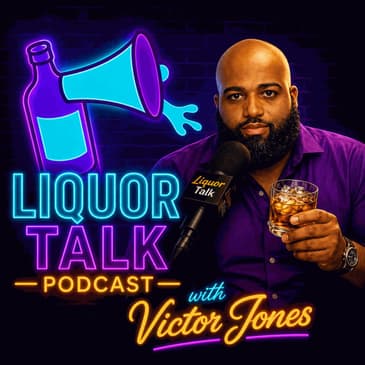

BDSM is a very interesting world to explore. The stories of people who partake in these activities are always ones where you will need some good liquor in order to take in these stories. On this special sunday edition of Liquor Talk Podcast, host Victor Jones engages in a deep conversation with Mistress Malisandre , a professional dominatrix and BDSM specialist. They explore the intricacies of BDSM, including the importance of ethical consent, the dynamics of power, and the therapeutic aspects of kink. shares her journey into the BDSM lifestyle, the misconceptions surrounding dominatrix work, and how she balances her personal life as a wife and mother with her profession. The discussion also touches on the cultural impact of media representations of BDSM, particularly the Fifty Shades of Grey series, and the potential for BDSM to serve as a healing practice for individuals dealing with trauma. In this engaging conversation, Malisandre and Victor Jones explore the multifaceted world of BDSM, touching on its humorous aspects, the importance of communication in relationships, and how BDSM can serve as a healing tool for trauma. Malisandre shares insights from her creative agency, discusses societal taboos surrounding sexual communication, and emphasizes the significance of trust and preparation for those interested in exploring BDSM. The conversation also addresses common misconceptions about BDSM and the curated experiences that professionals like Malisandre offer to their clients. Thanks to everyone for the support and go visit the website, www.liquortalkpodcast.com
[00:00:00] Liquor Talk, another episode starts now. Welcome on, welcome everybody to another edition of the Liquor Talk Podcast. Joining you, come to you on Apple Podcasts, Spotify, iHeartRadio, wherever you get your podcasts at. This week's episode, it will be an audio-only episode, y'all, so y'all bear with me on that. I appreciate y'all for tuning in to everybody that's tuned in to wherever you get your podcasts at. This episode is definitely an audio-only.
[00:00:29] I know that's rare and all, but shout out to our guests. This is going to be an adult-themed conversation, so I suggest y'all put the kids up. Joining me from Washington, D.C., we got our author, a BDSM specialist, Mistress Malison. How you doing? I'm doing great. Thanks so much. Talk to me a little about what you do for a living. Oof. Loaded question.
[00:00:56] What I do for a living is I tell people that I hold space for people who seek empowerment through BDSM and power dynamics work, also known as a dominatrix.
[00:01:17] Dominatrix is, you know, the word that everybody knows. I'm a professional dominatrix. I'm also an artist, and I actually have a degree in sex therapy. So I do all of that under the guise, under the name Madison.
[00:02:03] That's wonderful. So he taught me what is called high protocol. And this was back in the day. This is right at the beginning of, like, FetLife, which is kind of, if anybody's, if you have anybody who's kinky who's listening, they might know what FetLife is. And that was probably, even in the beginning of that, you know, the internet was still the wild, wild west. So a lot of people got initiated into the lifestyle by other people within the lifestyle.
[00:02:32] So there wasn't a lot of knowledge around it. It was a very closed practice. So if you didn't know somebody who was already into it, you weren't getting into it. So I met a man who was already in that scene. And he initiated me as a submissive. I became what's known as his alpha submissive. So I trained other submissives for him.
[00:02:59] And in doing that, I found out I'm actually kind of better at being the dominant than being the submissive. And so, you know, I started my journey and I became a professional. I became a professional probably about 10 years ago now. Wow, that's amazing. So is it always true? Because I had someone else that's a dominatrix on the season premiere, which y'all can go check out the episode, The Ladies Dressed in a Full Mask. That episode is everywhere. Y'all can go check out that episode.
[00:03:29] And I believe it was her or someone else. I can't remember because I had another one. They said the submissive is always the one that's really in control. Is that necessarily true? I would say, yeah. I mean, so in true power dynamics, you know, you have a leader and you have a follower.
[00:03:49] And especially if you guys are ethically, you know, in that type of dynamic, you know, oftentimes the submissive is the one who's kind of, you know, running the show in that they're the ones that put the limitations and the boundaries down. And, you know, you as the dominant role, you are the one that are adhering to their limits. So you're never taking them too far.
[00:04:17] You're helping them test their boundaries and playing in their shadows, but you're never taking them too far. Of course. Of course. Now, you did mention being ethical. So what does ethical consent really look like when power is involved? Yeah, sure. So ethical consent, I like to tell people. Ethical consent is an emphatic. Yes. So. That is not a maybe. That is not a you like wheedling somebody. Oh, please do it.
[00:04:46] This, do that, do that. And they eventually cave and say, yes, that's not ethical. That's not consent. That's ethical. Ethical consent is an emphatic. Yes. That's a hell. Yeah. That's a fuck. Yeah. That's a do it to me. Daddy. That's a do it to me.
[00:05:14] Ethical consent is an absolute must. And without, you know, ethical consent doesn't happen without trust. And trust is built over time. You know, it's not something that happens overnight. Now, how does one build that trust? I know you said it does happen overnight. And honestly, I wouldn't expect that nothing overnight because they always say nothing good
[00:05:42] happens overnight like that. So how does one build trust with somebody? So, you know, people are building trust in small ways. And, you know, and oftentimes, especially within the work that I do, that includes, you know, conversations and negotiations around scenes. And, you know, the scenes are what we call like when, you know, I have somebody in my dungeon and they're paying me. That's a scene.
[00:06:08] So we have negotiations around a scene that includes them talking to me about their limits, talking to me about their boundaries, talking to me about their fantasies and me meeting them in a way that holds space for them without judgment or shame. And so it's moments like that that build the trust. So what is something you wish you would have known about being a dominatrix before you started?
[00:06:33] Well, that I would have to convince people over and over again that, you know, even though what I do takes place within the sex industry, I'm not having sex with these people. Not all dominatrixes are having sex with people. I didn't realize it had to be such a big, when you're professional, I didn't realize that would
[00:06:55] have to be such a, like a non-starter that you'd have to like identify yourself first and foremost. I am not a fetish escort. That is a different person. If you want to have sex with me, where you have the wrong one, you have to go somewhere else. That's not what I do. So sex with you is just off the table, basically. Yeah. Yeah.
[00:07:22] I mean, you know, I have partners, you know, and, you know, I have a husband, you know, that's who I have sex with. I don't have sex with my clients. So your husband's okay with you doing this? And how did you convince him to be okay with you doing this? Because my husband is amazing. He's an amazing person. My husband is, you know, he's my equal.
[00:07:49] He, he's actually not super into BDSM or anything like that. It's we definitely have a female led relationship, but, you know, my house isn't covered in whips and chains. Um, but he's really supportive of what I do because he understands what I do is actually
[00:08:10] more of, yeah, it's, it's kink adjacent, but my version of BDSM is more therapeutic in a way. And it focuses more on discipline and the power dynamics than it does on the actual fetishes and kink aspect of it. The fetishes and the kink are tools in my arsenal. They are not what defines my practice. If that makes sense.
[00:08:40] Of course, of course, of course. Um, so how does you, how do you, um, how do you form discipline with, through BDSM? How does that happen? And how do you teach people about being disciplined through the BDSM? Sure. I mean, there are many different ways that I do it. So it all depends on my clientele. You know, I have, I actually mentor other women.
[00:09:05] So women come to me when they're looking to step into their power and I teach them basically how to be a dom themselves. How do they dom themselves? I make them do an exercise even where they'll dom themselves in the mirror. They'll look themselves in the mirror and they'll talk to themselves. Like I would talk to a submissive client, given them, you know, Hey, this is my expectation of you. When I say this, you do this. When I say this, you say this back.
[00:09:34] You know, it's, it is me teaching other women how to remember their power that they already have. It's not me teaching them how to get power. It's me helping them remember the power that's there already. Of course. Now, has any men came to you for, come to you for advice on how to be a dom? Because some men could, um, they may not have, have that. They may not have had the dad to teach them how to be the alpha male.
[00:10:04] Now, have you had men clients come to you wanting to learn how to be a dom? So no, I'm not going to lie to you. So in the BDSM community, there is a pretty big distinction between a male dom and what is called fem dom. And fem dom is it's, you know, the way that women dominate tends to be a lot different than the way that men dominate.
[00:10:28] And that's within the bedroom or without men often dominate by being, um, and it's, and this is just the way society has taught them to dominate, to be bigger, louder, more aggressive, be the loudest voice in the room. Right. The way that women tend to have power is that it's more soft. It's more direct.
[00:10:54] It's more, you know, if I were in a boardroom and I were having a conversation with a gentleman that turned heated, he would tend to get louder to try and assert that he's dominant. What I would do is I would wait for him to finish. And then I would simply say to him softly, does it make you feel good when you're loud like a child? That's the difference between how men and women dominate.
[00:11:19] So men typically are not interested in my style and learning, you know, fem dom and learning my style of domination. I got you. I got you. Now, what are some things that dom people do wrong while trying to be dominant? By trying, they, things they do wrong. Yeah. What are some things you can see that they're doing wrong and you're like, stop doing it this way. I told you differently, or that's not how it should be done.
[00:11:45] So I will say this, that a lot of, and it comes, it comes from lack of knowledge more than anything, because, you know, everything has been so inundated and I'm going to talk strictly in the kink space and the BDSM space. At the moment, there is been such an influx of information in such a short amount of time that pretty much anybody with a leather vest and a flogger can call themselves a dom on
[00:12:15] OnlyFans. And, you know, and so there's been, you know, misinformation that spread. One thing I will tell you, if I see a dom doing something that is completely just not only unethical, but unsafe, I'll call it out. So any dom that you see saying things like, I don't use safe words, red flag, absolute red flag. Get away. No way.
[00:12:42] Saying things like belittling somebody if that's not part of the negotiation. Or if you see them participating in what I would consider unethical consent. So a dom wheedling, you know, like, oh, come on. We're having so much fun like this. Why don't we try this? Just let me try. Just let me try. Why? When, you know, somebody has clearly said no before.
[00:13:10] So it's when I see people who, honestly, it's just a lack of training and a lack of education in certain spaces because they didn't have their elders, like the elders in the BDSM, to teach them right from wrong, honestly, because they didn't grow up in the clubs like I did. Yeah. And I could definitely see that. And also it's like, there's use of technology. So it's like, there's so dope. Everything's available at the tip of your phone.
[00:13:40] All you got to do is Google it. Like, so there's really no excuse of why people will do things wrong. Well, and unfortunately, I have found that what, because of that reason, that also means that anybody can present themselves as somebody who's a dom and they can present themselves as somebody who's an authority on something like that. And people who don't know any better would trust that information.
[00:14:09] So that helps to spread that. And I agree with you. You can absolutely, I mean, you can look up anything now. So what it's doing is I find that people who do not mean well are able to use it kind of as a cloak to cloak abusive behavior. Of course. And that's, that's crazy. A cloak of behavior. That's interesting. Ladies and gentlemen, this is Liquor Talk. The more you drink, the better we sound.
[00:14:33] Mistress Milestone, what is your favorite thing to drink while performing or afterwards? Ooh, good. That's a good question. So I like to keep a clear head before a session. So I don't drink before or after, or before a session. After a session, I love a good glass of red wine. Now, if I am performing on stage, like, so if I'm just doing like a presentation, then
[00:15:02] I love a bourbon on rocks. Ooh, okay. A bourbon on rocks and a red wine, y'all. Y'all got some choices to make if y'all listening at home. So how did you manage to balance everyday life while being in this? Because I mentioned you say you're a wife and you're a mom. So how did you find a balance to be the dominatrix while being a wife and being a mom?
[00:15:28] You know, it's actually not as hard as a lot of people want to make it, you know. So for me, you know, this has always been my personality. My persona when I'm on stage or for my persona when I'm meeting people, it's still me. But it's just dialed, certain parts of my personality are just dialed up to an 11, you know.
[00:15:53] So if anything, what happens is I just kind of am able to like gonna shake off the extra part, the extras, right? And go into my house and, you know, put on my nasty like sweatshirt and, you know, shorts and look like Adam Sandler in my own house, right? Being a mother, actually, I find that, you know, motherhood made me even fiercer, if that makes any sense.
[00:16:23] Really? Yeah, yeah. It taught me, you know, motherhood is not soft. Motherhood is not soft. Motherhood is beautiful. It's sacred. But it is also something that is very fearsome. You know, have you ever, did you ever see, there was a video that went around for a while that one of the, this, this guy, I guess, was asking just these women, hey, would you kill for your child?
[00:16:51] And there was like a whole bunch of like, oh no, I don't think I could do that. No. Did you see that video? Do you know which one I'm talking about? Um, I think I saw it, but I looked at those women like, really? You would never kill for your child? What is wrong with you? Me, I will kill for my kid, your kid, any kid near me. And that's what I mean when I say that like motherhood made me fiercer. Cause you know, absolutely not, you know?
[00:17:18] So it, because in the way of my thinking, there are two types of people on the planet. There are women and then there are the children of women, right? It's, it's a very sacred thing, but it's a very violent thing. Motherhood, that threshold. I mean, it's, it's a, it's kind of a violent, but beautiful experience.
[00:17:47] Yeah, it is. Um, would you be, would you be okay if your child, when they turned 18, whether you have a son or a daughter, um, would you be okay if they wanted to be a part of BDSM lifestyle when they are not living in your household anymore? Sure. Sure. You a real one. Because I know a lot of people who they could be a part of something. They might be an artist or they might be, um, in different lifestyles, but they're like,
[00:18:15] no, I wouldn't want that for my kid. And my question would be, why the hell are you doing it if you don't want your kid to do it? And that's, that's my thing. So, you know, if anything, I hope that what this teaches you is, you know, it's okay to express yourself in this way. Humanity is beautiful in every aspect. Yeah. There's some ugly parts for sure, but there's ugly parts of being an accountant too. Yes.
[00:18:45] Ugly parts of being a teacher. I'm not, I'm not trying to equate myself as being as important as a teacher because, you know, that would be ludicrous, but, you know, there's no matter what you believe in, there is, I've not yet met a religion or a spiritual path that says you shouldn't be authentically yourself.
[00:19:13] And so if authentically my child would want to participate in this as their parent, my only wish for them would be that they do it safely, ethically, you know, with a pure heart and a pure spirit about it and nothing malicious of intent. Right? Of course. So what, would you be willing to teach your kids or teach the younger generation about BDSM if they asked? I would answer questions.
[00:19:41] I think that when it comes to anything that has to do with, you know, BDSM and something like that, if my child were comfortable coming to me with that question, I would be comfortable in answering it, but it wouldn't be something that I would try and force on my child to speak about, you know what I mean? If they were uncomfortable speaking to me about it. But I think that I would also be the type of person that would find them the space that makes them comfortable to talk about it.
[00:20:10] I wouldn't let them flounder. How's that? That's real. That's really real out there. So going back to BDSM and the power of kink, how is it supposed to heal people? Because I remember you said there's a healing power behind kink and BDSM. Yeah. Well, you know, here, I'll give you a good example. I mean, when I was 19 and I was looking for something, I'll tell you that I didn't have an amazing upbringing. Okay.
[00:20:40] Mine was not. It was not cool, man. And so I was, I felt broken and I was looking for something. And I found in this power dynamic with this older gentleman, my teacher, I found with him structure, expectation. And what that did was that helped me create the scaffolding that I needed to pull myself
[00:21:07] out of my own, my own, you know, struggle as a practitioner, a good portion, you know, where I'm located, a good portion, I would say probably more than 30% of my clientele are war veterans, active military.
[00:21:28] So sometimes what my sessions include are a space that is safe for people who are taught never to fall apart and to never let a facade fall. It gives them a chance to let it fall. And sometimes in order to get it to fall, it requires bondage or it requires whipping
[00:21:55] or, you know, mummification, which sounds scary, I know, but I promise it's not as scary as it sounds. But, you know, just the ability to be still, to be held in a safe space without judgment or shame. And it gives them that space to let the facade drop and to sit in it for a minute, which is healing to sit in it, to help rebuild their own scaffold, to pull themselves out. Wow. That's interesting.
[00:22:26] You said war veterans. And I would expect war veterans and different veterans or active military because they deal with a lot. I know a lot of them suffer from PTSD as well. So I would definitely expect, I just didn't know that being in a BDSM room could help with healing. Yeah. So actually there is a lot of studies right now, actually, that are going on, clinical
[00:22:50] studies, that are trying to connect BDSM and certain, specifically bondage and specifically what impact, we call it impact play, linking those two things to behavioral therapy. So the, what I think that we're working towards, and I don't know that we'll see it in the next, I would love for us to see it in the next 15 to 20 years.
[00:23:22] But what we're looking to have is, you know, behavioral therapists and people who are psychotherapists are seeing the connection between BDSM and therapy. And so, you know, being able to refer those services out to a practitioner like myself who approaches it therapeutically probably would make all the difference to a percentage of
[00:23:52] the population. Really? In what way? Now, how would that help a percentage of the population? Would it just be a place for them to release or how would, how would that, how would it help them? Yeah. So, so what it's doing is they're, they're hoping that with a combination of behavioral therapies and psychotherapies, in addition to people.
[00:24:14] So, so let's say we have a client base who's already interested in BDSM having, it sounds crazy, but almost having permission to explore it from a doctor would make them do it. You know, it wouldn't make them take that step. So it's, it's almost like a therapy in conjunction with the BDSM.
[00:24:40] Cause you'll, we will never get to a chance into a part where, you know, you'll be able to go have, you know, your regular behavioral therapy. Um, and then, and then like in the same session, be, you know, whipped by your therapist. I don't foresee that ever being a thing, but I foresee it. There being, you know, the therapist having like a list of dominatrixes or a list of doms,
[00:25:08] people who, you know, do rope shibari ropes, you know, things like that, that they would be able to refer their clientele out to in a safe way. Of course. Um, I never thought I'd hear today where being bonded, being in bondage and being whipped would be therapeutic. I never thought I would hear that. You know, and I can appreciate that. And I'll tell you, like, if I weren't the person who was seeing it firsthand, you know,
[00:25:37] if I weren't the person handing out those ass whoopings, I don't know that I would believe it either. So I understand why it's shocking. Cause those sound so painful. Like those, those sound so painful. Cause it's like, sometimes you might get triggered because I grew up with a mom who had a leather belt and you know, that's not pain. That's not, that's not healing. No, that's very painful. And it makes me look at my mom differently as an adult. Right. Right. And that's, and that's fair.
[00:26:06] And, you know, it's not for everybody. There is, there is not, it's not a one size. I'll tell you that BDSM in general is not a one size fits all. It never has been. Every single person is so different. There it's, it's completely, you know, there, there, there are people who pay me hundreds of dollars to literally lick my boots clean.
[00:26:31] And then there are a hundred people who will pay me to, um, want to be, you know, I mean, literally left, you know, with welts. So it's, it's completely, it's very, yeah. It's variety is the spice of life, I guess, you know? And that's what I mean when I say that my space is one of like no judgment. Um, and I hold space for them. You know, I say, Hey, listen, that is fucked up, but I like it.
[00:27:00] Show me more. And that's not something that people experience often, right? There's not a lot of people in the world who are willing to do that. Right. Of course. Now I'm going to take it back like 10 years, 10 or 11 years. Um, how much of the movie 50 shades of gray was true in the BDSM light? Oof. So that is a really great question.
[00:27:27] And it is a hot button question for people that are within the BDSM community. You're going to find people who are really thankful for that movie and that book series, because what it did was opened up the conversation around BDSM, you know, into the mainstream culture.
[00:27:46] And then there are people who look at it and say, now we have all these people who are just half-assing it and inundated our community. I look at it from the eyes of, I'm glad it opened up the conversation. I also look at it as somebody who practices, you know, uh, what we call like, um, you know, ethical consent and rack like safety BDSM.
[00:28:15] And that guy was an abuser. That guy was an abuser. He was somebody who was abused, who turned into an abuser and used BDSM as a mechanism for that. So I don't particularly look at them and say, Hey, this was really, really great. Cause a lot of people look at that as their first blueprint on what a power dynamic looks like, especially one that's in a lifestyle setting.
[00:28:43] So that's a 24 seven type deal. And, you know, again, as long as it's done ethically and ethical consent, you do whatever you want to do. If you want to live in your house with a slave and a master and do all of that. If you're not hurting anybody, have at it. Of course, have at it. As long as it's done ethically, I agree with you on that.
[00:29:12] So do you think a movie like that could come out today in today's times or would society just have an uproar over it? Oh, yeah, I don't know. I think, I think if it came out today, if something like that came out today, I hate to say it, but people wouldn't look at it in the entertainment value. They'd be looking at it as a documentary.
[00:29:39] And so they'd be all pissed off, right? That it's not representing things accurately instead of looking at it for the entertainment value. So I think that it would be nice if something like that could be released. But I think that we would, we would venture into territory of, you know, just people just being angry about it because they want something to be angry about. That's true. And I find that's today's society.
[00:30:08] People just want to be Chads and Karens about every little thing. You know, I've just found that about today's society. I know. I know. And I got to tell you, because BDSM is, you have to take a lot of it so seriously. But my God, it's not, it's not very serious either. You should see, you should see some of the scenes that I've done. Do you know what I mean? Like they're funny. They're funny. What's an example of a funny scene? Oh, like good, like a good funny scene.
[00:30:35] Oh, and this is, this isn't even like too kinky or anything. It's probably one of my favorites that ever happened. This was what was called a femdom date. And so we were in public and, and only me and this person know what's going on. Only we know that this is what's happening. You know, that I'm, I'm the dominatrix and you are the submissive. And so we're in line to go into this museum and the line is, I mean, for ever.
[00:31:04] And I'm bored. And there's only so much you can do right in public because the public didn't consent to witnessing anything crazy. So I go in my bag and I pull out lip gloss and it's clear, but I hold him by the face and I put this lip gloss on him and I say, oh, it's bright red. Look at you. You look so pretty. You know? And so I'm like, I'm just talking to him about how pretty he looks with his bright red, you know, lip gloss, which it's actually not.
[00:31:33] It's just, it's just clear, but he thinks it's red. And so I'm, and you know, there are people laughing in the distance, not at us, but he doesn't know that. And I'm like, see, look, they're laughing at you. They think you're so pretty. Tell me you're a pretty princess. Yeah. So like that, that was probably one of the funniest ones that I've done. And it, all I needed was a tube of lipsticks and a long line. Yeah. Yeah. That is pretty funny to be out there like that in the broad public where everybody can see you. Yeah. Yeah.
[00:32:02] That, that, that does sound pretty funny. Um, ladies and gentlemen, this is liquor talk. Once again, shout out to everybody that's tuned in and we are pushing for 400 episodes. Stay tuned y'all. And if you are in Florida, get ready because episode 400 will be in person. So get ready. If you're in Florida plan for the plan to pull up in October, ladies and gentlemen, plan to pull up in October, ladies and gentlemen, um, talk to me about, you know, tell, talk to you about the agency you run.
[00:32:31] Say it again now. Oh, so what kind of agency do you have? Do you have your own business? That's like a business. Talk to me about how did that come to be? Okay. So, yeah. So actually, well, so I run a, what is called a creative agency. So I run an agency, uh, called MGH creatives. Um, and so what that is, is basically everything that I do that pertains to my artistry is, is done under that particular name.
[00:33:01] Um, and so that includes, but is not limited to, uh, photo, like fetish photography, as well as my, uh, clientele in power dynamics, um, couples empowerment, you know, any of my therapy sessions that I do with the sex therapy. Um, you know, so, so it's all just an entity that's under that it's under my control. There is, I've got myself and I've got one employee, my assistant who shall remain nameless,
[00:33:30] but she's fabulous. Um, but she, she, we, we run it together and we keep it, we keep it mostly humming. That's what's up. As long as y'all keep that thing humming, when it comes to sex therapy, what are some things that you see that all couples struggle with? Communication, my man. For some reason, for some reason, when it comes to communication, especially in the bedroom, everyone shuts down. They don't want to talk about it.
[00:34:00] They get embarrassed. And I've seen it in couples that have been together for, you know, 25 years. I'm like, you have seen children come out of this woman, but you feel embarrassed to tell her that you want her to put your, her finger in your butt. I just don't, you know what I mean? So, so helping people communicate desires to one another, to people that they have been in relationships with for gosh, for years that they just cannot articulate because they,
[00:34:28] they're afraid of judgment. They're afraid of shame. And for some reason, by the time they come to see me, oftentimes being seen by me in that container, it allows them to open up. It allows them to feel safe because this is neutral territory. And I'm here as like the witness, the negotiator, the facilitator, right? Right.
[00:34:54] That's crazy that people can be together for like 20 plus years and they still can't communicate what they want in the bedroom. When you got other people who they might meet somebody off the street and they want to communicate. So how does that even happen? You know, and the only thing that I can think of and the thing that I have noticed just anecdotally is society has put, pardon, pardon the, you know, the reference, but given everybody like
[00:35:23] a, basically a ball gag in that, if you talk about your desire in any way, talk about your desire, sexually talk about your desire, even talking about what you want out of life. If it's not what you currently have or what society thinks you should have, then it's dirty. It's taboo. We shouldn't talk about it. Right. So, you know, society and the way that we've grown up specifically in Western culture, I can only talk about, you know, my experience, you know, as an American, right?
[00:35:52] Those things are dirty, especially if you grew up in the Christian church, you know, which I did, you know, it's certain things are never said out loud ever. Right. They're prideful. You know, y'all find that the Christian church and most of these highly religious people's people, they are the biggest hypocrites, you know, because they'll tell you not to do something, but behind those doors, I bet you have something ringing your line like, hey,
[00:36:22] I'm here. Let me tell you, promise you, trust and believe that a good portion of those people who are got their butts in the pew on Sunday are at my place on Saturday. So, you know, I, unfortunately, and fortunately, knowing that helps you kind of cut through the baloney a little bit easier. Right.
[00:36:51] Kind of gives me a bit more of a ability to say, hey, I hear you. And, you know, I know what I believe. You know what you believe. But at the end of the day, you are interpreting it in a way that I don't like. So it's best to keep it away from me, you know? Yeah. And so in that sense, have you had to turn away people and just say, hey, no, I'm not doing business with you? Yeah, absolutely. I pick and choose who I, because, you know, I'm, I'm not a, you know, I work in the sex
[00:37:20] industry, but I am not a sex worker. Um, right. So I pick and choose my clientele in a big way. If you give me any kind of red flag, I've had people in the room with me before. And I've been like, hey, thank you so much for your money. Now that you said those words to me, you can go ahead and turn on around and I'm going to keep this. Then you don't even give them a refund. No, no. I don't refund.
[00:37:50] Wow. I don't blame you. You know, it's like, so what is, what do the, what do, what are some examples of what have people done to make you be like, um, no, thank you for your time. You can get out. Oh yeah, sure. So, um, not only do, you know, clients who come in, in a submissive light have their own limitations. Me as a dom, I have my own limitations and those have been communicated way before they've made it into the room with me.
[00:38:19] So if they completely ignore those limitations, one of my big ones is being called mommy. Uh, no, I've had one legitimately walk in the door, you know, down on their knees, handed me the flowers. I told him to, you know, pick up for me on the way there, call me mommy. And I told him to get the fuck out. And I'm going to keep your money.
[00:38:47] Now what is, what, what triggered you about being called mommy? Because there is only one little person on the planet who can call me mommy. And he's the little blonde headed boy that runs around this house telling me what to do. The only other man on the planet allowed to tell me anything. Respect, respect. Ladies and gentlemen, this is liquor talk. Y'all hope y'all enjoying this episode.
[00:39:09] Um, so tell me, um, how do people reclaim their power when they've had something like traumatic happen to them? Yeah. And, and I got to tell you that a lot of people who have had trauma, they, some, they do turn to BDSM as a form of empowerment. You're going to find that, you know, it's one out of five women have been sexually assaulted
[00:39:35] and you'll find that especially people who have, uh, sexual trauma oftentimes turn to BDSM and power dynamics because it is so structured and the limits are put there and the boundaries are there. It is part of the negotiation to make you feel safe. So in creating those limits and boundaries, they can create a safe space for themselves
[00:40:03] to explore some of the things that have given them trauma to slowly stretch their edges, conquer their shadows and bring themselves back into the light. Yeah. I understand that. Now, how does that help, help them like overcome that trauma? Because, because that trauma, it can live rent free in your head for years. Sure.
[00:40:26] And, and I have found that the work that a lot of people do with BDSM, it often will help expose some of the triggers that you might not have even known about. So, so the trauma happens, you have triggers, your work in BDSM, you know, like, uh, let's, you know, if, if there were a situation in which you were sexually assaulted, that means
[00:40:54] the sex to you is dangerous, right? Sex equals danger. It equals fear, but you're still a human being. You're still a sexual human being. No matter what's happened to you, you still have desires. Now, oftentimes that desire is actually a desire for intimacy. So what BDSM does is allows them to feel intimacy and helps them build courage around the thing that caused trauma.
[00:41:24] So I don't want to call it exposure therapy, but it's, you know, it's almost like exposure therapy. Now, is this a, it sounds like it's exposure therapy, but in a good way to, you know, it's not yet. It's, it's controlled. It is safe. It is consensual. A lot of, I feel like sometimes exposure therapy feels non-consensual to me, right? I don't know that it, I wouldn't call it non-consensual, but it certainly has that air about it.
[00:41:54] But BDSM is so controlled that the parameters are in stone, right? So, and they're only movable if you move them. Now, ladies and gentlemen, just to look, talk, we're going to wrap up real soon, but what are some common misconceptions about BDSM that you're like, okay, that is not true? That, you know, it, it's all or nothing.
[00:42:22] You're either incredibly hypersexual or, you know, it's, it's, it's not my experience that BDSM equals sexual deviant. It equals somebody who is more playful. It equals somebody who wants to explore, but it doesn't equal deviancy. So just because you're interested in BDSM or kink or fetish doesn't make you a sexual deviant.
[00:42:50] It doesn't mean you're, you're one of those weirdo people, you know, with a trench coat on the subway. Okay. The trench coat or subway. Right. So, you know, that's one of the biggest misconceptions. I feel like people hear BDSM, they think like, like a crazed John Walters type situation. And. Go ahead.
[00:43:17] It's, it's not, you know, it's, it's, it's the secretaries at the front desk. It's, it's doctors, it's lawyers. It's, you know, you would be, you would be surprised. Wow. So for people who are first timers in this and who want to explore, what is your advice to them that will get them ready for their first BDSM session? Whether it's with a professional like you or whether it's with their partner or whether
[00:43:46] it's with someone they trust. Make sure it's with someone you trust. Period. Without trust. Don't do it. Don't do it because what you're doing is you are putting your trust in an individual that they're going to uphold your limits and your boundaries ethically and safely. So if it's someone you just met and you're like, Hey, I like you. Kinda. You like me. Let's see if you can wrap this belt around my neck. Don't do that.
[00:44:16] Come on. You know, it sounds, it sounds, you know, like not everybody has your best interest at heart. You can't immediately trust anyone. Okay. Even in the BDSM community. So without trust, you don't do anything. Right. That being said, research, research, research, research, whether that looks like, you know, looking at porn and being like, that looks nice. That looks fun. That looks like something I'd want to do.
[00:44:44] And then looking it up, you know, RIP your, you know, Google search history, but, you know, don't go into it trusting that your knowledge of the mechanics are there, you know, just, just by knowing it. Like I know, you know, when you're putting with breath play, I know where you're not actually looking to take someone's breath away.
[00:45:13] You're looking to apply slight pressure on a carotid artery. That's what you're looking for. But someone who is looking for that sensation and has not done their research wouldn't know that. They think they're just getting choked out, but they're not. Research, research, research. Go into a scene with a knowledge base. Go into a scene with someone you trust.
[00:45:41] And go into a scene, you know, with the knowledge that any emphatic no or any emphatic yes. So any, any yes you've given previously can instantly be a no. You can, in that moment, say no. So you don't have to do anything negotiated or not. Of course, you definitely gotta know that you, you do hold the power. So what's your advice to people who, who haven't seen a professional like yourself, but you know,
[00:46:11] they want to see a professional. I know we said the research, what are some other things they can do to prepare themselves to meet with a professional like yourself? So most professionals like myself, when you make contact with us, we have a set protocol that we require of people before we engage with them. My own protocol looks like, you know, people have to approach and apply. So they have to apply.
[00:46:40] I have to read through their application. I usually have multiple conversations with them. They have to talk to me about their medical conditions, you know, so know that you're going to have to share everything like that. There's no, you can't, a professional cannot deliver you an experience that's authentic and meaningful if you're not truthful.
[00:47:05] So now do you run background checks on the people before, before you engage with them? Mm-hmm. Oh yeah. Yep. Of course, I would definitely expect you to run a background check on the people that you meet up with. Now, have you met anybody at any BDSM conferences? I don't know if they have those. I don't think they do, but. They do. Mm-hmm. So have you met people at the conference and they're trying to link up with you and then you're like, then you hit with the application? Yeah.
[00:47:34] So, so there are, there are definitely, there are cons a lot so that you have things like femdom balls and fetcons and things like that. So there are events in all over the country, all over the world. So if you're interested in BDSM and you're interested in that world and you want to explore it like just by looking first, attending one of those is probably the way to go.
[00:48:02] And then a lot of times if you, especially if you're there as a presenter, a lot of us will have our like protocols to approach at those. You'd be able to apply. Okay. What's the question on your application that may scare some people away? Occupation. Really? They're scared to tell you where they work? Yes. Yes. I don't know what they think I'm going to do with the information, but what I'm actually doing is that's just helping me verify who you are, you know, because, because
[00:48:31] if you tell me that you're a doctor and that I look you up and you're actually a plumber, then I know that I can't trust you and I'm going to deny your application. So what occupations get denied by you? If you have to deny that. Um, I only deny, I only deny occupations if they don't meet, if the background check doesn't meet what you've told me to do. There's no dirty money, honey.
[00:49:00] So you don't care if they work at McDonald's. No. If you say, if you saved up your money to come see me, you're worthy of being there. Of course. Of course. Um, that, that is wonderful. Yes. Save up your money to go see you. Um, now why should people save up their money to come for next? What does, what they get on when they experience you? So when they experience, so how do I explain it? People come to see me.
[00:49:29] They see me for a couple of hours at a time. Okay. I create scenes when I'm, when I'm talking to people, one of the questions I ask them is, what do you want to feel like in this scene? What do you want to get out of it? And that'll help me determine what kind of scene it's going to be. So if someone tells me they just want, they just want their mind to be quiet. I just want my mind to be quiet.
[00:49:55] I take that information and I'll build a scene around that sensory, you know, let's, and probably when somebody tells me something like that, that's somebody who wants sensory deprivation. So then I'll build a domination scene that rises and peaks at total sensory deprivation. And then I guide them back to the real world.
[00:50:16] So when people book with me, they're not getting, you know, a flogging and a lollipop and scent on their way. They are, they're getting a curated experience that I'm designing with them in mind. Because the way that I dom, the way that I create my experiences, it's one that is very intimate. I take it very seriously.
[00:50:47] I don't look at anything as a wasted moment. Everything has ritual. Everything has meaning. Of course, everything has ritual and everything has meaning. Now, have you had people that wanted you to travel and they were willing to pay for your flight? Or is that something you're not willing to do? I absolutely have done that. Absolutely. Really? Though these days, most people book and come see me.
[00:51:12] But definitely, definitely in my younger, definitely my younger days, I did a lot more of that. And I do tour from time to time. So when I tour, I will say, hey, I'm going to be in these four cities. And then people will book with me from those four cities. Understood. Understood. So lastly, why should people book with you? Only book with me.
[00:51:39] If you're willing to dump who you think you are at the door and leave as somebody you want to be. That's wonderful. That's a wonderful thought. Now, how can the people connect with you? So the people can connect with me. I have a LinkedIn tree. Any way to get in contact with me is going to be in that link tree. It has all of my socials. It has links to my website, as well as all of my fan sites. Of course. Of course.
[00:52:08] Well, Mrs. Moussaint, I want to thank you for blessing the liquor talk with your presence. Thank you for coming to have a drink with me. And thank you for educating us on the BDSM life. I definitely appreciate it. And thank you to our friends at Podmatch for making this conversation happen. It was wonderful. I'm willing to come back anytime. Hey, listen, if you are in Florida, if your tour comes to Florida, let me know. We could definitely set something up. And if I'm ever in the D.C. area, I will definitely come look your way because I do
[00:52:36] visit Baltimore a lot because I got podcasts I've recorded with in Baltimore. So I'll definitely come check you out if I'm ever in that area. Amazing. And thank you for your time. And thank you for listening to this edition of the Liquor Talk podcast. Thank you for listening to us on Apple Podcasts, Spotify, iHeartRadio, or wherever you get your podcasts at. Thank you all for tuning in. Shout out to everybody that's tuning in. Tell a friend. And also leave us some feedback. What did you think of this episode?
[00:53:04] And what are your thoughts, what are your concerns? And if you want to be a guest on Liquor Talk, I might be in Florida, but I'm just a DM away. Let's make it happen. This is the podcast that's taking over for the 26th and the 27th. Peace, y'all. I know. Bye.sa