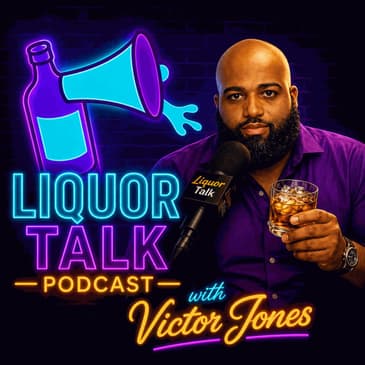

There are a lot of things people do not understand about corporate America. Pour up a drink because you will need it for this episode. On this episode of Liquor Talk host Victor Jones sits down with Jennifer Walton, founder of Sky Nile Consulting and creator of Grind Live, to talk about brand strategy, career pivots, and why honest conversations still matter. They also get into Black professional life, corporate politics, mentorship, and how to know when it is time to act on an inflection point.In this episode, Jennifer shares how she moved from corporate marketing into entrepreneurship, why she built a live talk show inside a community space, and how she thinks about truth telling in business. Victor and Jennifer also trade stories about football, family, and the real value of collaboration over competition.
[00:00:00] Liquor Talk, another new episode starts now. We are on the journey to 400 episodes, ladies and gentlemen. I want to thank you for everybody for supporting this journey. And shout out to everybody that's poured up, got your drinks ready, got poured up. That's tuned in on our podcast, Spotify, YouTube, wherever you get your podcasts at. Thank you all for tuning in today. And joining me today is we have a brand coach here and she has her own talk show as well. We got Ms. Jennifer checking in with us from Ohio and she's from
[00:00:30] Florida as well. So, you know, we got top it up. Always show love to people from the home state. Jennifer, welcome to Liquor Talk and how you doing today? Jennifer, thanks for having me. Congratulations on your journey to 400. Thank you for being a part of it. Thank you for being a part of it. Talk to us a little about what you do. Jennifer, my company is SkyMile Consulting. We are a marketing strategy and branding firm. And really what I like to do is help people define their story, tell their story and build a brand that's going to be a brand that's going to be a brand.
[00:01:00] And that supports that story. I've been a functional marketer for the last 15 years of my career. So I really got my start in corporate marketing, which is a different beast, but sets the tone for a lot of rigor that I think that I am able to bring to my clients pretty uniquely. But I've also worked in the public sector. I work with large nonprofits and I've been an entrepreneur running my own business doing this work for the last four years going on five. So what got you started in this business and how you managed to keep it going?
[00:01:30] You know, it's really funny. I growing up, I just it was always go to school, get a good job. And then, you know, life will be easy, which we all know isn't true. But I went to school for marketing really because I didn't know what else to do. I mean, I wanted to be a businesswoman. I just knew that they wore nice suits and smell good. And so that was kind of like my plan and my trajectory. And that's what got me there in corporate. I got my MBA in marketing and strategy. But then I think in the pandemic, things were a little bit weird and a lot of folks were having their great resignations.
[00:01:59] Same for me. I left the big private sector corporate ivory tower to go work for what I thought was going to be the community. So I worked for our public transit agency here and I did that leading marketing for a year before realizing it wasn't for me. But I didn't want to go backwards. I figured if I could put a whole lot of work into somebody else's business, I could do it for my own. So that's when I launched my own marketing consultancy.
[00:02:24] That's real. And that's how we always feel because and I'm glad you see that, because a lot of us, it's like we put a lot of work in for corporate America and other people's businesses. And instead of putting it in our own and put our own dreams on the back burner. And then we wonder why we get to certain ages and life hasn't really been fulfilled. Like now, I understand you're from Florida. So how did you wind up in Ohio? That's a really funny story in the sense that I'm from the Panhandle, which makes my Floridian experience a little bit unique.
[00:02:53] People always ask me, like, are you close to Miami? And it's like now Florida is a pretty big state. So it'll take you 12 hours to get there from my city. But honestly, I had big dreams of moving to Atlanta. And when I left college, that's what I did. I went from Tallahassee, the 850 or, you know, locals call it the 10 to 9. And I left Tallahassee and went to Atlanta and I was living in Atlanta for five years. Loved it.
[00:03:19] I mean, I have my own ups and downs like we all do. But then I met a guy and I was going to move to D.C. My plan was to leave Atlanta, move to D.C., get my MBA at Georgetown. And this really cute guy convinced me to apply to Ohio State, which I really wasn't feeling. But then I have a lot of family here. So I thought, I don't know, I'll give it a try. But the biggest thing and the lesson I always tell people is that go where the money is.
[00:03:44] I got a free ride to Ohio State. And thanks to, you know, Bright Futures in Florida, I had a free ride in undergrad. So I went where the money was. And that guy's been my husband now for 13 years. He's been together for 16 years, but he got me to leave Atlanta to move to Ohio. Wow. That's a really convincing brother. Congrats. Congrats on being a married for 13 years.
[00:04:06] Congratulations on that as well. So and I realized that we missed each other because I came to FAMU a little bit later after you did. So I realized we missed each other, you know, but it is what it is. And it's all love between Florida State and FAMU. You know, sometimes I actually was one of the charter members for an organization at FAMU.
[00:04:30] And so I was over there all the time. That was like it just for me, it was a great opportunity to to have both experiences. And I do all my alumni giving to Florida A&M. Respect, respect. I do as well. I always show love to the homeschool, you know. So I truly respect that, you know, and I want people to understand that there is love between FAMU and Florida State, even though some knuckleheads out there will love to hate on Florida FAMU when FSU is losing, though.
[00:04:58] But I know that's right. I mean, I get it. Like, listen, I'm both the Seminole and a Buckeye. So you have to understand that it's torment for me. Well, hey, hey, the Buckeyes up to some of those. They ain't looking so good, though. I guess I kind of again, I guess I get to occupy both worlds. Hey, I feel that because it's like I like the Hurricanes and I do like the Rattlers as well. So it's like, hey, my family grew up in Tampa. They had me on the Hurricanes.
[00:05:25] My family is, you know, Tampa is a little bit closer to Miami and my family had me on the Hurricanes. And it was like, that's where it was. So it's cool. House divided. I mean, I have a lot of oddly enough. My family is also split. The other half of my family also Hurricane fans. So I'm not going to admit this. I'm not going to say it's real, but there is maybe a picture of me floating around wearing a Hurricanes jersey.
[00:05:51] It was I had no choice. But yeah, I'm going to talk about it. Hey, at least you admit it. Now, tell me about your little talk show. You have the Grind Live talk show. Tell me about that talk show and talk to me about that experience. Well, honestly, the thing is here in Ohio, my husband and I own a social club. A lot of people talk about, you know, things like the Gathering Spot and other clubs like that membership based co-working spaces.
[00:06:17] We kind of started something similar called Grind and it's about grounding and grinding, having a place to come and be grounded in its community for us. And it's a safe space. It's a safe third space. And so we do operate somewhat on a membership base, but it's a really a place where we curate community, conversation, culture and care. And so it just kind of made sense. I was talking to some friends of mine one day and I said, you know, they asked me, what would you have wanted to be when you were a little girl? And honestly, it was talk show hosts. And they were like, OK, so why don't you do that?
[00:06:46] And I kind of saw 2026 as a year of doing all the things that previously I would have thought like, why me? Or, you know, like just things that I would have put on hold. So I've said that in 2026, I'm going to see what it looks like to lean in on my actual dreams. And I thought, well, I do have a space and I could start a talk show. And I do know a lot of people. We've got a really great, strong community around us.
[00:07:13] And I put together a team and I was like, I need a, you know, a producer. I need an audio engineer. I need all these things, set design, all kinds of stuff. And it led to me putting together a really powerful team. And we've been building Grind Live out to kind of really put it out into the universe of this offering. And for me, it was recognizing that conversations on the Internet typically go in polarizing directions.
[00:07:41] Right. And it's by design. And we know that. And the psychology is there. We understand that we are the product because the product is free. And yet we still allow ourselves to fall into it. And I honestly do believe in the dead Internet theory, which is that most accounts online are fake. And so then you are out here arguing with bots.
[00:08:02] And so I thought, well, if I want to have a talk show and I see the pendulum swinging towards a space where the digital space is no longer a safe space to have conversations, particularly cultural and community conversations, because they're, you know, they're watching us tinfoil hat. But I thought, you know, that's where my talk show can kind of stand in the gap. So we have a studio. We've converted our space into a studio, a very high quality production studio.
[00:08:31] And then we do a live audience and we're having conversations that we can't have online because some bot will come and argue with you. Someone will take you out of context. And we've moved away from the point. And so that's really why I started Grind Live. That's what it looks like. It's not yet completely packaged for the public, but we've taped two episodes thus far. And it's just it's very high quality. And people have been asking for that. Wow, that's amazing. You know, it's funny.
[00:08:58] We got nothing in common because my dreams is was to have my own talk show because I was inspired by watching Arsenio Hall growing up. And I was also watching the late night guys and how they can like cut loose like late night. And well, that's how we got liquor talk, ladies and gentlemen, because, hey, that's exactly how we got. That's exactly how I got to the point of we're producing liquor talk because we want to have those conversations that you said are not like robots.
[00:09:26] We're actually have live human beings and, you know, and not arguing with robots who are just or idiots who are have nothing better to do on social media than to just troll you or, you know, people who are just too hurt to realize they're making a dumb point. Right. So just that we can all share information and knowledge. You know, folks love to say, well, Google is free. Well, Google is compromised now. And so it really isn't free in that regard.
[00:09:54] And you want somebody to if you have a greater goal and a greater objective that you're trying to reach, you should want to be able to share knowledge. And I get it. You know, people have been doing that for so long and their labor in doing that have been uncompensated. But at the same time, folks are running free, full of disinformation and misinformation because they Google it and they took them to a place that they shouldn't have been. When I could have just told you what it was that I was trying to explain to you or what knowledge I was trying to share with you.
[00:10:24] And I could have done that for the greater good or I could have got, you know, here, go to my patron, pay for whatever the case may be. But we've gotten to a place where we're so combative that we're actually not achieving the goals that we're setting out to achieve. Yes, we really are because we're too busy arguing with people who don't make sense. You know, it's like, listen, I only listen to people who are in the direction I'm going or have knowledge or the experience I'm trying to gain.
[00:10:49] That's what you all should be doing instead of listening to pointless people whose dreams have been killed off at some point in time. And they allowed their dreams to be killed off at some point in time by some kind of minor setback, you know. And I know I usually say this at the end of the show, but 2027, if you're looking for guests and you want a speaker, hey, I don't mind flying up to Ohio. Just as long as it's not snowing. As long as it's not snowing, hey, I'll definitely go on that plane to come to Ohio. You ain't never lied about that.
[00:11:18] My dad lives in Tampa. So when I come down to Tampa, usually come down for Christmas because it's perfect. Go sit out in his backyard and just be in the sun. It's a really nice reprieve from the snow up here, honestly. Yeah, well, hey, if you come down to Tampa, Gale, I'll even do a Christmas episode. I can get a studio book. You just let me know. Hey, but yeah, I will not get on the talk show, you know, because I want to do travel more. So that's the next thing I want to do with the podcast. So you do talk about inflection points.
[00:11:47] What is what was one inflection point? And how do you know when you're in one? So, you know, what's interesting is I think about this as in a variety of different constructs. When I think about in your career, oftentimes folks will come to a moment where you feel like I've got too much invested. I don't want to turn back. But I'm feeling a pull to do something different, to do something new. And I talk to career professionals about how to navigate that because you're at an inflection point.
[00:12:18] What is the value of what I've invested thus far and how do I leverage that moving forward? And for me, as someone that has done a lot of different things, I kind of see it as there's no such thing as failure. We have a lot of fear of failures, but there's no such thing as failure because anything that you've done in the past helps inform what it could look like in the future. It's just wisdom, right? But then I think, you know, organizations go through that. I think that we're going through this as like a country, as like society.
[00:12:44] We're reaching an inflection point and it's easy to ignore, you know, history and just try to look forward. And I think that our younger generations do that very well in a sense. They challenge a lot of stuff to go like, what makes sense? Like a 40-hour work week doesn't make sense. And they're not wrong, right? But history informs us that it wasn't always a 40-hour work week. It was 80, right? You didn't have rights.
[00:13:08] You didn't have, you know, our labor unions and the workers fought for what we have today. So it's not as simple as ignoring the past. But at the same point, I just think that oftentimes it's probably a part of just human nature and psychology to feel such tension at an inflection point. And my goal is to help people release that tension and be able to step forward without fear, just knowing that you have what it takes because you do have all this wisdom from the past.
[00:13:37] But you also have within you the vision to build something new and to build a new path forward. And honestly, I think that's what's important for all of us to remember at this time. We're at an inflection point where people assume that we're in a tech era or a technology era. And I would say that we've actually surpassed that. We're now in a knowledge era. And so the inflection point for all of us is to determine what knowledge do we have and what value does that have for everyone else around us?
[00:14:06] And whether that's something you can sell or whether that's something that can help liberate your mind, that's up to you to decide. Of course, it's definitely up to you to decide. And if you hit that inflection point, you need to act on it because that might be another saying, hey, you're meant to do more, you know, than just be a nine to five job and you just come home. And because mama always said it, we ain't meant to be on this earth just to work and pay bills. You know, you got to create experiences. I love that. Yeah, I agree. Yes, we have to.
[00:14:36] Ladies and gentlemen, this is Liquor Talk. The more you drink, the better we sound. Shout out to everybody that's tuned in on Apple Podcasts, Spotify, iHeartRadio, wherever you get your podcasts at. Jennifer, what is your favorite thing to drink after a long day of work or whether you're just out on the town with your people? You know what? As I've gotten a little bit older, this sounds crazy, but I just love some wine. It's straight to the point and, you know, it's nice, relaxing, smooth drink.
[00:15:04] Now on our talk show, we always have a cocktail or a mocktail because we're inclusive of the night. And so our first episode was about the art of joy. And I told a story about how I worked with my vibe curator, who is our bartender, who makes the cocktails for each episode. That when I was growing up, my grandma there, she never drinks. She always says that she's crazy enough about it. And when we started, you know, my family, I come from a family of drinkers except for her.
[00:15:33] And the thing that she would always comment when she would see us and our eyes were getting a little low and our faces getting a little flushed is, oh, y'all drinking that joy juice. And so given that our first episode was about the art of joy, we titled that drink joy juice. And it was a delicious like mango pineapple rum concoction. My family is also from an island.
[00:15:53] So I'm a bit of a rum drinker just because my family is from Bermuda and a dark and stormy is just kind of like, it's just pure delicious gold. Our last episode, though, was called Legacy as Wealth. And we the cocktail of that episode was called Legacy in Bloom. And it was like a tequila and hibiscus drink. So, I mean, it's oh, it was delicious. Delicious.
[00:16:19] Also, a little bit of a tap into my island roots where hibiscus or sorrel is something that we often drink. So it was great. But I can drink anything. If I had to choose, it'd be wine. But if I'm out and I'm having a good time, tequila or rum. Hey, I feel that, you know, because, hey, I'm not from the islands, but I know plenty of people from the islands. They put me on games. So they had me on that Ray and Nephew. Man, look at here. We had some good nights. And, yes, I done had some episodes where we were sipping on some Ray and Nephew, man. Those are some good episodes.
[00:16:49] Listen, Ray and Nephew, that's tight. I like that. Yeah. Yeah. So because over here we sip on everything. And, yes, we're inclusive as well. Like if somebody tells us they don't drink, guess what we got to mock tails for you as well. Because I do the same thing whenever we do an in-person episodes. Got them all guys. They'll have the bottles or we'll have to mix up a drink. We do the same thing, you know. Top 10 great minds think alike here. Yeah. So now going back to organizations, you say they lie to themselves. What does that actually look like in practice?
[00:17:19] Because I see that a lot where companies, they will lie to themselves. And when you tell them the truth, they're trying to show you the door. You know, it's really hard because a lot of companies, I mean, we don't have to get into just, you know, economic theory. But the reality of it is that companies are here to make money. And I like to tell people, particularly those who are preparing to enter the workforce, that you just need to be honest with yourself and you need to be honest if that's what this is about.
[00:17:47] So what tends to happen is you will have a company or an organization that produces value statements, mission and vision and all those things. I call it as a marketer, you know, I get it. But I call it flowery language to really to convince you that they're an organization that is worth either working for or buying from. And so oftentimes, you know, a company, let's just say even you, you start a business and you set out with a mission and a vision that you're going to do X, Y, and Z.
[00:18:15] Maybe you grow and that mission or vision has to evolve with it, but maybe you're holding on to an old story. So that's a version of unintentionally lying to yourself about who it is or what it is that you do and what you offer. But I think bigger than that is that companies really love to be altruistic when they're in forward facing. But the reality of it is that's not a reflection of what your employees experience or your customers experience, either interacting with your service or purchasing your product.
[00:18:42] And I think that we will all do so much better in a world where AI is taking over, in a world where, again, the bots are taking over. Being just honest, I'm selling you, you know, a drink. I am selling you an experience. This is what it is. And either live that with your employees or live that internally, or also be honest with them and say, look, you're here for a paycheck. I'm here to advance this revenue. You'll get your check if I get more revenue. Of course. Of course.
[00:19:12] Hey, that's straightforward right there, you know? And I feel like a lot of businesses, they don't be straightforward enough, you know? And I feel like that's the biggest difference between humans and the bots and the bots that they just control to do whatever, you know? Right. Yeah. And, you know, even with that, like AI will convince you. And look, I'm not trying to... I don't... I'm very nuanced in my approach to just about anything. At least I try to be.
[00:19:37] And so it's like there's a reality of that AI as a tool that can help people speed up workflows or help people kind of like process thoughts or, you know, kind of it could help you extend yourself in a way that frees you up to do other things, right? But at the same time, if you are not rooted in who you are, if you don't know yourself, and this is true for people, this is true for organizations or companies that are selling things, it is a very easy way to hallucinate into something else. And so it's just keeping that stuff in mind.
[00:20:05] And people, individuals, employees, companies, all just being honest about what it is that you're doing and who you're serving keeps you in line too. It keeps you from what we call scope creep into doing things that you don't want to do or can't afford to do or honestly aren't as profitable for you or efficient. Of course, you got to always keep things efficient for you. And also, you got to learn how to work with the technology and learn how to work things to make things efficient for you.
[00:20:34] Now, you do work with a lot of Black women in navigating corporate spaces. Now, I'm going to go generally here because us Black women and Black men, we got to stick together. So what do you see Black people doing wrong in the corporate spaces? And what do you think we get right in corporate spaces? First, I'll say that it's really hard for Black people to navigate these spaces incorrectly. Right. Because it just, they're not made for us. And so it's not as simple as what's right or what's wrong.
[00:21:04] I think it's just recognition of, hey, you know, these bills aren't going to pay themselves. And so if you decide to go the route of working for a corporation or in corporate America or even working for a large nonprofit, whatever you're doing, if you're naming on the building, my advice to you is just know how the game is played. And that way you can make an informed decision about how you play it.
[00:21:28] You know, if your goal is to advance, then it is recognizing that technical expertise, i.e. I am a marketer or I do sales or finance, that expertise is only going to get you so far. You can be the subject matter expert of anything and you'll be stuck there because it'll be like, oh, Jennifer, she's good at making pretty PowerPoint decks or she's good at graphic design. We'll never advance her beyond that because she's head down a functional expert.
[00:21:55] But what you have to recognize is that your social and political savviness is what will allow you to advance. But if you're like, I don't want to play that game, then be the technical expert. Just know that you'll be stuck in a place, right? But when you're able to lift your head up and, you know, sometimes entertain conversations that you don't care about. They sitting around the water cooler talking about, you know, I couldn't even tell you, the latest, I don't know, is Love Island. I feel like everybody watches that. So let me not say that. But like. No, you can say that because I don't even watch Love Island.
[00:22:26] So you can say that. I don't even watch Love Island. Whatever it is, American Idol. I mean, whatever it is that they're talking about. And you're sitting there rolling your eyes going like, I don't want to talk to these people about this. Like just slide in there a little something like, oh, yeah, I saw so-and-so did X, Y, and Z yesterday. Right. And that's just enough to where you don't have to sacrifice yourself. And I know I tell, you know, black folks in particular, like, don't tell these people all your business because they can't relate and they don't care. But they will tell all of their business.
[00:22:55] And so all you got to do is listen and chime in every now and then. Right. And then folks are like, oh, yeah, Jennifer, she's so nice. I like working with her. They don't know anything about my work product. But they know that. But, you know, working in groups and working on teams, working in corporate America is about working without friction. And so as long as you are not someone who introduces friction and if you can be kind of like the lubricant to kind of keep things moving, then you're looked at positively.
[00:23:22] And so it doesn't always require you to sell out, but it is just like playing the game a little bit. And, you know, and I will I will put that back on people, too. Like, shoot, when Beyonce did Coachella, I came into work. I was so excited. Like, did y'all see Beyonce and Coachella last night at two in the morning? And they were like, no. But I'm like, OK, well, you missed a cultural moment. So there are times where I would be able to use my culture as a thing that kept them out of conversation. But I love football. I love college football.
[00:23:48] So there will be times where the men will be talking about football when my cousin played for Michigan. So then I would interrupt and be like, oh, did you see the game winning catch against Notre Dame? That was my cousin. And all of a sudden I'm an outsider. But I know and I've got inside knowledge that they want access to. And I would use that to my advantage. I don't have to talk to y'all all the time. I have to be on the golf course with y'all. But I know how to play ball. So I would just show up like that.
[00:24:15] That's real. You know, I wish I had known that years ago back when I was a corporate America, you know, because, you know, you got to know how to play the games because they see you as a hard worker. And you're right. They will they will find ways to keep you in that same position. They'll be like, oh, he's not dressed appropriately. I'm and my mindset was at the time was like, I'm not here to look pretty. I'm here to grind. But if I had known what I know now, I would have played the part a little better. Be like, oh, yeah, I can do this. I can do that.
[00:24:41] Now, you mentioned you went to Ohio State and you just said you have a cousin that played at Michigan. How does that family dynamic work out? Yeah. You know, it's actually kind of funny because my husband is a hardcore Michigan fan and talk about it. So like every year we throw a party for the game and it's all of us against him. You know what? When my cousin played for Michigan, it was actually when I was at Ohio State.
[00:25:07] So I would be at the games in my buckeye, like my scarlet and gray sitting in the Michigan side, cheering for him, but wanting my team to win. And so that's what it looks like. And the funny thing about that is that's really what it looks like across a lot of different dynamics is that people don't realize that we can do both. And I can cheer and support for I can support my cousin who's on the other side while still wanting my side to win.
[00:25:36] And when you really extrapolate that into a lot of different other use cases, you realize that those binaries are kind of holding us hostage. There's a lot more gray area that we have to operate within. And that's OK. Yeah, I know a lot of black families are like that because I even had an uncle like that was when I went to one high school playing college football, playing high school football. He was he told me straight up, hey, I'm rooting for you, but I want my want my school to win because I'm in St.
[00:26:02] Pete Gibbs and Lakewood was a big rivalry, you know, so it's like my uncle went to Lakewood, but he was still rooting for me at Gibbs. So so I know that and a lot of black families, they know how to navigate. Well, it's some other families. They don't know how to navigate that. They like, oh, I'm not talking to you. I'm not this. And it's even brutal in the state of Alabama. You know, when Auburn, Alabama goes down, you got people poisoning trees and killing each other.
[00:26:29] So it's like that's why I love us black people. We can we can show love, even though you are wrong, because I feel that way about Bethune cooking people because I want to film. I feel that way about Bethune. You know, I love I still love y'all. It's just that week I hate y'all, but I'm still show you love, though. And I think that's what separates us. And I never want us to be to strive to be like anyone else but us, because it's in us to be communal.
[00:26:54] It's in us to never throw people away. You know, we I sometimes talk about, you know, having family members that have been incarcerated. You know, for for us, it's like they were they never stopped being family. Right. And so when what it looked like was being there for them every day and being there for them when they came home and helping them, you know, reintegrate with society.
[00:27:21] Society because through love. But you don't always see that in other communities where it's like, you know, if you are, you know, impoverished in any way, they don't they don't acknowledge you. Or if you've made a mistake, they don't make it so easy to throw people away. I think what makes us different is that we look at community as as the solution across the board.
[00:27:43] Like I said, you can look at it could be as it could be as serious as, you know, caring for those who are more marginalized and who have less privileges and or as simple as like rooting for the opposite team occasionally because you got folks on there that you care about. That's true. And they say America is the land of second chances. So why is it that other races, other people are so quick to throw people away unlike us and we us black folks be so forgiving?
[00:28:10] Yeah, we've had to speak multiple languages since we arrived here. Right. And so it's just a part of it's in our DNA, truly to adapt and to figure it out. And we knew that the only way that we could do that was together. Now, that doesn't mean that we always agree. It doesn't mean that we always have the same strategies. But I do think that it's just a part of one society prior to us arriving in this country.
[00:28:34] I think that, you know, history would probably tell us that the ways in which our people really navigated intercommunally was that. And, you know, it's that we can't teach that to nobody else because our experience in this country is extremely unique and the ways in which we arrived here, extremely unique. And so other other ethnic backgrounds don't have that story, that origin story.
[00:29:02] And so it's very easy to fall in love with the so-called American dream of get it how you live and just scam your way to the top. And it's all about your individual self. That's just not how we move. Yeah, it's not how we move. And we've had to adapt to times because it's like, hey, the scammers don't realize that y'all time is coming.
[00:29:23] You know, it's like all the scams will come up. Why y'all around here singing Carisha Scammers, all the scammers that, why y'all around here singing that? Y'all time is coming, you know, you don't realize that. And just really quick to that point, you know, I don't I don't hate every player of the game in the sense that, again, if you have folks in our community that are making it do what it do, I call those workarounds.
[00:29:52] In a sense that, you know, again, we have been there have been so many walls put up before us. There's been so many things and many attempts to really hold us down and to hold us back from progressing. And we have fought for every little thing that we've had. And, you know, like. When we think about legality, even right, like my husband's a lawyer, so he he would be so mad at me for saying it that way.
[00:30:17] But when you think about what is legal, you know, it used to be illegal for us to read. And so sneaking and figuring it out and trying to learn how to read, even in that time would have been, you know, punishable. Right. And so I think that nowadays, like if you had to get it how you live in so long as you're exploiting the system, I guess that sounds horrible.
[00:30:41] But I don't I can't support us harming one another. Right. But I also can't be mad at somebody who, you know, got a booster in their pocket when I see the president of this country is a booster. He had. Yes, he's the biggest one. He's the biggest hypocrite in them all. You know, I've said this on previous. I had a I had a prison.
[00:31:08] I had a prison reform guest on here and she basically said it like you could do anything. We got a convicted felon as the president of the United States. So that should be motivation enough, you know, to go ahead and get how you live, because, hey, damn, girl. Yeah. And it's just like, you know, the goalposts move. So with that being said, it's a it's always a moving target.
[00:31:30] But I always go back to like in our DNA intrinsically, we as black folks, we set the tone for so many things that I don't ever worry about us being wrong or right. Because I just know that we are the North Star. Yes, we are. And why don't more black people accept that and just go ahead and embrace that? That we are the North Star. We are the trends. We are. We make this shit move. I don't know. I think it's hard.
[00:32:00] I think, again, it's easy to be enamored with this idea of like, you know, people look at these big tech bros and they see the material things. And even, you know, some of the and I'm a huge Beyonce fan, but even I don't I'm a fan of the music. I'm a fan of the work ethic. I'm not necessarily a fan of, you know, the choices that they've made as kind of titans in the industry.
[00:32:26] And, you know, really rare air for black folks. Right. But with that being said, I think it's I also it's the same thing. They're not immune to the effects of what this country does to us. And when it comes to like trying to change your life and trying to change your family's lives, like even like I think that we are far too often look at leaders and look at people that are very successful and assume a lot of them.
[00:32:54] And it's like, you know, they're just human, which means that they have the same limitations that we have. They probably have a lot of the same insecurities that we have. And you think to yourself, they just overcome it differently. But that's where people can't embrace that collective mindset because they're too afraid that doing so will leave them behind. And so we just have to keep showing them. Yes, we always have to keep showing them.
[00:33:21] And also, I need those people to go read this book called The Subtile Art of Not Giving a Fuck because you tell you straight up like you can't really care about what them other people think, you know, and you got to you got to keep getting how you live no matter what. Because at the end of the day, you don't know that we all going to die. We ain't going to be here forever. So why please people? Yeah, you got one life to live. I tell that to my kids every day.
[00:33:44] It's like, you know, you're really only responsible for yourself and your actions and how you react to others. And that is not to say that you always got to be the bigger person because sometimes you got to let people know that if you want to go low, I'm going to take it to hell. But the key is discernment, right? The key is the ability to discern where your energy is worth being spent. Of course, of course.
[00:34:07] Now, you being the Beyonce fan, what do you say to the irresponsible people out there who will buy the Beyonce tickets knowing their bills had been paid? Because I see that a lot on social media. Oh, I just paid my rent money to go for these floor seats at the Beyonce concert. And I'm like, Beyonce ain't paying your rent. And no disrespect to the Beehive, but a lot of y'all, y'all haven't even met Beyonce. Well, I will say this.
[00:34:35] At her Renaissance concert, she read my sign, which said that it was my husband and I's 10th anniversary. So she wished my husband and I a happy anniversary. So that was kind of nice because I was like, OK, she said my name. But I'll say this, you know, as we just discussed, there is we have one life to live. Right. And by and large, I do operate from the mindset of what's for me is mine. If I don't have it, it's not for me.
[00:35:02] And I think that I'm big on putting action in place. And so there are times where I have made tradeoffs in general, you know, especially when I was younger, I would have spent money on things that didn't necessarily move me forward, but gave me a bit of happiness or gave me something to hold on to, whether that be a memory or an experience or proof or a picture or whatever. Right.
[00:35:29] And so when you really zoom out, people do this all the time. People over leverage themselves all the time. That's why credit card debt is what it is in this country. And so I don't ever decry people for making decisions to have an experience or a memory that will last a lifetime because money comes and goes. But I do want people to be focused on priorities. Right. And so if your priorities are misaligned, then that will catch up to you over time.
[00:35:57] If you are like, ah, you know what? Like, I've never seen this person. I don't know if I'll ever get a chance to. The stars are aligning. I'm a buy this ticket. I don't know how my rent is going to get paid, but I've got some fires in the oven or, you know, I've got some irons in the fire. I'm horrible at metaphors, but I love using them. But I've got some irons in the fire to where things might work out. I always lean towards like if I'm doing the work and the actions are there, things will work out. I can take some risks.
[00:36:24] And so I might leverage myself to a point of like, I'm going to go on this trip or I'm going to go see this concert or go do this thing because there's something to gain from that. But I'm not going to then put the burden on other people around me to fill the gap where I've made mistakes that I could have avoided by just having my priorities together. Of course, of course. You know, I totally feel that. The only times I've done that is if I was going somewhere to speak, you know, say if someone invited me to speak somewhere,
[00:36:53] then I go ahead and leverage that because that's an experience for me, you know. So, you know, and also it's a great way for network to it. And now I told myself, you're going to make it back one way or another, you know. So, but I do feel bad. Even if it is going to a Beyonce concert, make it work for you, right? Like, so it's like, if you're going to travel somewhere, go to a city and meet some folks, figure out who you can connect with. And, you know, the easy thing is low hanging fruit. There is that you are going to a show where there's going to be 60,000 other people who obviously you have something in common with.
[00:37:23] So do you get to know some people because you never know where those connections might take you? So that's a great point of, you know, even when you put yourself in a tough situation, like that's a different mentality to be like, I'm a hustle around it anyway. Of course. Of course. Now you built a business, a newsletter and a talk show and a work workshop portfolio. How do you know what to say yes to? Because I see you done built it all. Oh, that's a struggle I still face.
[00:37:49] But I think that, again, it goes back to when you're building a brand and when you're building out things based on your areas of expertise, what helps ground you is knowing your why and just knowing your own strategy for what it looks like to move forward. I love talking to people. I love building things. I love helping other people build things. And so that's kind of the things that just ground me, you know, just foundationally.
[00:38:13] And so what will happen is if somebody is coming to me with something that doesn't allow me to tap into those things, then it's easy to say no. If there's an opportunity that's coming that can fit into what it is that I'm trying to achieve for myself and for my businesses, then I can say yes. And sometimes it will overextend me for sure. Last year for my main business, which is my marketing consultancy, I had the best year ever. I mean, almost a million dollar a year.
[00:38:42] And I was worn out. I mean, I was crawling to the finish line. So I made a strategic decision that I wanted to, you know, really have a goal for this year to do half in revenue. So I realized I'm not a corporate entity. I don't have shareholders or anything like that. I'm not held to somebody else's expectations of growth for me. I, that's the whole point of working for myself is that I get to, to, to steer this ship.
[00:39:10] And so I made a strategic decision to plan for half of the revenue that I made last year. And the funny thing is I'll do more than that still, but it took some of the hustle in the bustle out so that I can be more present for my kids. My husband is the new president of our, our local branch of the NAACP here. So allow me to be his wife and be his partner because I took some things off my plate.
[00:39:37] And so I had to, again, I always try to have my wise, very clear and the things that I'm very good at, very clear. So it's either, it's either supportive of those things or not. And I also just, I'm very clear about my priorities. Like I'm very ambitious, but my ambition is not just about what I do. It's about who I am and who I'm raising. And if there's things that come that are taking away from my ability to be a amazing family member,
[00:40:07] an amazing wife, an amazing mother, and even an amazing friend, then they, I have to put them down. So now with that being said, are you able to delegate to other people or to other businesses that you know of that y'all work together? Huge collaborator. I think, I can't, I think your shirt says what competition. And I don't know what that's in context too, but I don't ever see things as competitors. I don't see it as competition. I see folks doing what I'm doing as collaborators.
[00:40:35] And I, I absolutely love to share, to share. And my husband and I, our motto in our family is everybody eats. And so if there's anything that I'm working on, like I said, you know, with my talk show, I put together an amazing team and I remind them everybody eats. And then across the, just the spectrum, it's, that's just how I operate. Everybody eats. If I've got an opportunity that I cannot handle, then I'm going to pass it to you. Now you can eat. I feel that. I feel that.
[00:41:03] Cause it like, like shirt does say what competition, because I'm looking to collaborate. I ain't trying to compete with you because you know what people, people don't realize the longer, the longer you compete with somebody, you're going to tire yourself out faster. It's just better if you come together and collaborate and, you know, and help each other out. And because like you just said, everybody eats, everybody should be eating. That's right. It's a race to the bottom, honestly. And it's, it's sad. That's a race to the bottom, you know, because it's, it's a whole lot of opportunity out here though, you know?
[00:41:33] So for those who are trying to eat and who are trying to come up, what is the difference between a mentor and a sponsor and which one do people actually need? Cause sometimes I feel like you might need them both. I'll actually say that what I love telling people as a little framework that I use, um, just around how to build your, your village, but I always lead with you. I call it my fives. You need to have first and foremost, a personal board of directors.
[00:42:00] And that includes a sponsor and sponsors are people you only tell the good to, because they're the folks that can open doors for you. And throughout my life, I've been able to thankfully identify amazing sponsors who were, you know, in the C-suite or who were killing it in entrepreneurial spaces. And those are folks that I come to for opportunity and they know that, right? And so that's a very, um, informed position.
[00:42:25] Then there's the mentor that you would tell the good, the bad, the ugly too, and they can help you navigate that. There's your coach that helps pick you up when you're down and kind of gets you motivated and get in there, do that. I have a best friend who does that so well. She reminds me who I am when I'm not clear. Then you have your peers, somebody who's in it with you that, um, you can kind of have those more symbiotic conversations with, because not only do they get it, but they're, they're there in it with you.
[00:42:55] Right. And then you got to have a truth teller. That's just somebody who operates from a standpoint of honesty and what they say to you. And that's important because it's not to, it's not to be cruel. I tell people like, you don't got to be cruel to be honest. Um, but it is sometimes I need to know if my vision is bigger than my budget. I need to know if something sounds good to me, but isn't commercially viable. Right.
[00:43:22] That's kind of how you build your personal board of directors. And I tell people, go find five people doing what you want to do or are doing. And what can you learn from them and what can collaboration look like for you with them? And then the other five is you need to find five people at least who are doing what you can't do. And so even when I went to go start my business, I realized that I don't know what contracting and all that stuff looks like. I needed a lawyer. I don't know accounting. I don't want to go to jail.
[00:43:52] I need an accountant. I don't know, um, you know, necessarily about like HR and things like that. I needed someone on my team or someone within my, uh, sphere of influence that could help me navigate some of those things. And I don't know it all. So that's where I easily outsource the information. And so when you really think about that, you know, that's 15 people that I always tell folks, like, try and have some sort of touch with them at least five times a year. Um, that's just an easy framework and it could be three, it could be nine, it could be whatever.
[00:44:22] But just thinking about it, like your personal board of directors, the people doing what you want to do and the people doing what you can't do. Of course, of course, you know. So if any of y'all listen out there, I will be approaching y'all because I've been like doing the one man rec crew for years. You know, you know how it is. Like sometimes you just do bad all by yourself because it's like you can't because sometimes the struggle is finding people that align with you and they are going to go get it with you.
[00:44:46] Because there's a lot of people that say they want to do it, but then when it's time to do it, they don't show up or they make excuses. Yeah. And that's what it is. And I think that, again, it goes back to just how we've been trained in this country to get things done. And it's really about lack of trust. I mean, when you can build trust, then you know that you can share your ideas meaningfully with people that aren't going to exploit them, abuse them, and that are really going to help you advance them. That's real. Ladies and gentlemen, this is Liquor Talk.
[00:45:14] Shout out to everybody that's poured up and tuned in. I appreciate it, y'all. Y'all are wonderful. You know, I hope y'all enjoy this conversation. Keep enjoying this conversation as we hit the home stretch. Now, you talk about telling organizations about telling the truth. What happens when they're not ready to hear it? Because let's be honest, nobody wants to really hear the truth about themselves. And, you know, sometimes some people can take it, and then some people, they will be in denial. And then some people are just outright dismissive. Yeah, you know, it's a couple things.
[00:45:44] Honestly, when people hire me, I let them know that that's the role that I'm going to play. And it's honest, and it is truth-telling, and it's informed by more than just, you know, data. It's informed by lived experience and a cultural perspective even, right? I've had instances often where I was a Fortune 100 company, in my opinion, made a mistake in a communication that went out internally.
[00:46:10] And this was during the pandemic when social justice was at the forefront of a lot of things for us as a country. And the company, honestly, I approached it as a business case. I knew what I was talking to. I'm talking to C-suite leaders, and I explained to them that this, the communication that they had produced was actually harmful to the bottom line
[00:46:36] because you have employees that are going to read this and take away from it that they themselves don't matter to the work that's being done. And what does that look like? There's, you know, there's risk to your talent pipeline. There's risk to your profitability. There's risk to your reputation. When I identified all of that stuff, certainly they didn't want to hear that. But it was even my upfront approach that made it difficult for them to ignore. And in particular, I deal with that a lot with companies.
[00:47:03] And so my process is I'm going to show you the data. I'm going to make a business case, or I'm going to make a compelling impact case, or I'm going to make a compelling case from a storytelling perspective. And I'm going to prove it out. You have a couple options. You can either put into place the things that I'm telling you to either move forward with and strengthen your internal capabilities and competencies to then show up better externally, or, you know, make your external messaging better.
[00:47:32] Or you could just do nothing. And then I want to be clear what the cost of doing nothing is. And so then the choice is yours. I did my part. That's real. And now how many of them choose to do nothing and then call you once shit hit the fan? Well, funny thing is if they choose to do nothing, they typically don't call me back. Because nobody wants to be told, I told you so. And that's okay. I've already told you what the cost of doing nothing is. And if you pay that cost, then you'll figure it out from there. But if you've... But you'd be... I mean, I guess you wouldn't be surprised.
[00:48:02] But a lot of people do choose to do nothing because that is hard. That I've had companies and organizations that have put their trust in me. And I've been able to read the tea leaves of what's coming. And I said, you know, if you allow me to make... If you allow me to put in place my recommendations, then I then will bear the cost of... If it doesn't work, right? You can blame it on me. But those organizations that have put their trust in me and my guidance and my recommendations,
[00:48:32] they have seen the value and the fruits of that. That's what's up. That is definitely what's up. You know, and I think people should definitely hire you. Now, going back to individuals, what does it mean to outgrow your story? And how do you build a new one without losing yourself or your mission within the process? Because we see some people, they will make it to the top. They've ascended. But then they get up there and they forget about what got them there. They might forget about the people that got them there.
[00:48:59] And then you have people who remember them, but they'll have their bad taste in their mouth. Because it's like, I was with you when you started and you made it all the way up there. And you just forget about people. And personally, I said that's something I fear. But I tell myself all the time that that's not going to happen because I'm going to remember the ones that were with me when we were shooting in the gym or trying to make things happen. You know? So I might have that mindset, but other people may not have that mindset. Well, I think it's a couple of things.
[00:49:27] One, and this happens to everyone, whether it's you on a business, whether you're, say, for example, a content creator or an influencer or just even who we are as people. I think that the first piece is take everyone with you. It's hard to forget, folks, when they're right there. Right? It's hard to forget where you come from when you make it an intentional choice to stay there or go back. Right?
[00:49:55] That's my biggest thing is just don't leave people. I'm, you know, you know where I'm from. We talked about where I'm from. And certainly when I was younger, I wanted to get as far away from there as possible. But as I've grown older and my wisdom has grown, I go back. I see it differently. I don't see just, you know, the, I don't want to say this, but like I call people, I tell people all the time I'm a hillbilly, but I don't see just the hicks that I grew up with. Right?
[00:50:21] I see people who work hard and who are resilient and who have the deck stacked against them. And so I always like to be there so I can continue to advocate for them. As I climb. I think the other piece is just knowing who you are. Right? You can't be, you can't be knocked off your pedestal when you know who you are and nothing can take you from that because you know that money can't buy all of that. Right?
[00:50:45] When it comes to forsaking those around you or forsaking where you come from, like money can't buy who you are on the inside. And then the other piece to that is seeing growth as a part of the story and evolving that. And that's where I like to help people is instead of seeing your past or even some of your mistakes as something that you put down. Like it's a part of the story and carry it with you. Right? There's, that's not a failure. And like when I tell people all the time, I failed in corporate America.
[00:51:14] I was very successful, but I realized it wasn't a good fit for me. So I left. And that was an intentional choice I was able to make. And I'm able to carry that with me. I then moved to the public sector and it was absolutely a horrific experience. And I could have easily said this is a mistake or a failure, but instead it was just a lesson. And I learned so much. And so for any one of us, it's about not seeing our story as like little containers or little blocks that you put away that you just build upon them.
[00:51:41] And honestly, I think it just remaining in touch is the biggest thing. People say someone is out of touch. That's what they mean. Like you just, you put something away and you've tucked it away and you don't return to it. And I'll be honest, like sometimes our life, our lived experiences don't expose us to all of the things. And that's what I would just call a blind spot. And so when those blind spots come up, it's just honoring and recognizing. I have a privilege that kept me from seeing that.
[00:52:08] And now that I see it, now that you're telling it to me, now that I hear it, allow me to just listen. Allow me to learn so that I can use my privilege to advocate on your behalf. It's okay to be like, I hadn't considered that. I wasn't aware of some of these things that are happening, particularly because I am in a different space in my life or in my career. But being open to listening and being open to correction and being open to leveraging what I do have is going to be the difference.
[00:52:38] Of course, of course. Now you mentioned that you help people see themselves more clearly. What do you see in most people that they don't see themselves? You know, speaking again, just for my own self, and that's, you know, we call this in marketing. You never do anything as a sample size of one. So I don't say this as like a projection. But the thing is, like I recognize the ways in which I get in my own way. I know the things that I'm saying in my own head.
[00:53:07] When I'm talking to other founders, when I'm talking to other leaders, my gift is I can hear by what they're saying what the things in their head are telling them. And so my goal is to take your vision and help you make it tangible and replay back to you the way you show up in the world.
[00:53:26] And so no matter what you're saying to yourself, no matter what your mind is telling you that kind of keeps you in a specific place that prevents you from moving forward, I'm there to kind of clear that block and make it tangible. If you're like, there's no way I can get to this place, I'm going to help you determine the exact steps to put one foot in front of the other to get there. I think sometimes we often look at it as if I'm not there in two months, then I fail.
[00:53:53] My goal is to help you realize that maybe it wasn't a two month process. It was six months, eight months. So it's like, let's set a goal for two years out. And you might surprise yourself and get there in six months as opposed to set the goal at two months. And now you're a failure because you fell short. Yeah, if you think something's going to get done in two months, then it's like you're definitely going to fail because it's going to feel rushed. You know, whether if you give yourself two years, that means you give yourself time to go ahead and build it out.
[00:54:22] And everything is going to come together because if it feels rushed, then of course it's not going to work. Right. And that's easy peasy. So, but it's like, you know, it's hard for people to see that. Again, my goal is always to hear the things that people don't always want to say out loud just because I understand. Now, what should people do before hiring a marketing firm? That's a great question because let me tell you, the first thing is recognize that marketing firms are not cheap.
[00:54:51] Having someone do it for you, do it with you is not cheap. And so that's the first thing. And so do your research and be very clear on what it is that you are asking and do some research on what the difference between marketing, branding, public relations, communications. Those are all part of, you know, an ecosystem, but they're different sides of that.
[00:55:14] And so oftentimes you will waste an agency's time if you're not clear on what you're asking them and you're not clear on what your goals and objectives are. And if you're going to a marketing agency or a firm or even someone who's freelance marketing and you're asking them to do something that gets you measurable results, you've got to have the business idea, the business objectives and the business infrastructure to support that.
[00:55:36] Because when we start asking questions and we start digging in, oftentimes I find that that's actually what the client is asking me to do. And now I have to charge you for strategy because you thought you had it, but you really had were just a list of tactics. And so oftentimes if you don't have the strategy, the tactics that you're giving me are guesses and they're probably not the right ones.
[00:56:00] But if you bring me in to help you build the strategy, then we can probably figure out what the right path forward is. And oftentimes it's not what you originally thought. Of course, of course. Now, of course, we are in an age where everybody's asking chat GPT these questions. So what do you think is the biggest difference between talking to an actual human and talking to chat GPT about the marketing strategies, about all that stuff?
[00:56:26] I think that if you were to ask the robot what I think instead of asking the robot what to do, you should ask the robot what to ask. Because the reality of it is it's a it's a it's 2D and I'm not like an IT person or a tech person or anything like that. But as a human, I am 3D. I move through the world. I know the nuances of how people act and behave. You know what I'm saying? If you want to do market research or something like that and you ask the robot, that's what I call it.
[00:56:54] Like if you ask the robot, like give me the sources that I can go deeper to learn these things and show me show your work. Then you can validate what you're receiving. But by and large, like as a human, I know human behavior and not from a textbook. But it's like when I had my kids, I told the my I told the doctor, I said, well, I read all these books. And the doctor told me, well, that's great. But the baby didn't read all those books.
[00:57:21] And honestly, I went home and I took the stress off of what these books were telling me to do to be a good parent. And I just trusted my instincts, because, again, that's a part you the robot can only tell you so much until you move out into the world. Like the robot can tell me all the steps to brain surgery, but that's still not going to make me a brain surgeon. Mm hmm. That's real. That's so real. So you do need a human element as well. So I definitely agree with you on that. How can the people get in touch with you?
[00:57:51] Yeah. So, I mean, you can follow me on on pretty much any. Well, I'm only on Instagram now. JG runs the city. And from there, you know, you can kind of see some other things about my business. Sky Now Consulting or our social space here in Columbus, Ohio, which is called Ground and Grind and our talk show Grind Live. You could also find me on LinkedIn. I'm Jennifer Walton. And I typically say there's probably a lot of us, but I'm the black one.
[00:58:18] And and I'm the one that's all about my business. So, yeah. Of course, of course. Jennifer Foyke, I heard give people a call to action on something they should be doing after listening to this episode. Honestly, do a gut check, figure out what your life vision is for yourself and then figure out then how does your career vision ladder up to your life vision? And then how are you showing up in your communities, in your companies, in your work?
[00:58:44] And if that is all in alignment, congratulations. If it's not, give me a call. Yes, that's real. Hey, Jennifer, I want to thank you for blessing the liquor talk with your presence. Thank you for spending your afternoon having a drink with me. I definitely appreciate it. And I hope this is not our last conversation. I would like hope to get to Ohio and come up there and be on your talk show. And also, if you come down to Florida, I'd love to collaborate with you again because I might need to hire you my damn self.
[00:59:12] Yeah, I'll reach out when I'm down and down in my hometown. Yeah. Yes, please, please do. Thank you for being here. Thank you to listeners for checking out this latest episode of the Liquor Talk podcast. That's where we're tuned in on Apple Podcasts, Spotify, iHeartRadio, wherever you get your podcasts at. Please tell us what you think. Like, comment, share this. Go tell a friend to pour up with us because you're the one that's keeping the dream alive, ladies and gentlemen. So go tell a friend and tell that friend another friend. And if you're looking to collaborate, come on down. We open the door around here, you know.
[00:59:42] We open the door to everybody because we run it like a late night talk show. So you never know who's going to come on next. So thank you all for tuning in to the Liquor Talk podcast. Shout out to everybody. I am your man, Victor. Until the next episode, peace.